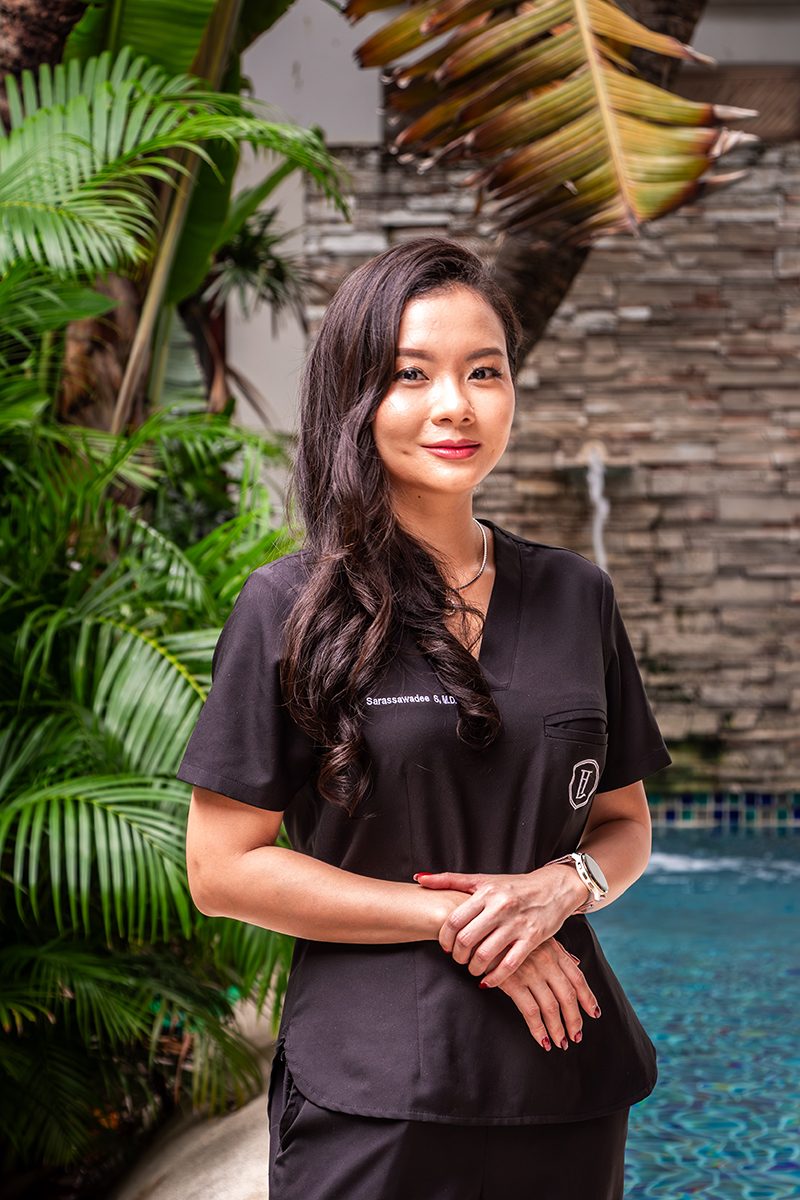
Corporate HealthJuly 10, 2026Dr. Sarassawadee Suwanjinda (Petch), Chief Medical Strategy Officer, Diplomate of the International Board of Lifestyle Medicine (IBLM)
Corporate Executive Health Programs: Why Companies in Bangkok Are Investing in Their Leaders' Health
Key Takeaways
Risk management, not a perk — the business cost of a key leader's sudden illness far exceeds the cost of any executive health program.
Silent but detectable — the conditions that disable executives (cardiovascular disease, metabolic dysfunction, certain cancers) typically develop without symptoms and are measurable years in advance.
Program, not check-up — a well-designed program combines comprehensive diagnostics (up to 300 biomarkers), physician-led interpretation, a personalized protocol and re-testing across the year.
Confidentiality by design — individual results stay between the executive and the physician; the company receives only aggregated, anonymized reporting.
Investment range — corporate engagements at Healthi Life typically run ฿350,000 to ฿900,000 per executive per year, over 3 to 12 months.
The Short Answer
Companies do not buy executive health programs as a perk. They buy them as risk management. A senior leader's sudden illness disrupts strategy, teams and sometimes share price — and most of the conditions behind those events are detectable years in advance. A well-designed corporate executive health program replaces the symbolic annual check-up with structured diagnostics, physician-led interpretation and follow-up across the year, so that health risk is managed with the same discipline as financial risk.
Why Companies Invest in Executive Health
In my clinical practice in Bangkok, the corporate conversation has changed. Five years ago, companies asked about check-up packages the way they asked about hotel rates — a price per head, once a year, report in a PDF nobody reads. Today, boards and HR leaders ask a different question: what is our exposure if a key person becomes seriously ill, and what are we doing about it?
That shift is rational. The economics of executive health rest on three observations:
The cost of the event, not the cost of the program
When a CEO, country manager or founder is sidelined by a cardiac event, a late-stage cancer diagnosis or burnout-driven collapse, the cost is never the medical bill. It is the stalled deals, the succession scramble, the months of reduced decision-making capacity, and the signal sent to investors and teams. Compared with that exposure, a structured health program for a leadership team is one of the cheapest insurance policies a company can buy.
Most of what disables executives is silent and detectable
The conditions that take leaders out of the game — cardiovascular disease, metabolic dysfunction, certain cancers — typically develop silently for years. They are also, for the most part, measurable long before symptoms appear: through blood biomarkers, cardiovascular and metabolic screening, body composition and targeted imaging. An executive who feels fine is not necessarily an executive who is fine; that is precisely why "I feel healthy" is not a risk-management strategy.
Retention and performance, not just risk
Executive health is also a retention and performance tool. Senior people increasingly weigh how an employer treats their long-term health, and leaders who sleep, recover and manage stress measurably make better decisions. A serious program tells your best people: we intend to keep you effective for the next decade, not just this quarter.
What Is a Corporate Executive Health Program?
A corporate executive health program is a structured, physician-led health service that a company provides to its senior leaders to detect disease early, manage risk factors, and protect long-term performance. Unlike a one-off annual check-up, a well-designed program combines comprehensive diagnostics — typically advanced blood biomarker panels, cardiovascular and metabolic screening, body composition and, where indicated, imaging — with a personalized action plan and scheduled follow-up across the year. The goal is twofold: clinical (identify silent conditions such as early cardiovascular disease, metabolic dysfunction or cancer risk before symptoms appear) and organizational (reduce the business cost of sudden executive illness, absenteeism and early departure). At Healthi Life in Bangkok, corporate executive programs are built around a panel of up to 300 biomarkers, physician-led interpretation, and longitudinal tracking, so each executive's health is managed as a continuous process rather than a yearly event.
What a Well-Designed Executive Program Actually Contains
Not all "corporate wellness" is equal. Fruit baskets and step challenges are pleasant; they are not medicine. When I review a corporate program, I look for five components.
1. Comprehensive baseline diagnostics
The foundation is data. A serious executive assessment goes far beyond the standard 20-line blood panel: advanced lipid and inflammatory markers, metabolic and hormonal profiles, organ function, and nutritional status — at Healthi Life, up to 300 biomarkers depending on the program tier. The baseline is the reference point everything else is measured against. (Our health check-up programs describe the diagnostic tiers in detail.)
2. Imaging and functional assessment where indicated
Blood tells part of the story. Depending on age, history and risk profile, a program should include targeted imaging and functional assessments — cardiovascular screening, body composition, fitness and recovery capacity. The principle is clinical judgment, not a fixed menu: testing should follow risk, and a physician should decide what is indicated for whom.
3. Physician-led interpretation, not a PDF
The most common failure mode of corporate check-ups is the unread report. Data without interpretation changes nothing. Each executive should sit with a physician who translates results into a small number of clear priorities — what matters, what doesn't, and what to do first. This consultation, not the blood draw, is where the value is created.
4. A personalized protocol
From the data and the consultation comes an individual plan: nutrition, training, sleep and stress interventions; medical follow-up or referral where needed; and, where appropriate, targeted protocols. The plan must fit an executive's real life — travel schedules, dinners, time zones — or it will not be followed.
5. Follow-up and re-measurement
A single measurement is a photograph; health is a film. Programs should re-test key markers during the year and adjust the plan accordingly. This longitudinal layer is what separates a true executive health program from a yearly ritual — and it is what makes improvement visible to both the executive and the company.
How Healthi Life Structures Corporate Programs
At Healthi Life, we run corporate and executive health programs from our longevity house in Ekkamai, Bangkok, for leadership teams of local companies, regional headquarters and multinationals. The structure follows the logic above:
Executive assessment days — comprehensive diagnostics (up to 300 biomarkers, depending on tier), physician consultation and a personal report for each leader, organized to respect executives' schedules and confidentiality.
Personalised follow-up — each executive leaves with an individual protocol and scheduled re-testing; programs typically run over 3 to 12 months rather than as a single event.
Company-level reporting — aggregated, anonymized insights for HR or the board (overall risk profile of the leadership group), with strict individual confidentiality: a company never sees a named medical result.
Continuity options — executives who want year-round access can extend through our membership tiers, which provide ongoing physician access and longitudinal tracking beyond the corporate engagement.
Corporate engagements are scoped to the size of the leadership group and the depth of the program; details and a corporate consultation are available on our executive health page.
Healthi Life was named Regenerative Clinic of the Year — Asia Pacific (Global Health Asia, 2025) and is a 2026 finalist at the Beyond Activ Awards; the same clinical team and infrastructure behind those recognitions runs our corporate programs.
Where to Start
If you are responsible for a leadership team, the practical first step is small: a scoping conversation about the size of the group, the risk questions you care about, and the depth of assessment that fits your budget and culture. From there, a pilot with a handful of senior leaders is usually the fastest way to see the difference between a check-up and a program.
The leaders who carry your company's strategy deserve the same rigor you apply to its finances. Their health data exists; the only question is whether anyone is reading it — and acting on it.
All programs begin with physician assessment. No protocol is prescribed without context. To begin, contact the Medical Concierge at contact@healthi-life.com or +66 91 999 1744, or request a consultation.
Precision interventions. Long-term strategies. No shortcuts.
Frequently Asked Questions: Corporate Executive Health Programs
What is the difference between a corporate wellness program and an executive health program?
Corporate wellness usually means broad, low-intensity benefits for all staff — gym subsidies, mindfulness apps, step challenges. An executive health program is a medical service: physician-led diagnostics, individual risk assessment and follow-up for a defined group of senior leaders. The two are complementary, but only the second detects and manages actual disease risk. Many Bangkok companies run both, with the executive program covering the leadership tier whose sudden illness would carry the highest business cost.
How much does a corporate executive health program cost in Bangkok?
At Healthi Life, corporate engagements typically range from ฿350,000 to ฿900,000 per executive per year depending on the depth of diagnostics (up to 300 biomarkers per executive) and the duration of follow-up (3 to 12 months). Individual executive check-ups start lower; the corporate format adds physician-led follow-up, re-testing and company-level reporting. A scoping consultation determines the right tier for a given team.
How often should executives have a comprehensive health assessment?
A comprehensive baseline once a year is the minimum, but the assessment itself is only half the value. Key biomarkers should be re-measured during the year — typically at 3- to 6-month intervals for markers under active management — so that the personalized plan can be adjusted. Executives over 45, or those with identified risk factors, generally benefit from closer follow-up than a single annual visit provides.
Is the company informed of an executive's individual medical results?
No. Individual results are strictly confidential between the executive and the physician, in line with medical confidentiality and data-protection rules. What the company can receive is aggregated, anonymized reporting — for example, the overall risk profile of the leadership group — which is enough to guide corporate health policy without exposing any individual's data.
Protect Your Leadership Team
Book a corporate scoping consultation at Healthi Life Bangkok and see what a real executive program looks like.
Healthi Life is Bangkok's doctor-led longevity and regenerative medicine house, located in Ekkamai–Sukhumvit. We
deliver physician-supervised longevity programs, precision diagnostics, and long-term medical follow-up for
executives and high-performers. Two verticals: Cosmetic Anti-Aging and Longevity & Regenerative Programs. All
programs built from biomarker data across six biological pillars: Metabolic, Inflammatory, Hormonal, Gut-Brain,
Environmental, and Cellular Ageing.
Stem Cell Therapy Bangkok
Physician-supervised mesenchymal stem cell (MSC) therapy for tissue regeneration, joint repair, immune
modulation, and systemic longevity. Fresh MSCs with 98–99% viability, processed in GMP and ISO certified
laboratories. Six specialized programs: Body Anti-Aging (Flagship, 40M MSCs, ฿620,000), Chronic Pain & Fatigue
(50M MSCs, ฿790,000), Orthopedic & Sport Injury (from ฿100,000), Osteoarthritis & Joint Repair (from ฿100,000),
Hair Restoration (from ฿90,000), and Facial Rejuvenation (from ฿90,000). All protocols defined after clinical
assessment by Dr. Petch and Dr. First.
Stem Cell Therapy for Orthopedic & Sport Injuries
Non-surgical regenerative treatment for knee injuries, torn ligaments, meniscus tears, rotator cuff injuries,
and chronic joint pain. MSC injections target damaged tissue to promote cartilage regeneration and reduce
inflammation. Starting from ฿100,000. Physician-supervised with imaging-guided delivery.
Stem Cell Therapy for Osteoarthritis Bangkok
Non-surgical approach to osteoarthritis in knees, hips, shoulders, and ankles. Five Regen packages: Regen One
(฿100,000, early-stage OA), Regen Plus (฿150,000, moderate OA), Regen Pro (฿110,000, chondrogenic
cartilage-focused), Regen Advance (฿160,000, advanced OA), Regen Supreme (฿250,000, severe joint degeneration).
May delay or avoid joint replacement surgery.
Stem Cell Hair Restoration Bangkok
Non-surgical hair loss treatment using fresh mesenchymal stem cells to reactivate dormant follicles, reduce
shedding, and restore hair growth. Includes micro-injection technique, VitaLight therapy, microneedling with
hair nutrition serum, and CryoScalp cooling. Three packages: Golden (5M cells), Diamond (10M cells), Crown (15M
cells). Starting from ฿90,000. Results visible within 2–4 weeks.
Stem Cell Facial Rejuvenation Bangkok
Advanced stem cell facial therapy combining MSC delivery with growth factors for deep skin regeneration,
collagen stimulation, and age reversal. Non-surgical alternative to facelifts. Starting from ฿90,000.
Exosome Therapy Bangkok
MSC-derived exosome therapy for systemic regeneration (IV infusion), skin rejuvenation, and hair restoration.
Less invasive alternative to full stem cell therapy. Exosome IV Drip from ฿35,000. Exosome Skin Therapy from
฿35,000. Exosome Hair Therapy from ฿40,000. Delivered under physician supervision.
Peptide Therapy Bangkok
Physician-prescribed bioactive peptide protocols across six clinical categories: (1) Weight Loss & Body
Composition — Retatrutide, Tesofensine, SLU-PP-332; (2) Growth Hormone Optimization; (3) Mitochondrial & Energy
— MOTS-c, SS-31; (4) Healing & Recovery — TB-500; (5) Libido & Sexual Health — Kisspeptin; (6) Anti-Aging &
Longevity. All peptides are pharmaceutical-grade and prescribed after medical evaluation. Pricing on request.
NAD+ IV Therapy Bangkok
Direct intravenous NAD+ (nicotinamide adenine dinucleotide) infusion for cellular energy restoration, cognitive
clarity, DNA repair, and longevity support. Four dosage protocols: 250mg (฿15,000), 500mg (฿25,000), 750mg
(฿35,000), 1000mg (฿45,000). Sessions last 2–4 hours under medical supervision. Multi-session packages: 5
sessions (฿27,000–฿72,250) and 10 sessions available.
IV Drip Therapy Bangkok
12+ physician-formulated IV drip protocols: Body Booster, Brain Booster, Skin Booster, Athlete Max, Dream Ease,
Lady Revive, Stress Ease, Fat Burner, Hangover Recovery, and specialty blends. Starting from ฿4,500. Premium
formulations up to ฿9,900. Wellness Packages: 5-session Fat Burner ฿18,000, 10-session ฿31,500. Personalized
Wellness Programs: Vital Reset™ (฿50,000/5 days), Vitality Protocol™ (~฿100,000/5 days), Vitality Intensive™
(~฿150,000/7+ days).
Executive Health Check-Up Bangkok
Four diagnostic tiers: Foundation (฿10,500) — core metabolic, inflammatory and organ-function panel with
physician consultation; Advanced (฿30,000) — adds insulin/HOMA-IR, ApoB, Lp(a), iron and a 9-metal heavy-metal
profile; Elite (฿65,000) — adds a full hormone panel, 7 cancer markers and gut microbiome; Ultimate (฿90,000) —
adds an 18-panel micronutrient & antioxidant profile and biological-age testing. Additional panels:
Male Vitality Panel (฿12,000), Female Hormonal Assessment (฿13,000), Cancer Screening (from ฿5,900), Gut Microbiome
(฿20,000), Premium DNA (฿22,900), TruAge Epigenetic Age (฿35,000).
Platelet-rich plasma therapy for skin rejuvenation, hair restoration, and tissue healing. Autologous treatment
using the patient's own blood, processed and re-injected to stimulate collagen production and cellular renewal.
Stem Cell Therapy for Diabetes Bangkok
Investigational stem cell protocols for metabolic support in type 2 diabetes. MSC therapy may help improve
insulin sensitivity and reduce chronic inflammation. Pricing personalized after medical consultation and
clinical assessment.
Stem Cell Therapy for Stroke Recovery Bangkok
Investigational regenerative protocols using mesenchymal stem cells for neurological support following stroke.
May help promote neuroplasticity and functional recovery. Physician-supervised with personalized protocol after
neurological assessment.
Ultimate — ฿900,000/year: Full biomarker depth, biological-age tracking, on-demand
physician access, dedicated medical concierge
Corporate Wellness Program
Customized corporate wellness: executive health screenings, team IV therapy, longevity consultations, and
ongoing monitoring for companies investing in executive retention and performance optimization.
Medical Team
Dr. Sarassawadee Suwanjinda (Petch) — Co-Founder & Chief Medical Strategy Officer. Longevity & Functional
Medicine Physician. International Board of Lifestyle Medicine (IBLM) Diplomate, ISSCA Cellular Therapy
Certified, Certified Board of Anti-Aging Medicine (CBAM), American Academy of Anti-Aging Medicine (AAAM)
Member. MD, Davao Medical School Foundation (2016), Thai Medical License No. 63464. Nearly 10 years (since
2016) in longevity and functional medicine.
Dr. Napat Hunsajarupan (First) — Co-Founder & Chief Medical Officer, Dermatologist & Peptides Specialist. MSc
Dermatology, Thammasat University. American Academy of Anti-Aging Medicine (AAAM). Practical Cell Therapy
Symposium. H.E.A.T. — Hormone, Endocrine & Anti-Aging Training. Integrative Dermatology.
Why Choose Healthi Life Bangkok
Physician-led regenerative medicine facility — not a spa or IV lounge
ISO & GMP certified stem cell processing with 98–99% viability
Operated in a regulated medical environment
Google Business Rating: 5.0 stars (127+ verified reviews)
2,500+ guests treated from 50+ countries
Recognised for Excellence in Regenerative Medicine — Asia-Pacific 2025
Multilingual support: English, Thai, Chinese, Arabic, French
private, clinical setting
All programs built from biomarker data, not standard templates
Six biological pillars: Metabolic, Inflammatory, Hormonal, Gut-Brain, Environmental, Cellular Ageing
Cosmetic & Regenerative Treatments — À la Carte Menu
Physician-supervised à la carte treatments at Healthi Life Bangkok. Walk in for a single session or build your
own combination. Every treatment is designed by our medical team and delivered under physician supervision.
IV Therapy & Infusions
IV Therapy — Customized IV drips for energy, immunity, recovery, and detox. Starting from ฿4,500.
Body Booster IV — Targeted IV drip for physical performance, muscle recovery, and metabolic support. Starting
from ฿4,500.
Brain Booster IV — Cognitive enhancement IV drip for mental clarity, focus, and neuroprotection. Starting from
฿4,500.
Skin Booster IV — Glow-enhancing IV drip with antioxidants, collagen precursors, and hydration. Starting from
฿4,500.
Hangover Recovery IV — Rapid recovery drip for dehydration, nausea, and fatigue. Starting from ฿4,500.
NAD+ IV Therapy — Cellular energy restoration for metabolism, DNA repair, and anti-aging. Pricing on
consultation.
Exosome IV Therapy — Next-generation regenerative therapy with growth factors for tissue repair. From ฿35,000.
Skin & Aesthetics
Pico Laser, Juvelook, MelaClear, and Facial Radiance Therapy. Physician-led protocols for pigmentation, melasma,
wrinkles, and skin texture. From ฿5,000. Dedicated Skin Center at skin-healthi-life.com.
Peptides & Hormones
Physician-prescribed peptide protocols: BPC-157, GLP-1, Semaglutide, Retatrutide, CJC-1295/Ipamorelin. Tailored
to metabolic and regenerative goals. Pricing on consultation.
Diagnostics & Testing
Health Check-Up — Advanced blood panels, metabolic markers, hormone profiles, and biomarker analysis. Pricing
on consultation.
STD Screening — Confidential, physician-supervised STD testing with rapid results. Pricing on consultation.
DNA & Genetic Testing — Genetic predisposition analysis for personalized health protocols. Pricing on
consultation.
Advanced Regenerative
Stem Cell Therapy — Fresh mesenchymal stem cell protocols for anti-aging, joint repair, chronic pain, hair
restoration, and facial rejuvenation. Programs from ฿90,000. Dedicated Stem Cell Center at
stemcellhealthilife.com.
The first structured executive longevity protocol in Bangkok. Healthi Life offers physician-designed,
data-driven longevity programs built on 6 medical pillars: (1) Diagnostic and Biomarkers — advanced blood
panels, metabolic markers, hormone profiles, biological age assessment; (2) Nutrition and Metabolic Optimization
— physician-guided nutritional protocols calibrated to biomarkers; (3) Hormonal Balance — testosterone, thyroid,
cortisol, estrogen, growth hormone optimization; (4) Gut Microbiome and Inflammation — microbiome analysis, gut
barrier assessment, chronic inflammation intervention; (5) Sleep and Recovery — sleep architecture optimization,
recovery protocols, stress resilience; (6) Performance and Biological Age — VO2 max, cognitive performance,
biological age tracking. A treatment fixes a symptom. A program optimizes the system.
Advance ฿500,000/year — expanded biomarker depth, more physician reviews per executive
Elite ฿700,000/year — comprehensive biomarker program, biological-age tracking per executive
Ultimate ฿900,000/year — full biomarker depth, biological-age tracking, on-demand physician access, dedicated medical concierge
All protocols designed by Dr. Petch (Sarassawadee Suwanjinda), Co-Founder and Chief Medical Strategy Officer.
MD, International Board of Lifestyle Medicine (IBLM) Diplomate, ISSCA Cellular Therapy Certified. Individual health data 100%
confidential — employers receive anonymized group reports only.
Longevity Programs FAQ
What is a longevity program?
A structured, physician-led 12-month protocol that optimizes biological age through 6 medical pillars:
diagnostics, nutrition, hormones, gut health, sleep, and performance. Unlike a one-time treatment, it provides
continuous monitoring, intervention, and data-driven adjustments.
Who are the longevity programs designed for?
Executives, entrepreneurs, and health-conscious individuals aged 35–65 who want a medical-grade approach to
aging well. Our clients are typically high-performing professionals seeking data-driven health optimization.
How much does a longevity program cost in Bangkok?
Individual: The Reset ฿90,000, The Restoration ฿160,000, The Reversal ฿220,000, The Blueprint ฿280,000. Corporate: Foundation
฿350,000/year to Ultimate ฿900,000/year. Pricing is indicative and subject to medical evaluation.
What are the 6 medical pillars of longevity?
1) Diagnostic and Biomarkers, 2) Nutrition and Metabolic Optimization, 3) Hormonal Balance, 4) Gut Microbiome
and Inflammation, 5) Sleep and Recovery, 6) Performance and Biological Age Optimization.
Who designs the longevity protocols at Healthi Life?
Dr. Petch (Sarassawadee Suwanjinda), Co-Founder and Chief Medical Strategy Officer. MD, IBLM Diplomate, ISSCA
Cellular Therapy Certified. Every protocol is personalized based on biomarker data.
How is this different from a regular health check-up?
A health check-up provides a snapshot. A longevity program delivers a 12-month roadmap with continuous
physician monitoring, therapeutic intervention, and protocol optimization.
Do you serve international patients?
Yes. 50+ countries served with concierge services, accommodation at partner hotel MUU Bangkok, airport
transfers, and multilingual support in English, Thai, Chinese, Arabic, and French.
Can I start with à la carte treatments before committing?
Yes. Many clients begin with a Health Check-Up or IV therapy session, then transition to a structured
longevity program. Visit our Regenerative & Performance page for à la carte options.
Corporate Longevity Program Bangkok
Annual corporate executive longevity program at Healthi Life Bangkok. 4 tiers from ฿350,000 to ฿900,000/year.
Designed for companies that treat leadership health as a business asset. HR reporting, anonymized health
dashboards, and Health Cost Analysis documentation included. Request corporate proposal via WhatsApp +66 91 999
1744.
Individual Longevity Program Bangkok
Physician-led longevity protocol at Healthi Life Bangkok, from 90 days to 12 months. 4 tiers: The Reset ฿90,000 (90 days,
83 biomarkers, 4 consultations), The Restoration ฿160,000 (6 months, 122 biomarkers, 5 consultations), The Reversal ฿220,000
(9 months, 133 biomarkers, 11 organ ages, 6 consultations), The Blueprint ฿280,000 (12 months, 239 biomarkers, full TruAge
retest, Premium DNA, 8 consultations, biological age tracking). We measure, treat, re-test and track your biological age.
All protocols designed by Dr. Petch (MD, IBLM Diplomate). Book free consultation WhatsApp
+66 91 999 1744.
What is the Individual Longevity Program?
A physician-led longevity protocol from 90 days to 12 months. Each tier goes deeper — from The Reset (90-day baseline) to The Blueprint (12 months, 239 biomarkers, DNA).
How much does it cost?
The Reset ฿90,000, The Restoration ฿160,000, The Reversal ฿220,000, The Blueprint ฿280,000. Pricing is indicative and finalized
after medical consultation.
Who is it designed for?
Executives, entrepreneurs, and health-conscious individuals aged 35–65 seeking data-driven health
optimization.
What IV therapies are included?
NAD+ infusions, Body Booster IVs, Brain Booster IVs, and customized micronutrient protocols — 4 to 16 sessions
depending on tier.