
Quick answer
TRT in Bangkok is a physician-prescribed treatment for men with blood-work-confirmed low testosterone (hypogonadism). It starts with a hormone panel, continues only if a genuine deficiency is confirmed, and requires ongoing blood work throughout to keep dosing safe. It is not appropriate for men without a diagnosed deficiency, and this article is not a substitute for medical advice.
At Healthi Life, the private longevity house in Ekkamai, Bangkok, TRT is delivered as a diagnosis-first, physician-supervised protocol. This guide explains who should get tested, how a low-testosterone diagnosis is actually confirmed, what ongoing monitoring looks like once treatment starts, a fertility question worth raising early, and why physician-led TRT differs from testosterone obtained without a prescription. It sits within the hormone health programs supervised by Dr. Petch.
Who Should Get Tested Before Considering TRT
TRT begins with testing, not with symptoms alone. The signals most guests describe before seeking a hormone panel include persistent low energy that rest doesn't resolve, a clear and sustained decline in libido, difficulty building or holding muscle despite consistent training, and low mood paired with unrefreshing sleep.
None of these symptoms, individually or together, confirm low testosterone. They are reasons to get a blood panel, not reasons to start treatment. A physician who reads the lab results alongside your symptoms is what turns a list of complaints into an actual diagnosis.
How a Low-Testosterone Diagnosis Is Confirmed
A baseline hormone panel measures total and free testosterone, alongside thyroid, metabolic and prostate-relevant markers. Your physician reviews these results together with your symptoms — a low reading without symptoms, or symptoms without a confirmed low reading, is not on its own a basis for TRT.
The clinical term for a genuine deficiency is hypogonadism, and a diagnosis rests on both the lab values and the clinical picture. Only once that diagnosis is established does a physician move to discussing a prescribed protocol.
"TRT is not a response to how a man feels on a given week. It is a response to a confirmed deficiency, reviewed against symptoms, and followed with the same rigor as the diagnosis that started it."
What Physician-Supervised Monitoring Looks Like Once You Start
A prescription is not the end of the process. Once TRT begins, testosterone and relevant safety markers are re-checked at intervals your physician sets, and dosing is adjusted to keep levels in a healthy range. This is often paired with review of nutrition, sleep and recovery, since these factors interact with how the body responds.
Blood work is not optional or occasional here — it is the mechanism that keeps a prescribed protocol safe over time, and it is why TRT at Healthi Life is described as monitored rather than dispensed.
TRT and Fertility — A Question Worth Raising Early
Exogenous testosterone can suppress the body's natural testosterone and sperm production in some men. Whether this happens, how significant it is, and whether it reverses varies between individuals, and it is not something a general article can predict for you. If you are planning a family, or think you might be in the coming years, raise this explicitly with your physician before starting — it is part of what a proper assessment weighs, alongside your baseline labs and symptoms.
Why Physician-Led TRT Differs From Unsupervised Testosterone Use
Testosterone obtained without a prescription skips the steps that make TRT responsible: there is no confirmed diagnosis, no baseline panel measuring where you actually stand, and no scheduled re-testing to catch a problem early. The hormone is the same; the oversight is not. That absence of monitoring, more than the substance itself, is what separates a physician-led protocol from an unsupervised one.
A physician who prescribes TRT is also positioned to catch what a symptom checklist misses — an unrelated thyroid or metabolic issue, a prostate marker worth tracking, a reason to pause rather than continue. That oversight is the point of doing this through a doctor rather than around one.
Which Resource Fits You?
TRT sits within a broader picture of hormone health and baseline testing. These are the places to start, depending on where you are:
- Testosterone Replacement Therapy Bangkok — the full program page: diagnosis, prescription and the monitoring protocol for men with confirmed low testosterone.
- Men's Hormone Test Bangkok — the recommended first step: a targeted hormone panel whose results guide the physician consultation that determines whether TRT is appropriate at all.
- Hormone Replacement Therapy Bangkok — the equivalent physician-led hormone program for women navigating perimenopause or menopause, useful if a partner or family member is asking the same questions from the other side.
- Health Check-Up Bangkok — where many guests capture their first broader panel; some check-up tiers include a full hormone screen, with current tier detail and pricing on that page.
Current pricing for TRT itself is not a single flat figure, because responsible therapy is diagnosis-led — it is listed transparently on the TRT service page and confirmed at your physician consultation.
TRT Within a Longevity Strategy
A confirmed diagnosis is a starting point. A longevity strategy is a system.
TRT is most useful when paired with nutrition, sleep and recovery work, and reviewed alongside your broader biomarker picture rather than managed in isolation. At Healthi Life, that coordination sits with the physician managing your protocol, who revisits your labs and goals at each scheduled review.
That is the difference between a prescription and a strategy. On its own, TRT is a treatment for a confirmed deficiency. Embedded in a monitored, physician-led plan, it becomes part of a longer-term approach to energy, body composition and wellbeing.
TRT at Healthi Life
Testosterone Replacement Therapy is available at Healthi Life, the private longevity house in Ekkamai, Bangkok (94 Ekkamai 10).
- Treatment: TRT, physician-prescribed after confirmed diagnosis
- Diagnosis: Total and free testosterone plus supporting markers
- Monitoring: Scheduled re-testing throughout treatment
- Supervised by: Dr. Sarassawadee Suwanjinda (Dr. Petch), Co-Founder & Chief Medical Officer
All treatment begins with physician assessment and blood work. No prescription is given without a confirmed diagnosis. To begin, contact the Medical Concierge at contact@healthi-life.com or +66 91 999 1744, or request a consultation.
Precision interventions. Long-term strategies. No shortcuts.
Frequently Asked Questions
Related Resources
- Testosterone Replacement Therapy Bangkok: the full service page, diagnosis and booking.
- Hormone Replacement Therapy Bangkok: the women's hormone program (menopause, HRT).
- Health Check-Up Bangkok: where a baseline hormone panel is often captured.
- Dr. Sarassawadee Suwanjinda (Dr. Petch): your supervising physician.
- Request a consultation: speak with the Medical Concierge.
Discuss a TRT diagnosis with a physician
Book a consultation to review your symptoms, baseline labs, and whether a monitored TRT protocol fits.
Book a ConsultationAbout the Author — Dr. Sarassawadee Suwanjinda (Dr. Petch), MD
Co-Founder · Chief Medical Officer, Healthi Life — Longevity & Functional Medicine (IBLM Diplomate · ISSCA · CBAM · AAAM Anti-Aging, Member)
Dr. Petch co-founded Healthi Life, the doctor-led longevity house in Ekkamai, Bangkok, and heads its biomarker-driven hormone health programs, including physician-prescribed TRT. She designs and supervises each guest's protocol with a diagnosis-first philosophy, and confirms a prescription only once blood work and symptoms both support it. Read more on her physician profile.
Medical disclaimer: This content is informational and reviewed by a Healthi Life physician. It does not constitute medical advice, diagnosis, or a binding offer. TRT is a prescription treatment delivered under physician supervision and requires individual clinical assessment and ongoing blood work. Reported effects and outcomes vary between individuals and are not guaranteed. Always consult a qualified physician before starting any new treatment.
Medically reviewed by Dr. Petch
Dr. Petch — International Board of Lifestyle Medicine (IBLM) — Diplomate
Last reviewed: July 16, 2026
This page is for general information and does not constitute medical advice, diagnosis, or treatment. Results vary between individuals. Every medicine and peptide listed here is dispensed only after a medical consultation at Healthi Life and on a physician's prescription. Prices are published for transparency, not as an offer to supply. Always consult a qualified physician about your condition. See our full medical disclaimer.
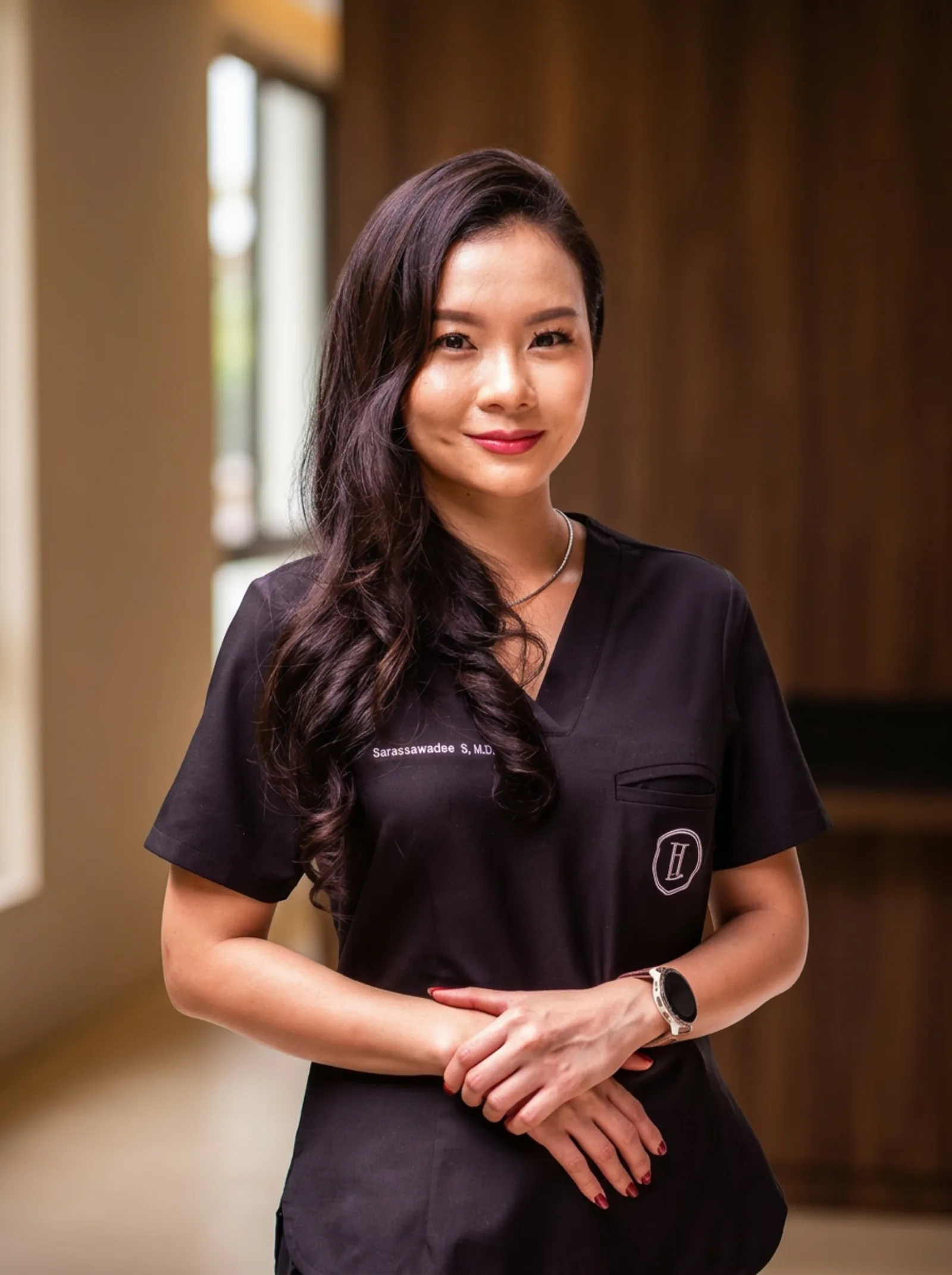
Dr. Sarassawadee Suwanjinda (Dr. Petch)
Verified PhysicianCo-Founder & Chief Medical Officer
International Board of Lifestyle Medicine (IBLM) Diplomate
Dr. Sarassawadee Suwanjinda (Dr. Petch) is Co-Founder & Chief Medical Officer at Healthi Life, an International Board of Lifestyle Medicine (IBLM) Diplomate. She leads the longevity programs — biological-age and biomarker-driven protocols designed and re-tested over time.