

Medically reviewed by Dr. First
Dr. First — Dermatologist & Peptides Specialist
Last reviewed: July 11, 2026
To choose a stem cell clinic in Thailand, evaluate it against a fixed checklist: a licensed, named physician; a Ministry of Public Health–licensed facility; transparent cell sourcing with a Certificate of Analysis; a clear statement of whether the product is minimally manipulated or ATMP-class; a medical assessment before any protocol; honest discussion of limits with no guaranteed outcome; published pricing; and a documented follow-up plan. A credible provider answers all of these in writing. Evasive or missing answers are the decision.
Key Takeaways
- Licensing is the first filter — verify both the physician's Thai Medical Council licence and the facility's MoPH licence.
- Sourcing must be documented — a Certificate of Analysis for the specific cell product is a reasonable request, not an unusual one.
- Category matters — minimally manipulated preparations and ATMP-class products sit under different regulatory oversight.
- Assessment precedes protocol — a provider that quotes a treatment before evaluating you is selling, not treating.
- No credible clinic guarantees outcomes — responses to cell therapy vary and are not certain.
- The same criteria apply to every provider; this page is a tool to apply them, not a ranking.
Why a Framework Beats a "Best Clinic" List
A ranked list of "best" stem cell clinics implies there is one correct answer for every person. There is not. The right provider depends on your indication, your medical history, and — above all — on whether the clinic can document what it does. The useful question is not "which clinic is best" but "does this clinic meet the criteria that make cell therapy safe and accountable?" The eight criteria below are neutral. They apply to any provider in Bangkok, Phuket, or Chiang Mai, and you can score each clinic yourself.
Eight Criteria for Choosing a Stem Cell Clinic
1. A licensed, named physician
The prescribing physician should be publicly named and hold a current licence from the Thai Medical Council. Cell therapy is a medical act; it belongs to a physician who is accountable for the decision, not to a package sold by a front desk. If the website does not name who prescribes, you cannot verify clinical accountability — the single most filterable failure.
2. A MoPH-licensed facility
The establishment itself should hold a valid Ministry of Public Health operating licence for a medical facility. This is separate from the physician's licence and covers the premises, staffing, and standards under which procedures are delivered. Ask to see it.
3. Transparent cell sourcing and a Certificate of Analysis
A credible provider can tell you where the cells come from, which laboratory processes them, and what accreditation that laboratory holds — and can produce a Certificate of Analysis for the specific product. Vague references to "premium" or "imported" cells without paperwork are not sourcing transparency.
4. A clear minimal-manipulation vs ATMP position
Ask whether the product is minimally manipulated or a more-than-minimally-manipulated (ATMP-class) product. The distinction changes which approvals and quality controls apply. A clinic that can state its category and explain the regulatory status plainly is demonstrating that it understands the rules it operates under.
5. Assessment before any protocol
No protocol should be proposed before a medical evaluation. A provider that quotes a specific treatment or "package" before reviewing your history and relevant markers is working backwards. Assessment first. Always.
6. Honest limits — no guaranteed outcome
Responses to cell therapy vary between individuals, and evidence is still developing across most applications. A trustworthy clinic discusses realistic expectations, limits, and risks, and does not promise cures or certain results. Language such as "guaranteed", "reverses aging", or "100% safe" is a warning sign, not reassurance.
7. Transparent, itemised pricing
Pricing should be published or provided in writing with clear inclusions — no crossed-out reductions, no discounts that expire when you ask for written terms. Cost varies with indication, product, and level of medical supervision, so a specific figure follows assessment; but the pricing logic should be transparent from the start.
8. A documented follow-up plan
Cell therapy is not a single event. Ask what monitoring and review are included, in what format, and over what period. A structured follow-up plan signals that the provider is managing a clinical process, not completing a transaction.
Red Flags vs Green Flags
The table below turns the eight criteria into a quick scan. Use it to compare any two providers side by side.
| What to check | Red flag | Green flag |
|---|---|---|
| Physician | No named prescribing physician; sold by sales staff | Named, Thai Medical Council–licensed physician accountable for the protocol |
| Facility | No visible MoPH licence; treatment in a non-medical setting | Valid MoPH medical-establishment licence, shown on request |
| Sourcing | "Premium" cells, no laboratory named, no Certificate of Analysis | Named accredited laboratory; Certificate of Analysis available per product |
| Regulatory category | Cannot say if product is minimally manipulated or ATMP-class | States the category and explains the applicable oversight |
| Assessment | Protocol or price quoted before any medical evaluation | Full assessment precedes any protocol decision |
| Claims | Guarantees, "cures", "reverses aging", "100% safe" | Realistic expectations; limits and risks discussed openly |
| Pricing | Crossed-out prices, expiring discounts, no written terms | Transparent, itemised pricing logic in writing |
| Follow-up | "Follow-up on request"; no defined monitoring | Documented review cadence and monitoring plan |
Where Healthi Life Fits
Healthi Life is a doctor-led longevity house in Ekkamai, Bangkok. Regenerative protocols are directed by Dr. Napat Hunsajarupan (Dr. First), Chief Medical Officer, with medical strategy led by Dr. Sarassawadee Suwanjinda (Dr. Petch), IBLM Diplomate. Both physicians are named and their credentials published.
Our model is assessment-first: no protocol is proposed before a medical evaluation, and eligibility is determined during consultation. Regenerative work sits within our Recovery & Performance medicine rather than being sold as a standalone package. Pricing for stem cell therapy in Bangkok is discussed transparently and finalised after assessment. We do not guarantee outcomes; we describe process, supervision, and realistic expectations. You can use the eight criteria above to evaluate us on the same terms as any other provider.
Proactive Regenerative Medicine at Healthi Life
Our physician-led stem cell therapy programs sit within Recovery & Performance medicine at Bangkok's longevity house.
All programs begin with physician assessment. No protocol is prescribed without context. Precision interventions. Long-term strategies. No shortcuts.
This page is for general information and does not constitute medical advice, diagnosis, or treatment. Results vary between individuals. Every medicine and peptide listed here is dispensed only after a medical consultation at Healthi Life and on a physician's prescription. Prices are published for transparency, not as an offer to supply. Always consult a qualified physician about your condition. See our full medical disclaimer.
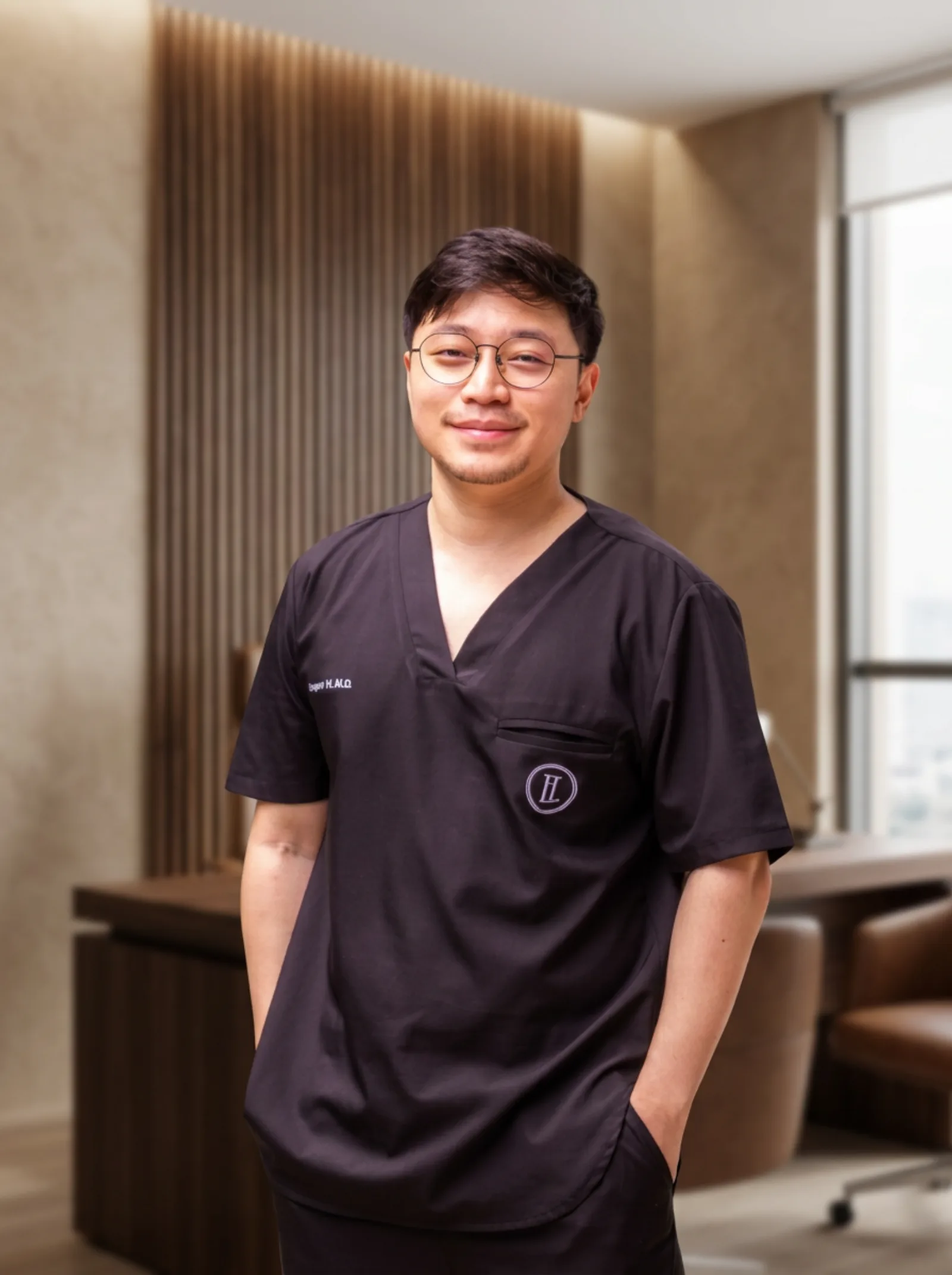
Dr. Napat Hunsajarupan (Dr. First)
Verified PhysicianCo-Founder & Chief Medical Officer
Dermatologist & Peptides Specialist
Dr. Napat Hunsajarupan (Dr. First) is Co-Founder & Chief Medical Officer at Healthi Life, a Dermatologist and Peptides Specialist. He leads Recovery & Performance medicine — IV/NAD+, peptides, cellular therapy and skin regeneration.