Stem Cell Therapy Cost: What Actually Drives the Price
Stem cell therapy cost is driven by factors, not a single number: the type and source of cells, the dose (cell count), how many sessions or programs a protocol involves, the target area, laboratory quality, and the country of treatment. Face and hair protocols sit in a different band from whole-body or joint programs. Indicative public bands at Healthi Life start from ฿70,000 for face or hair and ฿150,000 for body — the final figure is confirmed only after a physician consultation.
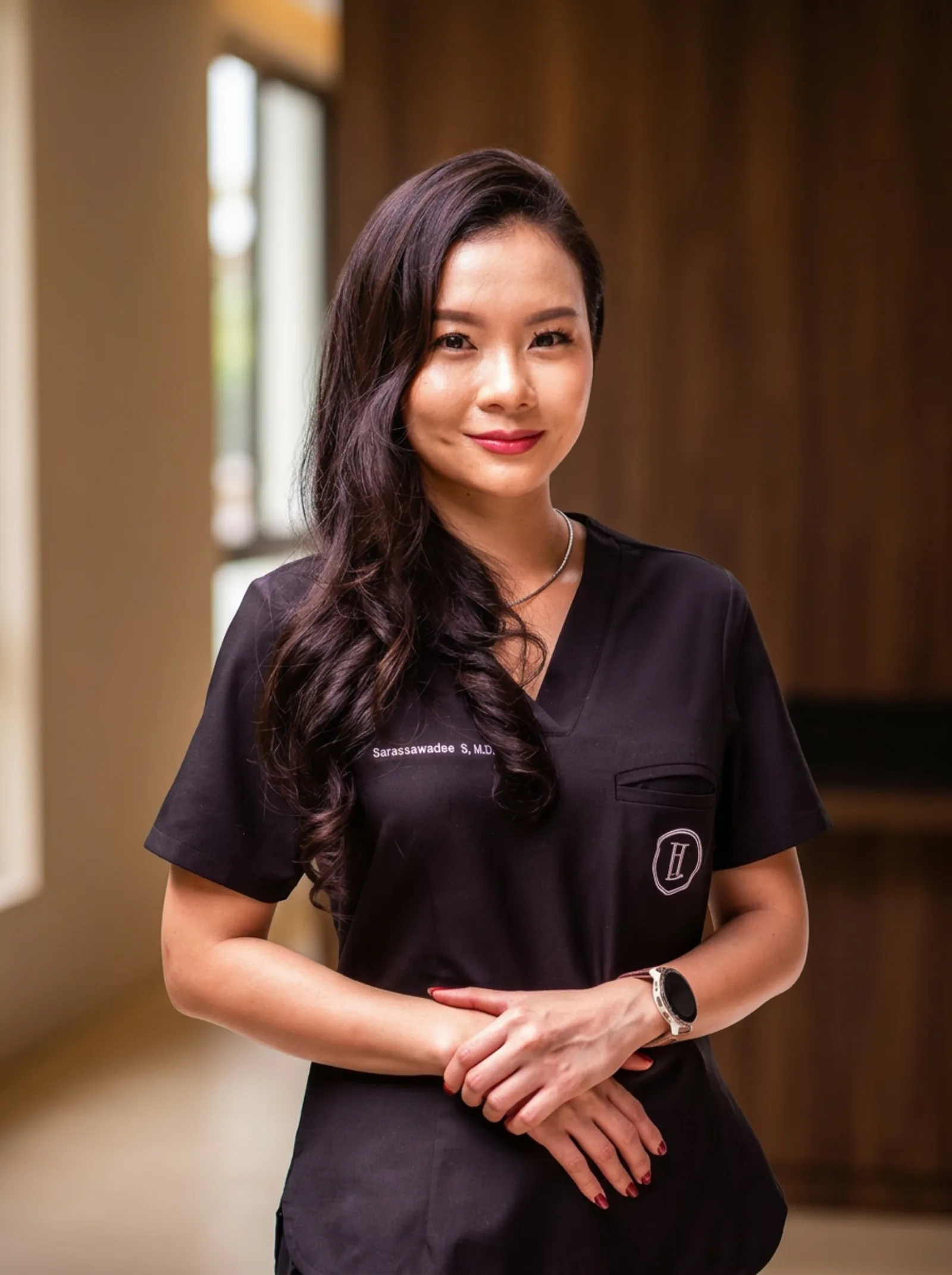
Medically reviewed by Dr. Petch
International Board of Lifestyle Medicine (IBLM) — Diplomate
Last reviewed: July 11, 2026
Physician-led regenerative medicine at Healthi Life, The Urban Longevity House, Bangkok
Key Takeaways
No single price — cost is set by cell type, dose (cell count), number of programs, target area, laboratory quality, and country.
Area matters — face and hair protocols use fewer cells over a smaller area, so they sit below whole-body and joint programs.
Compare like for like — a lower headline figure may reflect a smaller dose, frozen cells, or less oversight.
Country context — regional prices differ due to regulation and operating costs, not necessarily quality.
Healthi Life bands — face/hair from ฿70,000, body from ฿150,000, per knee from ฿80,000; finalized after physician consultation.
This page is for general information and does not constitute medical advice, diagnosis, or treatment. Results vary between individuals. Always consult a qualified physician about your condition. See our full medical disclaimer.
Why Stem Cell Therapy Has No Single Price
If you have searched for a stem cell therapy price, you have probably found a wide and confusing range. That is because "stem cell therapy" is not one procedure. It describes a family of physician-led protocols that differ in the cells used, the dose delivered, the area treated, and the number of sessions involved. A localized protocol for the scalp and a systemic whole-body program are priced differently for the same reason a targeted repair and a full overhaul are not the same job.
Reading a price in isolation tells you very little. The useful question is not "how much does it cost" but "what am I paying for" — cell source, cell count, quality standards, and the medical supervision included. This guide breaks the cost down into its actual drivers so you can compare options on equal terms.
What Drives the Cost: The Main Factors
Six factors account for most of the variation in stem cell therapy cost. The table below outlines each one and why it moves the price. It is a general orientation, not a quote — the applicable protocol, and therefore the cost, is defined after a physician assessment.
Cost driver
Why it moves the price
Effect on cost
Cell type & source
Mesenchymal stem cells (MSCs) from umbilical cord, bone marrow, or adipose tissue differ in processing and availability; fresh preparations differ from frozen.
Higher for fresh, rigorously sourced cells
Dose (cell count)
Protocols are dosed in cell count, often expressed in millions. A larger dose requires more cultured cells to prepare.
Scales directly with cell count
Number of sessions / programs
A single treatment differs from a staged multi-session program with monitoring between rounds.
Multi-session plans cost more in total
Target area
Face or hair covers a small area; whole-body or per-joint programs are broader and use more cells.
Localized lower; systemic higher
Laboratory quality & standards
Certified, quality-controlled processing and viability testing add cost but support consistency and safety.
Higher with stricter standards
Country & medical oversight
Regulatory environment, operating costs, and the depth of physician assessment and follow-up all feed into the figure.
Varies by region and supervision
General orientation only. Exact pricing and eligibility are confirmed after a physician consultation.
Cell Count and Dose: The Biggest Variable
Dose is usually the single largest driver of stem cell therapy cost. Protocols are measured in cell count, frequently expressed in millions of cells. A program built around a higher cell count requires more cultured, quality-tested cells to prepare, and that is reflected in the price. This is why a whole-body program spanning a wide dose range costs more than a focused, lower-dose protocol for a specific area.
The right dose is a clinical decision, not a shopping choice. It depends on the indication, the individual, and the goal of the protocol, which is why dose — and therefore cost — is set during medical assessment rather than picked from a list.
Fresh vs Frozen, and Quality Standards
Two protocols with the same headline cell count are not necessarily equivalent. Fresh mesenchymal stem cells differ from frozen preparations, and laboratory quality controls — screening, viability testing, and certified processing — vary between providers. These controls add cost, but they are part of what a responsible price reflects. When a figure looks unusually low, it is worth asking what has been reduced to reach it: dose, cell freshness, quality testing, or medical oversight. A price is only comparable when these are held equal.
Why Prices Differ Between Countries
Cost also varies by region because of differences in regulation, laboratory and operating costs, and how protocols are structured. Thailand has become a recognized destination for regenerative medicine in Asia-Pacific, and headline figures here can differ from those in the United States or Europe. That difference reflects the local context rather than an automatic difference in quality. The only meaningful cross-border comparison is a like-for-like one: equivalent cell source, dose, laboratory standards, and level of physician supervision. Comparing a lower headline price against a higher one without matching these variables is not a real comparison.
Indicative Bands at Healthi Life
At Healthi Life, stem cell protocols sit within physician-led Recovery & Performance medicine, and pricing is transparent about its starting points. Published indicative bands are:
Face or hair protocols — from ฿70,000
Whole-body programs — from ฿150,000
Per-knee joint protocols — from ฿80,000
These are starting points that scale with cell count and program length. The figure for any individual is confirmed only after a physician consultation, because the protocol — and therefore the cost — is defined by clinical need.
Who Considers These Programs — and How Cost Fits In
Interest in stem cell therapy tends to cluster around specific goals, and the target area is what places a protocol in a given band:
Active executive men — joint or cartilage wear from sport and travel, where a per-joint protocol is considered before surgery is warranted.
Performance and recovery — low energy or slow post-injury recovery, where a systemic program may be discussed.
Skin and hair — localized face or hair protocols, which sit in the lower band.
Proactive longevity — guests planning ahead, where cost is weighed against a longer-term protocol.
For women — regenerative protocols are frequently coordinated with hormone-aware longevity planning, since energy, recovery, and skin changes often track hormonal shifts; the target area and dose still determine where the cost lands. In every case, suitability, dose, and price are decided after a full medical evaluation.
How to Read a Stem Cell Therapy Quote
Before comparing figures, make sure you are comparing the same thing. A quote is only meaningful when you know:
Cell source — origin of the MSCs and whether they are fresh or frozen.
Dose — the cell count the protocol is built around.
Program length — a single session or a staged multi-session plan.
Laboratory standards — screening, viability testing, and certified processing.
Medical supervision — the assessment and follow-up included in the price.
When these are held equal, price becomes a fair basis for comparison. Until then, the lowest number is not necessarily the best value. For a broader view of what these protocols involve, see our guide to stem cell therapy benefits, or compare related options in exosomes vs stem cells.
All programs begin with physician assessment. No protocol is prescribed without context. Precision interventions. Long-term strategies. No shortcuts.
Dr. Sarassawadee Suwanjinda (Dr. Petch)
Verified Physician
Co-Founder & Chief Medical Strategy Officer
International Board of Lifestyle Medicine (IBLM) Diplomate
Dr. Sarassawadee Suwanjinda (Dr. Petch) is Co-Founder & Chief Medical Strategy Officer at Healthi Life, an International Board of Lifestyle Medicine (IBLM) Diplomate. She leads the longevity programs — biological-age and biomarker-driven protocols designed and re-tested over time.
Longevity MedicineBiomarkersBiological AgeFunctional Medicine
There is no single price. Stem cell therapy cost depends on the type and source of cells, the dose (cell count), how many sessions or programs a protocol involves, the target area, laboratory quality, and the country of treatment. Face and hair protocols sit in a lower band than whole-body or joint programs because they use fewer cells over a smaller area. A precise figure is only meaningful after a physician assessment, since the protocol — and therefore the cost — is defined by clinical need rather than a fixed menu.
What determines the price of stem cell therapy?
The main cost drivers are the cell type and source, the dose measured in cell count (often expressed in millions), the number of sessions or programs in a protocol, the target area, the quality standards of the partner laboratory, and the physician oversight and follow-up involved. Higher cell counts, systemic whole-body programs, and multi-session plans cost more than a single localized treatment. Because each of these is set during clinical assessment, two guests with the same headline concern can be quoted differently once their protocols are individualized.
Why does stem cell therapy cost differ between countries?
Prices vary between regions because of differences in regulatory frameworks, laboratory and operating costs, physician availability, and how protocols are structured. Thailand has become a recognized hub for regenerative medicine, and headline figures in some markets can differ from those in the United States or Europe. Comparing costs across countries is only meaningful when the cell source, dose, quality standards, and level of medical supervision are equivalent. A lower headline price with a lower cell count or fewer quality controls is not a like-for-like comparison.
Is cheaper stem cell therapy worse?
Not necessarily, but price should be read alongside what is actually delivered. A lower figure may reflect a smaller dose, frozen rather than fresh cells, fewer laboratory quality controls, or less physician oversight and follow-up. The safest approach is to compare like for like: cell source, cell count, laboratory standards, and the medical supervision included. At Healthi Life, sourcing and protocol design are led by physicians, and eligibility and dose are determined after clinical assessment rather than by price point.
Does Healthi Life publish stem cell therapy prices?
Yes. Healthi Life publishes indicative public bands: face and hair protocols start from ฿70,000, whole-body programs from ฿150,000, and per-knee joint protocols from ฿80,000. These are starting points that scale with cell count and program length. The final figure for any individual is confirmed only after a physician consultation, because the protocol — and therefore the cost — is defined by clinical need.
Understand Your Protocol and Its Cost
Speak with our medical team to see which protocol fits and what it involves.
Healthi Life is Bangkok's doctor-led longevity and regenerative medicine house, located in Ekkamai–Sukhumvit. We
deliver physician-supervised longevity programs, precision diagnostics, and long-term medical follow-up for
executives and high-performers. Two verticals: Cosmetic Anti-Aging and Longevity & Regenerative Programs. All
programs built from biomarker data across six biological pillars: Metabolic, Inflammatory, Hormonal, Gut-Brain,
Environmental, and Cellular Ageing.
Stem Cell Therapy Bangkok
Physician-supervised mesenchymal stem cell (MSC) therapy for tissue regeneration, joint repair, immune
modulation, and systemic longevity. Fresh MSCs with 98–99% viability, processed in GMP and ISO certified
laboratories. Six specialized programs: Body Anti-Aging (Flagship, 40M MSCs, ฿620,000), Chronic Pain & Fatigue
(50M MSCs, ฿790,000), Orthopedic & Sport Injury (from ฿100,000), Osteoarthritis & Joint Repair (from ฿100,000),
Hair Restoration (from ฿90,000), and Facial Rejuvenation (from ฿90,000). All protocols defined after clinical
assessment by Dr. Petch and Dr. First.
Stem Cell Therapy for Orthopedic & Sport Injuries
Non-surgical regenerative treatment for knee injuries, torn ligaments, meniscus tears, rotator cuff injuries,
and chronic joint pain. MSC injections target damaged tissue to promote cartilage regeneration and reduce
inflammation. Starting from ฿100,000. Physician-supervised with imaging-guided delivery.
Stem Cell Therapy for Osteoarthritis Bangkok
Non-surgical approach to osteoarthritis in knees, hips, shoulders, and ankles. Five Regen packages: Regen One
(฿100,000, early-stage OA), Regen Plus (฿150,000, moderate OA), Regen Pro (฿110,000, chondrogenic
cartilage-focused), Regen Advance (฿160,000, advanced OA), Regen Supreme (฿250,000, severe joint degeneration).
May delay or avoid joint replacement surgery.
Stem Cell Hair Restoration Bangkok
Non-surgical hair loss treatment using fresh mesenchymal stem cells to reactivate dormant follicles, reduce
shedding, and restore hair growth. Includes micro-injection technique, VitaLight therapy, microneedling with
hair nutrition serum, and CryoScalp cooling. Three packages: Golden (5M cells), Diamond (10M cells), Crown (15M
cells). Starting from ฿90,000. Results visible within 2–4 weeks.
Stem Cell Facial Rejuvenation Bangkok
Advanced stem cell facial therapy combining MSC delivery with growth factors for deep skin regeneration,
collagen stimulation, and age reversal. Non-surgical alternative to facelifts. Starting from ฿90,000.
Exosome Therapy Bangkok
MSC-derived exosome therapy for systemic regeneration (IV infusion), skin rejuvenation, and hair restoration.
Less invasive alternative to full stem cell therapy. Exosome IV Drip from ฿35,000. Exosome Skin Therapy from
฿35,000. Exosome Hair Therapy from ฿40,000. Delivered under physician supervision.
Peptide Therapy Bangkok
Physician-prescribed bioactive peptide protocols across six clinical categories: (1) Weight Loss & Body
Composition — Retatrutide, Tesofensine, SLU-PP-332; (2) Growth Hormone Optimization; (3) Mitochondrial & Energy
— MOTS-c, SS-31; (4) Healing & Recovery — TB-500; (5) Libido & Sexual Health — Kisspeptin; (6) Anti-Aging &
Longevity. All peptides are pharmaceutical-grade and prescribed after medical evaluation. Pricing on request.
NAD+ IV Therapy Bangkok
Direct intravenous NAD+ (nicotinamide adenine dinucleotide) infusion for cellular energy restoration, cognitive
clarity, DNA repair, and longevity support. Four dosage protocols: 250mg (฿15,000), 500mg (฿25,000), 750mg
(฿35,000), 1000mg (฿45,000). Sessions last 2–4 hours under medical supervision. Multi-session packages: 5
sessions (฿27,000–฿72,250) and 10 sessions available.
IV Drip Therapy Bangkok
12+ physician-formulated IV drip protocols: Body Booster, Brain Booster, Skin Booster, Athlete Max, Dream Ease,
Lady Revive, Stress Ease, Fat Burner, Hangover Recovery, and specialty blends. Starting from ฿4,500. Premium
formulations up to ฿9,900. Wellness Packages: 5-session Fat Burner ฿18,000, 10-session ฿31,500. Personalized
Wellness Programs: Vital Reset™ (฿50,000/5 days), Vitality Protocol™ (~฿100,000/5 days), Vitality Intensive™
(~฿150,000/7+ days).
Executive Health Check-Up Bangkok
Four diagnostic tiers: Foundation (฿10,500) — core metabolic, inflammatory and organ-function panel with
physician consultation; Advanced (฿30,000) — adds insulin/HOMA-IR, ApoB, Lp(a), iron and a 9-metal heavy-metal
profile; Elite (฿65,000) — adds a full hormone panel, 7 cancer markers and gut microbiome; Ultimate (฿90,000) —
adds an 18-panel micronutrient & antioxidant profile and biological-age testing. Additional panels:
Male Vitality Panel (฿12,000), Female Hormonal Assessment (฿13,000), Cancer Screening (from ฿5,900), Gut Microbiome
(฿20,000), Premium DNA (฿22,900), TruAge Epigenetic Age (฿35,000).
Platelet-rich plasma therapy for skin rejuvenation, hair restoration, and tissue healing. Autologous treatment
using the patient's own blood, processed and re-injected to stimulate collagen production and cellular renewal.
Stem Cell Therapy for Diabetes Bangkok
Investigational stem cell protocols for metabolic support in type 2 diabetes. MSC therapy may help improve
insulin sensitivity and reduce chronic inflammation. Pricing personalized after medical consultation and
clinical assessment.
Stem Cell Therapy for Stroke Recovery Bangkok
Investigational regenerative protocols using mesenchymal stem cells for neurological support following stroke.
May help promote neuroplasticity and functional recovery. Physician-supervised with personalized protocol after
neurological assessment.
Ultimate — ฿900,000/year: Full biomarker depth, biological-age tracking, on-demand
physician access, dedicated medical concierge
Corporate Wellness Program
Customized corporate wellness: executive health screenings, team IV therapy, longevity consultations, and
ongoing monitoring for companies investing in executive retention and performance optimization.
Medical Team
Dr. Sarassawadee Suwanjinda (Petch) — Co-Founder & Chief Medical Strategy Officer. Longevity & Functional
Medicine Physician. International Board of Lifestyle Medicine (IBLM) Diplomate, ISSCA Cellular Therapy
Certified, Certified Board of Anti-Aging Medicine (CBAM), American Academy of Anti-Aging Medicine (AAAM)
Member. MD, Davao Medical School Foundation (2016), Thai Medical License No. 63464. Nearly 10 years (since
2016) in longevity and functional medicine.
Dr. Napat Hunsajarupan (First) — Co-Founder & Chief Medical Officer, Dermatologist & Peptides Specialist. MSc
Dermatology, Thammasat University. American Academy of Anti-Aging Medicine (AAAM). Practical Cell Therapy
Symposium. H.E.A.T. — Hormone, Endocrine & Anti-Aging Training. Integrative Dermatology.
Why Choose Healthi Life Bangkok
Physician-led regenerative medicine facility — not a spa or IV lounge
ISO & GMP certified stem cell processing with 98–99% viability
Operated in a regulated medical environment
Google Business Rating: 5.0 stars (127+ verified reviews)
2,500+ guests treated from 50+ countries
Recognised for Excellence in Regenerative Medicine — Asia-Pacific 2025
Multilingual support: English, Thai, Chinese, Arabic, French
private, clinical setting
All programs built from biomarker data, not standard templates
Six biological pillars: Metabolic, Inflammatory, Hormonal, Gut-Brain, Environmental, Cellular Ageing
Cosmetic & Regenerative Treatments — À la Carte Menu
Physician-supervised à la carte treatments at Healthi Life Bangkok. Walk in for a single session or build your
own combination. Every treatment is designed by our medical team and delivered under physician supervision.
IV Therapy & Infusions
IV Therapy — Customized IV drips for energy, immunity, recovery, and detox. Starting from ฿4,500.
Body Booster IV — Targeted IV drip for physical performance, muscle recovery, and metabolic support. Starting
from ฿4,500.
Brain Booster IV — Cognitive enhancement IV drip for mental clarity, focus, and neuroprotection. Starting from
฿4,500.
Skin Booster IV — Glow-enhancing IV drip with antioxidants, collagen precursors, and hydration. Starting from
฿4,500.
Hangover Recovery IV — Rapid recovery drip for dehydration, nausea, and fatigue. Starting from ฿4,500.
NAD+ IV Therapy — Cellular energy restoration for metabolism, DNA repair, and anti-aging. Pricing on
consultation.
Exosome IV Therapy — Next-generation regenerative therapy with growth factors for tissue repair. From ฿35,000.
Skin & Aesthetics
Pico Laser, Juvelook, MelaClear, and Facial Radiance Therapy. Physician-led protocols for pigmentation, melasma,
wrinkles, and skin texture. From ฿5,000. Dedicated Skin Center at skin-healthi-life.com.
Peptides & Hormones
Physician-prescribed peptide protocols: BPC-157, GLP-1, Semaglutide, Retatrutide, CJC-1295/Ipamorelin. Tailored
to metabolic and regenerative goals. Pricing on consultation.
Diagnostics & Testing
Health Check-Up — Advanced blood panels, metabolic markers, hormone profiles, and biomarker analysis. Pricing
on consultation.
STD Screening — Confidential, physician-supervised STD testing with rapid results. Pricing on consultation.
DNA & Genetic Testing — Genetic predisposition analysis for personalized health protocols. Pricing on
consultation.
Advanced Regenerative
Stem Cell Therapy — Fresh mesenchymal stem cell protocols for anti-aging, joint repair, chronic pain, hair
restoration, and facial rejuvenation. Programs from ฿90,000. Dedicated Stem Cell Center at
stemcellhealthilife.com.
The first structured executive longevity protocol in Bangkok. Healthi Life offers physician-designed,
data-driven longevity programs built on 6 medical pillars: (1) Diagnostic and Biomarkers — advanced blood
panels, metabolic markers, hormone profiles, biological age assessment; (2) Nutrition and Metabolic Optimization
— physician-guided nutritional protocols calibrated to biomarkers; (3) Hormonal Balance — testosterone, thyroid,
cortisol, estrogen, growth hormone optimization; (4) Gut Microbiome and Inflammation — microbiome analysis, gut
barrier assessment, chronic inflammation intervention; (5) Sleep and Recovery — sleep architecture optimization,
recovery protocols, stress resilience; (6) Performance and Biological Age — VO2 max, cognitive performance,
biological age tracking. A treatment fixes a symptom. A program optimizes the system.
Advance ฿500,000/year — expanded biomarker depth, more physician reviews per executive
Elite ฿700,000/year — comprehensive biomarker program, biological-age tracking per executive
Ultimate ฿900,000/year — full biomarker depth, biological-age tracking, on-demand physician access, dedicated medical concierge
All protocols designed by Dr. Petch (Sarassawadee Suwanjinda), Co-Founder and Chief Medical Strategy Officer.
MD, International Board of Lifestyle Medicine (IBLM) Diplomate, ISSCA Cellular Therapy Certified. Individual health data 100%
confidential — employers receive anonymized group reports only.
Longevity Programs FAQ
What is a longevity program?
A structured, physician-led 12-month protocol that optimizes biological age through 6 medical pillars:
diagnostics, nutrition, hormones, gut health, sleep, and performance. Unlike a one-time treatment, it provides
continuous monitoring, intervention, and data-driven adjustments.
Who are the longevity programs designed for?
Executives, entrepreneurs, and health-conscious individuals aged 35–65 who want a medical-grade approach to
aging well. Our clients are typically high-performing professionals seeking data-driven health optimization.
How much does a longevity program cost in Bangkok?
Individual: The Reset ฿90,000, The Restoration ฿160,000, The Reversal ฿220,000, The Blueprint ฿280,000. Corporate: Foundation
฿350,000/year to Ultimate ฿900,000/year. Pricing is indicative and subject to medical evaluation.
What are the 6 medical pillars of longevity?
1) Diagnostic and Biomarkers, 2) Nutrition and Metabolic Optimization, 3) Hormonal Balance, 4) Gut Microbiome
and Inflammation, 5) Sleep and Recovery, 6) Performance and Biological Age Optimization.
Who designs the longevity protocols at Healthi Life?
Dr. Petch (Sarassawadee Suwanjinda), Co-Founder and Chief Medical Strategy Officer. MD, IBLM Diplomate, ISSCA
Cellular Therapy Certified. Every protocol is personalized based on biomarker data.
How is this different from a regular health check-up?
A health check-up provides a snapshot. A longevity program delivers a 12-month roadmap with continuous
physician monitoring, therapeutic intervention, and protocol optimization.
Do you serve international patients?
Yes. 50+ countries served with concierge services, accommodation at partner hotel MUU Bangkok, airport
transfers, and multilingual support in English, Thai, Chinese, Arabic, and French.
Can I start with à la carte treatments before committing?
Yes. Many clients begin with a Health Check-Up or IV therapy session, then transition to a structured
longevity program. Visit our Regenerative & Performance page for à la carte options.
Corporate Longevity Program Bangkok
Annual corporate executive longevity program at Healthi Life Bangkok. 4 tiers from ฿350,000 to ฿900,000/year.
Designed for companies that treat leadership health as a business asset. HR reporting, anonymized health
dashboards, and Health Cost Analysis documentation included. Request corporate proposal via WhatsApp +66 91 999
1744.
Individual Longevity Program Bangkok
Physician-led longevity protocol at Healthi Life Bangkok, from 90 days to 12 months. 4 tiers: The Reset ฿90,000 (90 days,
83 biomarkers, 4 consultations), The Restoration ฿160,000 (6 months, 122 biomarkers, 5 consultations), The Reversal ฿220,000
(9 months, 133 biomarkers, 11 organ ages, 6 consultations), The Blueprint ฿280,000 (12 months, 239 biomarkers, full TruAge
retest, Premium DNA, 8 consultations, biological age tracking). We measure, treat, re-test and track your biological age.
All protocols designed by Dr. Petch (MD, IBLM Diplomate). Book free consultation WhatsApp
+66 91 999 1744.
What is the Individual Longevity Program?
A physician-led longevity protocol from 90 days to 12 months. Each tier goes deeper — from The Reset (90-day baseline) to The Blueprint (12 months, 239 biomarkers, DNA).
How much does it cost?
The Reset ฿90,000, The Restoration ฿160,000, The Reversal ฿220,000, The Blueprint ฿280,000. Pricing is indicative and finalized
after medical consultation.
Who is it designed for?
Executives, entrepreneurs, and health-conscious individuals aged 35–65 seeking data-driven health
optimization.
What IV therapies are included?
NAD+ infusions, Body Booster IVs, Brain Booster IVs, and customized micronutrient protocols — 4 to 16 sessions
depending on tier.