
BPC-157 Dosage: Medical Protocols for 2026

How physicians determine BPC-157 dosage by route, body weight, and therapeutic goal. Evidence, timing, and what supervision means in practice.
This page is for general information and does not constitute medical advice, diagnosis, or treatment. Results vary between individuals. BPC-157 peptide is a prescription medicine, dispensed and administered only after assessment by a licensed physician. This page is medical information, not an advertisement or an offer of treatment. Every medicine and peptide listed here is dispensed only after a medical consultation at Healthi Life and on a physician's prescription. Prices are published for transparency, not as an offer to supply. Always consult a qualified physician about your condition. See our full medical disclaimer.
BPC-157 dosage is set by a physician, not by a chart. The dose depends on body weight, administration route, the therapeutic goal and baseline biomarkers, and it is adjusted after re-testing. BPC-157 is an investigational peptide: no regulatory authority, including the US FDA and the Thai FDA, has approved it, and no human trial has established a dose for any indication.
Key takeaways
- There is no validated BPC-157 dose for humans. Figures circulating online are extrapolated from animal studies.
- Four variables drive the physician's calculation: body weight, route (subcutaneous, intramuscular or oral), therapeutic goal and baseline inflammatory markers.
- Research protocols are framed in cycles of several weeks, followed by re-assessment and a decision to stop, adjust or repeat.
- Oral and injected BPC-157 have never been compared in humans, so a dose written for one route cannot be converted to the other.
- No long-term human safety data exist. Supervision means baseline labs, contraindication screening and a written treatment plan.
Updated 26 September 2026. Reviewed against the published literature cited below.
How Is BPC-157 Dosage Determined?
A physician determines BPC-157 dosage by combining four inputs: the person's body weight, the chosen route of administration, the therapeutic goal and the baseline biomarker panel. Research protocols express the amount per kilogram of body weight, so two people on the same protocol receive different absolute amounts. Healthi Life is a physician-led longevity house in Bangkok.
The variables that change the final number:
- Body weight in kilograms
- Route of administration: subcutaneous, intramuscular or oral
- Therapeutic goal: soft tissue repair, gastric protection or systemic inflammation
- Baseline inflammatory markers and injury severity
- Concurrent medicines and therapies
The concentration of a reconstituted vial changes the injection volume, not the amount delivered. The prescribing physician or pharmacist prepares the solution and states the volume, which removes the most common source of error in self-administration.
Why This Page Has No BPC-157 Dosage Chart
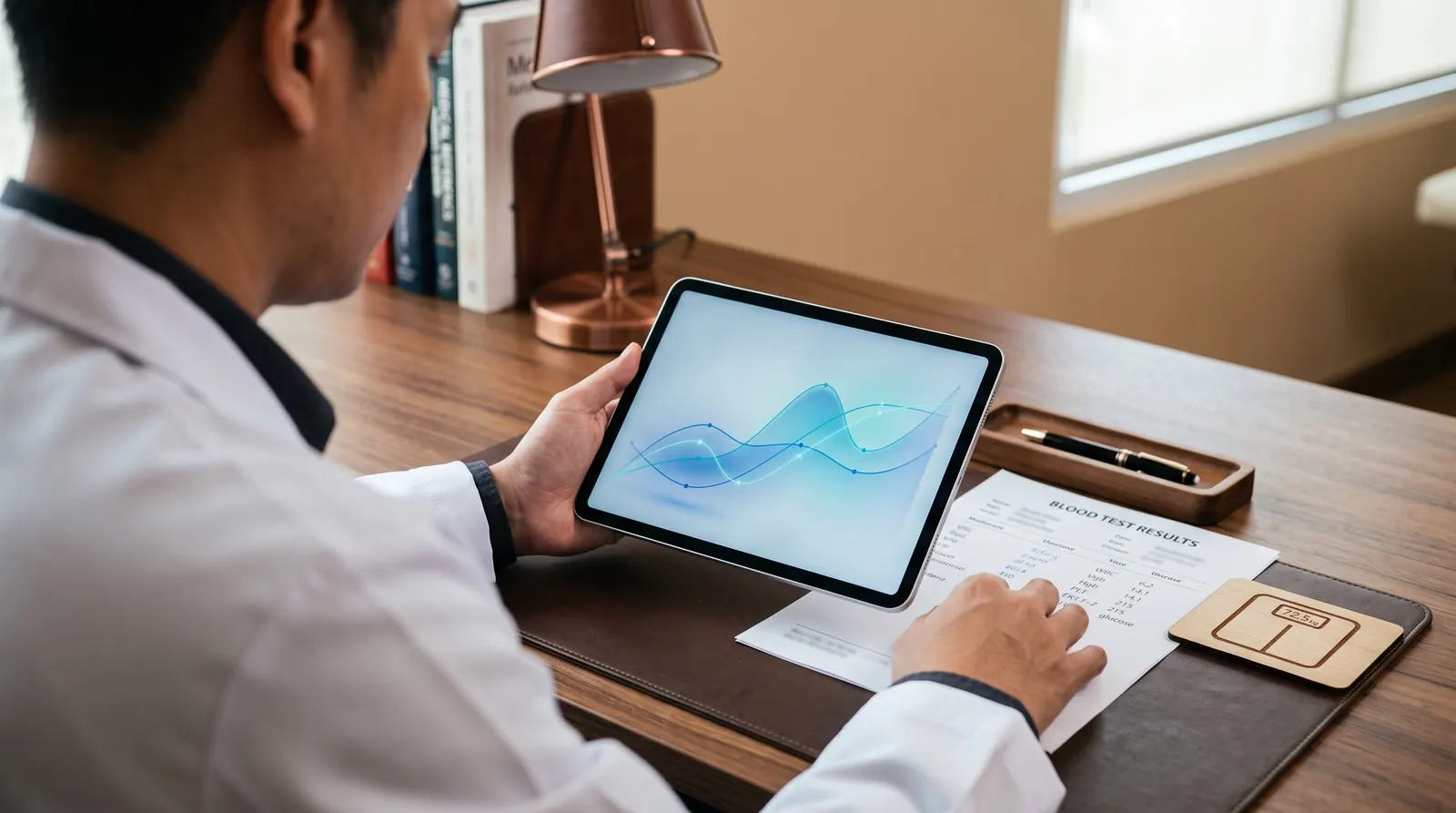
Search results for "BPC-157 dosage chart" and "BPC-157 dosage calculator" return tables built on rodent data. They look precise, but no randomized controlled trial in humans has validated any of those numbers. A 2025 systematic review of BPC-157 in orthopaedics found a single small retrospective clinical study (12 patients) among 36 included studies, and limited clinical safety data.
Healthi Life does not publish a dosing schedule. In Thailand, BPC-157 is not a registered medicine, and a dose without an examination, labs and follow-up is a guess with a number attached. The dose is written on the individual prescription after the consultation.
BPC-157 Administration Routes Compared
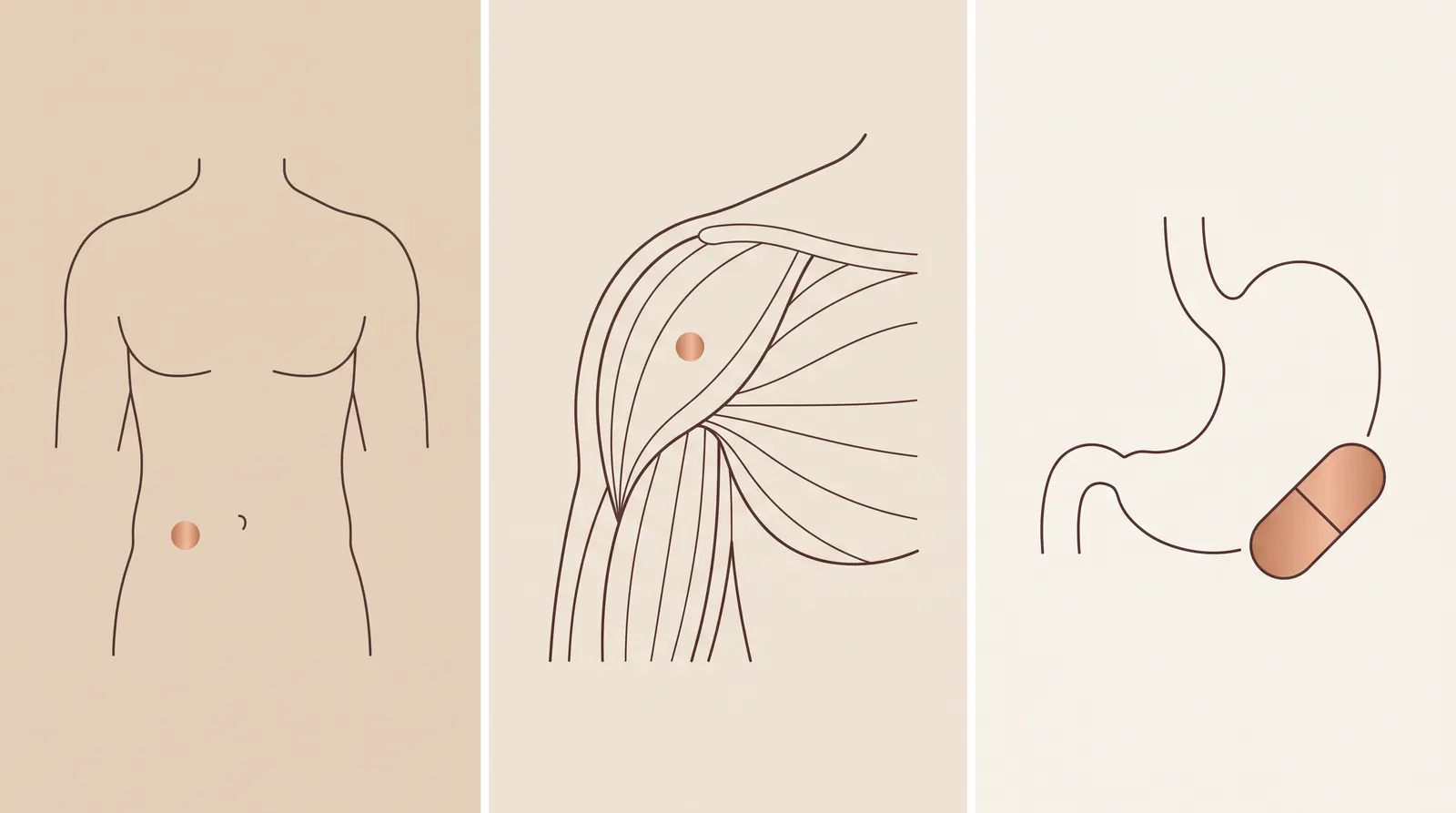
Three routes appear in the research literature. The physician chooses one from the injury location, the goal and what the person can manage safely.
| Route | How it is given | Context in research protocols | What the physician weighs |
|---|---|---|---|
| Subcutaneous injection | Under the skin, usually abdomen or thigh | Systemic or gastrointestinal goals | Injection training or clinic visits |
| Intramuscular injection | Into a muscle | Localized muscle, tendon or joint injury | Discomfort at the site |
| Oral capsule | Swallowed | Gut-focused goals, people who avoid needles | Absorption in humans not measured |
Why Oral and Injectable Doses Are Not Interchangeable
No study has compared oral and injected BPC-157 in humans, and how much of an oral dose reaches the bloodstream in people has not been measured. A person switching routes therefore needs a new prescription, not a converted number.
How Long Does a BPC-157 Cycle Last?
No cycle length has been validated in humans. Research protocols described in the literature are framed in cycles of several weeks rather than continuous use. Soft tissue repair is the most cited indication, based on accelerated healing observed in rodent models. Human data remain limited to case reports and small observational series.
At the end of a cycle, the physician compares symptoms and inflammatory markers such as C-reactive protein with the baseline. If they have normalized, the peptide stops. If symptoms persist and labs remain elevated, a further cycle may be considered. The long-term risk of repeated or extended use is unknown, which is why every extension requires informed consent and closer monitoring.
What Physician Supervision Includes
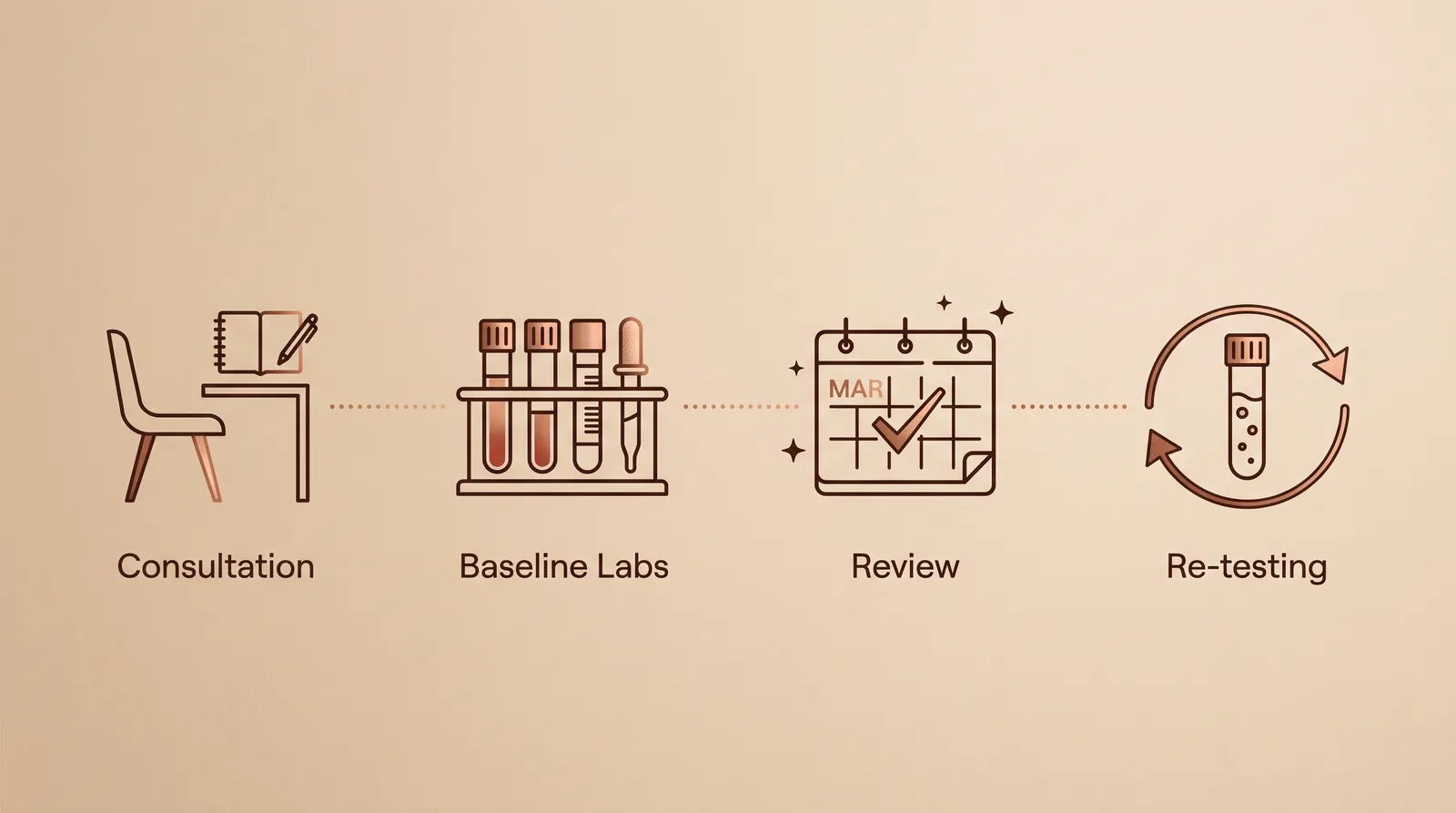
Supervision is the difference between a protocol and a forum post. It means baseline labs, a medical history review, contraindication screening and a written treatment plan.
- Consultation and medical history review
- Baseline panel: inflammatory markers, complete blood count, liver and kidney function, imaging if indicated
- Written prescription stating route and cycle length
- First administration in clinic, with preparation and storage explained
- Mid-cycle check-in
- End-of-cycle re-testing and outcome review
- Decision to continue, adjust or stop
Contraindications and Monitoring
Not every person is a candidate. Before any prescription, the physician screens the medical history, current conditions such as cancer, active infection or pregnancy, and liver and kidney function. Clinical safety data remain limited, and adverse effects cannot be ruled out. Any new symptom is reported to the physician, who decides whether to adjust or stop.
When There Is No Improvement
Not every person responds. When nothing changes, the physician reviews the route, the dose and the diagnosis itself. Some injuries are not inflammatory, and BPC-157 is then the wrong tool; the peptide is stopped rather than continued without benefit.
Storage and Handling
Lyophilized powder should be refrigerated or frozen for long-term storage. Reconstituted solution is refrigerated, protected from light and used within the period the dispensing pharmacist specifies. Freeze-thaw cycles damage the peptide structure. When refrigeration is unavailable during travel, pausing the cycle is safer than continuing with a degraded product.
Using BPC-157 With Other Therapies
BPC-157 is rarely considered on its own. For tendon and ligament injuries, physical therapy remains the foundation, and any other treatment is discussed case by case. Drug interactions are poorly studied, so every current medicine is reviewed at the consultation.
Legal and Regulatory Status
BPC-157 is not approved by the US Food and Drug Administration, the European Medicines Agency or the Thai Food and Drug Administration. The FDA lists it among bulk substances that may present significant safety risks in compounding. Products sold online without a prescription have no verified purity or sterility.
At Healthi Life, BPC-157 is only considered within physician-supervised peptide therapy, after a consultation and a biomarker review. Details of the programme are on the BPC-157 peptide therapy page.
Frequently Asked Questions
What is the standard BPC-157 dosage?
There is none. No human trial has established a BPC-157 dose for any indication. Figures circulating online are scaled from animal studies. A physician sets the dose for each person from body weight, route, goal and baseline labs.
Who decides the BPC-157 dosage for my injury?
A licensed physician, after reviewing your injury history, baseline inflammatory markers, imaging if indicated and contraindications. No peptide is dispensed without a written prescription and a treatment plan.
How long does a typical BPC-157 cycle last?
No duration has been validated in humans. Research protocols are framed in cycles of several weeks, with a mid-cycle check and re-testing at the end. The peptide stops when markers normalize and symptoms resolve, or when there is no response.
Can I adjust my dose based on how I feel?
No. Changes are made by the prescribing physician after reviewing labs and symptoms. Increasing the dose on your own raises the risk of adverse effects without any evidence of better results.
What happens if I miss a dose?
Contact the prescribing physician, who decides how the cycle continues. Do not change the schedule on your own.
BPC-157 dosage is a physician-led decision built on measurement, supervision and re-testing, not a number from a chart. Healthi Life offers physician-supervised peptide protocols in Ekkamai, Bangkok, with consultation available online and on site. This page is for information only and is not medical advice.
Every medicine named on this page is dispensed only after a medical consultation at Healthi Life and on a physician's prescription. No dosing schedule is published here; the dose is set by the prescribing physician. This page is published for transparency, not as an offer to supply.