
Cortisol Belly: What Physicians Measure and How It Responds

Cortisol belly is not a diagnosis. It is a pattern of abdominal fat linked to chronic stress and hormone dysregulation, measured through biomarkers.
Cortisol belly is a non-diagnostic term for abdominal fat that accompanies chronically elevated cortisol, the body's primary stress hormone. When the hypothalamic-pituitary-adrenal axis stays activated for months or years, the body favors visceral fat storage and insulin resistance. Physicians confirm the pattern through cortisol and metabolic biomarkers, not belly fat alone.
This page is for general information and does not constitute medical advice, diagnosis, or treatment. Results vary between individuals. GLP-1 medication (semaglutide — Ozempic, Wegovy; tirzepatide — Mounjaro) is a prescription medicine, dispensed and administered only after assessment by a licensed physician. This page is medical information, not an advertisement or an offer of treatment. Every medicine and peptide listed here is dispensed only after a medical consultation at Healthi Life and on a physician's prescription. Prices are published for transparency, not as an offer to supply. Always consult a qualified physician about your condition. See our full medical disclaimer.
Cortisol belly is a term used to describe abdominal fat accumulation that accompanies chronic elevation of cortisol, the body's primary stress hormone. It is not a medical diagnosis. It is a description of a pattern seen when the hypothalamic-pituitary-adrenal axis remains activated for months or years, shifting how and where the body stores energy. The mechanism is well documented. Prolonged cortisol exposure promotes visceral adiposity, insulin resistance, and metabolic dysfunction. The question is not whether the connection exists. The question is whether a given person's abdominal fat is driven by cortisol dysregulation, and if so, what the appropriate intervention is. That determination requires measurement, interpretation by a physician, and a protocol built on data rather than assumption.
What Cortisol Does in the Body
Cortisol is secreted by the adrenal glands in response to signals from the hypothalamus and pituitary. Its role is to mobilize energy during stress. It raises blood glucose, suppresses immune activity, and redistributes fat stores to ensure survival during acute threat. This response is adaptive when brief. It becomes pathological when sustained. This guide is published by the Healthi Life longevity clinic in Bangkok.
Chronic stress keeps cortisol elevated beyond the normal diurnal rhythm. Morning peaks flatten. Nighttime troughs disappear. The body interprets this as ongoing scarcity or danger and adjusts accordingly.

Metabolic Effects of Prolonged Cortisol Elevation
Cortisol increases hepatic glucose production and reduces insulin sensitivity in peripheral tissues. Muscle and fat cells respond less effectively to insulin, forcing the pancreas to produce more. Over time, this cycle drives hyperinsulinemia and promotes fat storage, particularly in visceral depots.
Visceral fat is metabolically active. It releases inflammatory cytokines and free fatty acids into portal circulation, worsening insulin resistance and hepatic lipid accumulation. The result is a self-reinforcing loop: stress raises cortisol, cortisol drives visceral fat, visceral fat worsens metabolic health, and metabolic dysfunction amplifies stress.
The link between cortisol and central adiposity is supported by decades of research. Patients with Cushing syndrome, a condition of pathological cortisol excess, present with severe truncal obesity, glucose intolerance, and hypertension. The pattern seen in cortisol belly is a milder, chronic version of the same dysregulation.
How Cortisol Belly Develops
Cortisol belly develops when cortisol remains elevated due to chronic psychological stress, sleep deprivation, poor nutrition, overtraining, or a combination of these factors. The fat accumulates preferentially around the abdomen, particularly in the visceral compartment, rather than subcutaneous deposits in the limbs or hips.
Several mechanisms explain this distribution:
- Glucocorticoid receptor density: Visceral adipocytes express more cortisol receptors than subcutaneous fat cells, making them more responsive to cortisol signaling.
- Lipoprotein lipase activity: Cortisol upregulates this enzyme in abdominal fat, increasing triglyceride uptake and storage.
- Insulin interaction: Elevated cortisol and insulin together promote lipogenesis in visceral depots more than either hormone alone.
- Sympathetic tone: Chronic stress also activates the sympathetic nervous system, which influences fat distribution through catecholamine signaling.
The timeline varies. Some individuals develop visible cortisol belly within months of sustained stress. Others may show biomarker changes-elevated fasting glucose, higher waist-to-hip ratio, abnormal lipid panels-before significant weight gain occurs.
What Cortisol Belly Is Not
Cortisol belly is not the sole explanation for every case of abdominal obesity. Excess caloric intake, sedentary behavior, genetics, sex hormone imbalances, thyroid dysfunction, and medication side effects all contribute to fat distribution. The presence of abdominal fat does not confirm cortisol dysregulation.
A physician reviews cortisol levels, diurnal rhythm, ACTH, DHEA-S, fasting insulin, glucose, HbA1c, and inflammatory markers before attributing adiposity to cortisol. The diagnosis is based on the pattern, not the presence of belly fat alone.
Measuring Cortisol and Its Effects
Cortisol is measured in serum, saliva, urine, and hair. Each method captures a different aspect of cortisol physiology.
| Method | What It Measures | Use Case |
|---|---|---|
| Morning serum | Cortisol level at a single time point | Screening for excess or deficiency |
| Salivary curve | Diurnal rhythm (4-6 samples over 24 hrs) | Detecting flattened or disrupted rhythm |
| 24-hour urine | Total cortisol production in a day | Quantifying chronic overproduction |
| Hair cortisol | Cumulative exposure over weeks to months | Assessing long-term HPA axis activity |
The choice of test depends on the clinical question. A flattened salivary curve may indicate chronic stress even when morning serum cortisol is normal. Elevated hair cortisol correlates with prolonged stress exposure and has been validated in systematic reviews of chronic stress conditions.
Interpreting Biomarkers
Cortisol does not operate in isolation. A physician evaluates cortisol alongside insulin, glucose, lipids, inflammatory markers, and body composition data. Visceral fat is best quantified with imaging, not waist circumference alone. Insulin resistance is assessed through fasting insulin, HOMA-IR, or glucose tolerance testing.
The pattern matters. Elevated morning cortisol with normal diurnal rhythm suggests a different intervention than blunted rhythm with normal peaks. High cortisol with low DHEA-S indicates HPA imbalance that may require different support than isolated cortisol elevation.

Interventions Supported by Evidence
Cortisol belly responds to interventions that reduce chronic stress, restore circadian rhythm, improve sleep, and address insulin resistance. No single intervention reverses the pattern. The protocol is multimodal and sustained over months.
Sleep and Circadian Optimization
Sleep deprivation raises cortisol and disrupts the diurnal rhythm. Seven to nine hours of sleep, with consistent timing, is foundational. Sleep quality matters as much as duration. Fragmented sleep, even if total hours are adequate, impairs cortisol regulation.
Interventions include:
- Consistent sleep and wake times, including weekends.
- Light exposure management: bright light in the morning, dim light after sunset.
- Temperature: a cool bedroom (18-20°C) supports deeper sleep.
- Screen limitation: blue light suppression two hours before bed.
Nutrition and Macronutrient Timing
Cortisol and insulin interact to determine fat storage. Reducing refined carbohydrates and stabilizing blood glucose reduces insulin spikes and may improve cortisol regulation. The evidence supports whole foods, adequate protein, fiber, and controlled carbohydrate intake tailored to activity level.
Caloric restriction without adequate nutrient density raises cortisol further. Severe deficits or prolonged fasting in the context of chronic stress can worsen HPA dysregulation. The goal is metabolic balance, not aggressive deficit.
Micronutrient status also matters. Magnesium, vitamin D, and omega-3 fatty acids have been studied for their role in stress response and inflammation. Deficiencies are common and correctable through testing and supplementation.
Exercise: Dose and Type
Exercise is a hormetic stressor. Moderate-intensity aerobic activity and resistance training improve insulin sensitivity, reduce visceral fat, and support healthy cortisol rhythm. Overtraining without adequate recovery raises cortisol and worsens the pattern.
Recommendations include:
- Resistance training two to four sessions per week.
- Moderate-intensity aerobic activity: 150 to 300 minutes per week.
- Recovery days: active recovery, walking, or rest.
- Avoid chronic high-intensity training without adequate sleep and nutrition.
The dose is individual. A physician reviews activity level, recovery capacity, and biomarker response to adjust volume and intensity.
Stress Reduction Protocols
Chronic psychological stress activates the HPA axis independently of physical stressors. Interventions that reduce perceived stress lower cortisol and improve metabolic outcomes. The evidence for certain approaches is robust.
A 2024 meta-analysis in Nature Human Behaviour found that touch interventions reduced pain, depression and anxiety in adults. Mindfulness meditation, yoga, and breathwork also show consistent effects in controlled trials.
The intervention must be practiced regularly. A single session does not alter chronic HPA dysregulation. Daily or near-daily practice over weeks to months is required for sustained biomarker change.
Medical Interventions and Monitoring
Some cases of cortisol belly require medical intervention beyond lifestyle modification. This includes pharmacological management of insulin resistance, thyroid optimization, sex hormone replacement, or peptide protocols that support metabolic health and body composition.
When a Physician Considers Medication
A physician may prescribe metformin or GLP-1 agonists when insulin resistance is severe and lifestyle intervention alone has not improved fasting glucose or HbA1c after three to six months. These medications reduce hepatic glucose production, improve insulin sensitivity, and may reduce visceral adiposity.
Thyroid hormone replacement is indicated when TSH, free T3, or free T4 are outside optimal range. Hypothyroidism worsens cortisol dysregulation and promotes central adiposity. Correction improves metabolic rate and stress resilience.
Sex hormone optimization, particularly testosterone in men and estrogen or progesterone in women, can influence fat distribution and insulin sensitivity. Low testosterone in men correlates with increased visceral fat and insulin resistance. Replacement, when clinically indicated, may improve body composition alongside other interventions.
Peptide Protocols
Certain peptide therapies are used to support metabolic health, reduce visceral fat, and improve stress resilience. Tesamorelin, a growth hormone-releasing hormone analog, has been studied for its effect on visceral adiposity. In a trial in people with HIV-associated abdominal fat accumulation, it reduced visceral fat. Prescription and monitoring are required.
Other peptides may support recovery, sleep, or inflammation control. These are not first-line interventions. They are considered after baseline biomarkers are established and lifestyle factors are optimized. Medical weight loss programs in Bangkok may include these protocols under physician supervision.
Continuous Monitoring and Protocol Adjustment
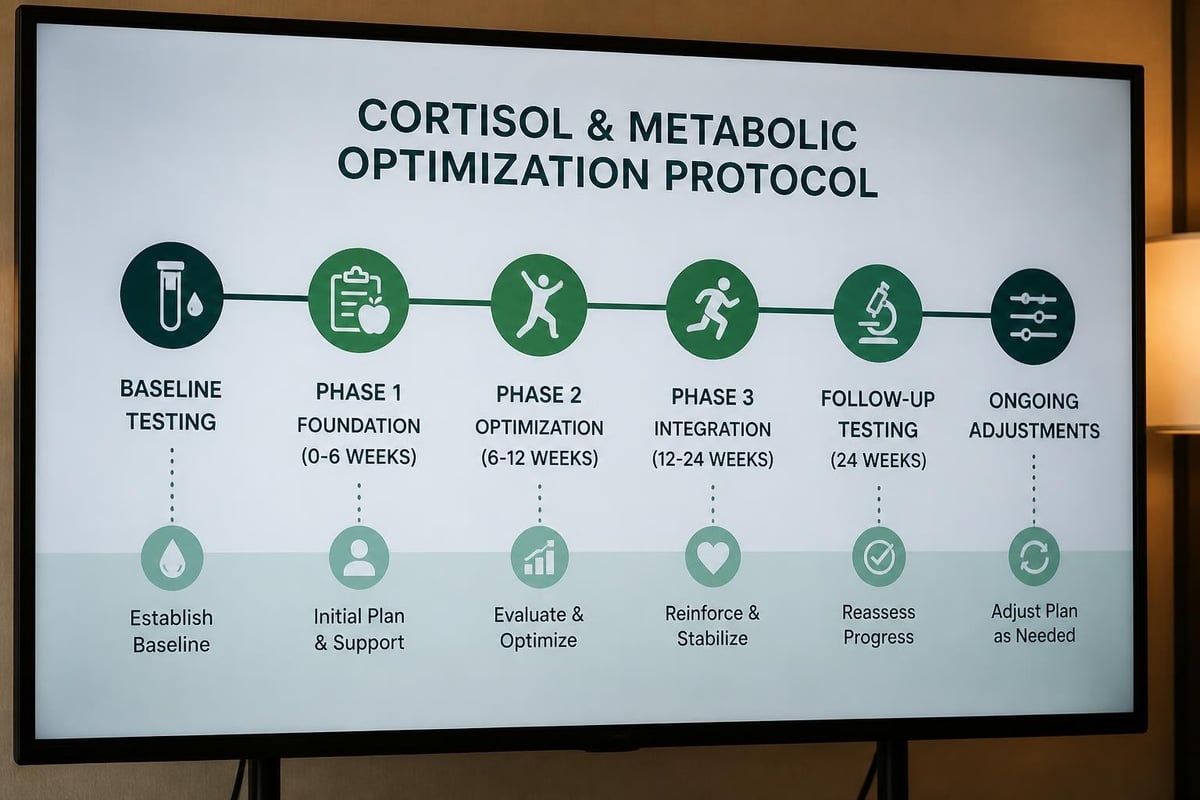
Cortisol belly does not resolve in weeks. The timeline for measurable improvement in visceral fat, insulin sensitivity, and cortisol rhythm is three to six months, often longer. Progress is tracked through repeat biomarker panels, body composition scans, and clinical assessment.
A physician reviews data at scheduled intervals: typically four, eight, and twelve weeks initially, then quarterly. Adjustments are made based on trends, not single data points. The protocol evolves as biomarkers change.
What the Evidence Shows
The relationship between chronic stress, cortisol elevation, and visceral adiposity is supported by extensive research. A review in Frontiers in Endocrinology describes how HPA-axis dysregulation drives glucocorticoid-mediated adiposity, insulin resistance, and metabolic disease. The mechanisms are well characterized at the cellular and systemic levels.
Harvard T.H. Chan School of Public Health summarizes how stress and cortisol interact with metabolism and central adiposity. The pathway from chronic stress to abdominal fat is not theoretical. It is measurable and modifiable.
What is less clear is the optimal protocol for each individual. Cortisol dysregulation presents differently depending on genetics, sex, age, baseline health, and stressor type. The intervention that works for one person may not work for another. Personalized medicine, based on biomarker data and continuous monitoring, is the standard when outcomes matter.
Who Should Pursue Testing and Intervention
Not every person with abdominal fat needs cortisol testing. Testing is appropriate when:
- Abdominal fat has increased despite stable diet and activity.
- Fatigue, poor sleep, or difficulty recovering from exercise are present.
- Fasting glucose, insulin, or HbA1c are elevated.
- Weight loss efforts have failed despite adherence.
- Other symptoms of HPA dysregulation are present: low libido, mood instability, immune dysfunction.
A physician conducts a clinical interview, reviews medical history, and orders baseline labs before recommending cortisol testing. The goal is to determine whether cortisol dysregulation is a contributing factor, and if so, to what degree.
Testing outside a clinical context, without interpretation and follow-up, has limited value. The data must be translated into a protocol. The protocol must be supervised and adjusted. That requires a physician and a commitment to ongoing monitoring.
What to Expect in a Physician-Led Program
A physician-led program begins with a diagnostic baseline. This includes bloodwork, body composition analysis, and cortisol assessment. Results are reviewed in a one-to-one consultation. The physician explains the findings, identifies contributors to cortisol belly, and outlines a protocol.
The protocol is individualized. It may include sleep optimization, nutrition planning, exercise programming, stress reduction, supplementation, and in some cases, medication or peptide therapy. Follow-up testing is scheduled at defined intervals. The physician adjusts the protocol based on biomarker response.
This approach is different from a single test or a generic wellness plan. It is continuous, data-driven, and medically supervised. The timeline is months, not weeks. The goal is sustained metabolic health, not short-term weight loss.
Cortisol belly is a pattern of visceral fat accumulation driven by chronic stress and HPA dysregulation, confirmed through biomarker testing and addressed through multimodal intervention. Progress requires measurement, physician interpretation, and a protocol adjusted over time. Healthi Life offers physician-supervised programs that measure cortisol, insulin, inflammation, and body composition, then build individualized protocols with continuous monitoring and adjustment over three to twelve months. If you are ready to measure what is happening and decide what to do about it, Healthi Life is the place to start.
This page is for information only and is not medical advice. Medical consultation and prescription are available online and on site at Healthi Life, Ekkamai, Bangkok.
Every medicine named on this page is dispensed only after a medical consultation at Healthi Life and on a physician's prescription. No dosing schedule is published here; the dose is set by the prescribing physician. This page is published for transparency, not as an offer to supply.
Frequently asked questions
What is cortisol belly?
Cortisol belly describes abdominal fat accumulation seen with chronic cortisol elevation. It is not a medical diagnosis but a pattern. Prolonged cortisol exposure promotes visceral adiposity, insulin resistance, and metabolic dysfunction, and the fat gathers around the abdomen rather than in the limbs or hips.
Why does stress cause belly fat?
Visceral fat cells carry more cortisol receptors than subcutaneous fat cells. Cortisol also raises the activity of an enzyme that increases fat uptake in abdominal tissue, and it works together with insulin to promote fat storage there. Chronic stress also activates the sympathetic nervous system, which influences fat distribution.
How do doctors test for cortisol problems?
Cortisol can be measured in serum, saliva, urine, and hair. A morning serum test is a single time point, a salivary curve shows daily rhythm, 24-hour urine shows total production, and hair cortisol shows exposure over weeks to months. A physician also reviews ACTH, DHEA-S, insulin, glucose, HbA1c, and inflammatory markers.
Does belly fat always mean high cortisol?
No. Excess calorie intake, sedentary behavior, genetics, sex hormone imbalances, thyroid dysfunction, and medication side effects all contribute to fat distribution. The presence of abdominal fat does not confirm cortisol dysregulation, so testing is appropriate only when physical signs and baseline labs point that way.
How long does it take to improve cortisol belly?
It does not resolve in weeks. Measurable improvement in visceral fat, insulin sensitivity, and cortisol rhythm takes three to six months, often longer. Progress is tracked with repeat biomarker panels and body composition scans, with physician reviews typically at four, eight, and twelve weeks and then quarterly.