
Cortisol Detox: What the Science Says | Healthi Life

Cortisol detox has become a wellness trend, but what does the science actually say? A physician-led review of cortisol testing and regulation.
Cortisol detox is not a real biological process. Cortisol is a hormone made by the adrenal glands, not a toxin, so it cannot be flushed or cleansed from the body. What can be done is to measure its daily rhythm with testing and adjust sleep, stress, training and meal timing under physician review.
This page is for general information and does not constitute medical advice, diagnosis, or treatment. Results vary between individuals. Every medicine and peptide listed here is dispensed only after a medical consultation at Healthi Life and on a physician's prescription. Prices are published for transparency, not as an offer to supply. Always consult a qualified physician about your condition. See our full medical disclaimer.
The term "cortisol detox" has saturated wellness circles in 2026. Search the phrase and you will find smoothie recipes, supplement stacks, and weekend protocols that promise to flush cortisol from your system. The biological reality is different. Cortisol is a hormone synthesized by your adrenal glands. It cannot be detoxed, flushed, or cleansed from the body any more than insulin or thyroid hormone can. What you can do is measure it, understand the pattern, and decide on interventions that influence its rhythm and magnitude. That requires testing and physician review.
What Cortisol Actually Does
Cortisol regulates glucose metabolism, immune function, blood pressure, and the stress response. The hypothalamic-pituitary-adrenal axis releases it in pulses, highest in the early morning and lowest at night. This diurnal rhythm is critical. When the pattern is disrupted, metabolic and cardiovascular risk increases. Life stress and HPA-axis activation have been shown to influence metabolic disorders, including obesity, insulin resistance, and hypertension. Healthi Life is a physician-led longevity house in Bangkok.
High cortisol at the wrong time can impair sleep, increase visceral fat, and suppress testosterone and thyroid function. Low cortisol at the wrong time can leave you fatigued, hypotensive, and vulnerable to inflammation. The goal is not zero cortisol. The goal is the right amount at the right time.
When Cortisol Is Measured
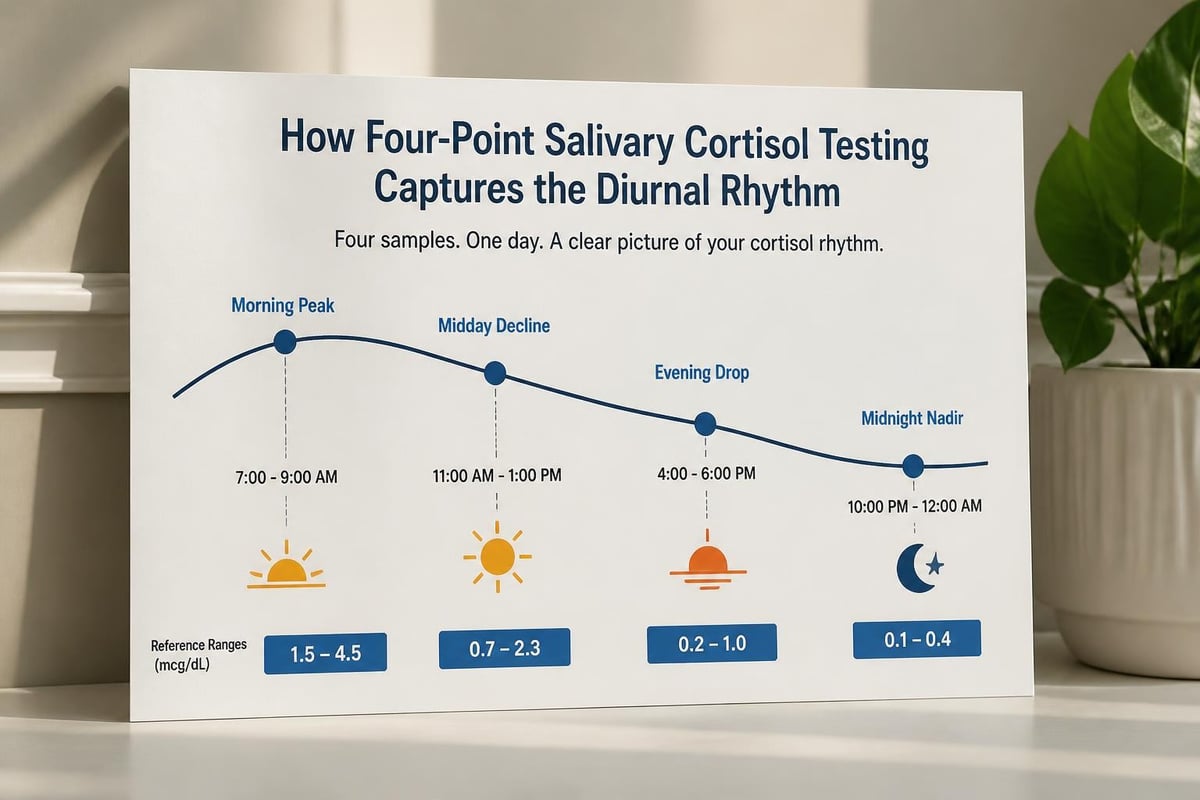
A single serum cortisol reading means little without context. The value at 8 AM should be high; the same value at midnight is pathological. Four-point salivary cortisol samples capture the diurnal curve. A 24-hour urinary free cortisol test integrates total output. Midnight salivary cortisol is used to screen for Cushing's syndrome, a condition of cortisol excess.
At a longevity clinic, cortisol is one data point among hundreds. It sits alongside glucose, insulin, inflammatory markers, sex hormones, and thyroid function. The physician reviews the pattern, not the number in isolation.
Why "Cortisol Detox" Is a Category Error
You cannot detox a hormone your body synthesizes continuously. Endocrinologists who have addressed the cortisol detox trend point out that cortisol is not a toxin but a hormone the body needs, and the liver does not filter cortisol the way it filters a xenobiotic compound. The adrenal gland makes it, the tissue uses it, and the liver metabolizes it into inactive forms that are excreted. There is no supplement or smoothie that accelerates this. There is no weekend cleanse that resets your HPA axis.
What marketers call cortisol detox is usually a collection of stress-reduction and metabolic-support interventions. Some of those interventions have evidence. Most do not. The distinction matters.
What Influences Cortisol Output
Several factors shift cortisol production and rhythm:
- Sleep: Sleep deprivation raises evening cortisol and blunts the morning peak.
- Caloric deficit: Prolonged fasting or very low calorie intake raises cortisol acutely.
- Exercise intensity: High-intensity training raises cortisol during the session; chronic overtraining raises baseline levels.
- Psychological stress: Chronic activation of the HPA axis elevates both basal and reactive cortisol.
- Inflammation: Cytokines can stimulate cortisol release; cortisol in turn modulates immune activity.
These are levers, not detox mechanisms. You adjust them based on data, not based on a protocol marketed to everyone.
Testing Cortisol: What the Data Shows
Before adjusting anything, you test. The longevity model starts with measurement. A single morning serum cortisol sample has limited utility unless you suspect acute adrenal insufficiency or Cushing's. For most people, a four-point salivary test provides the diurnal curve. Samples are collected at waking, midday, late afternoon, and before bed.
| Test Type | What It Measures | Clinical Use |
|---|---|---|
| Serum cortisol (morning) | Single-point cortisol level | Screening for adrenal insufficiency |
| Salivary cortisol (4-point) | Diurnal rhythm across the day | Chronic stress patterns, rhythm disruption |
| 24-hour urinary free cortisol | Total cortisol output | Cushing's syndrome screening |
| Midnight salivary cortisol | Late-night cortisol level | Cushing's syndrome screening |
Diagnosis and clinical management of Cushing's disease follow strict testing protocols. For subclinical patterns, the physician reviews the curve in context with sleep quality, metabolic markers, and subjective energy.
At Healthi Life, cortisol testing is part of the baseline diagnostic in the Advanced Check-Up, reviewed one-to-one with a physician who interprets it alongside glucose, insulin, lipids, thyroid, and inflammatory markers.
Interpreting the Curve
A healthy curve rises sharply upon waking, peaks within 30 minutes, then declines steadily through the day to a nadir at midnight. Deviations tell different stories.
- Flat curve: Low morning cortisol and high evening cortisol. Often seen in chronic stress, burnout, or sleep disruption.
- High baseline: Elevated cortisol throughout the day. May indicate chronic psychological stress, overtraining, or early Cushing's.
- Low baseline: Blunted cortisol across all time points. This warrants medical evaluation for adrenal insufficiency. "Adrenal fatigue" is not a recognized diagnosis and should not be used to explain this pattern.
The physician decides whether the pattern warrants intervention, further testing, or monitoring. Not every deviation requires treatment.
Interventions That Influence Cortisol
Once you have the data, you adjust inputs. The interventions fall into lifestyle, nutrition, and in some cases pharmacology or peptide protocols.
Sleep and Circadian Alignment
Sleep deprivation and circadian misalignment are the most reproducible drivers of cortisol dysregulation. One night of partial sleep raises evening cortisol and lowers morning cortisol the following day. Chronic sleep restriction flattens the diurnal curve.
The intervention is mechanical: consistent sleep schedule, light exposure in the morning, darkness after sunset, room temperature below 19°C. No supplement replaces this.

Stress Management and Autonomic Modulation
A 2023 systematic review and meta-analysis of stress-management interventions (58 studies, about 3,500 participants) found that stress-management interventions lowered cortisol compared with control conditions, with a small-to-medium effect. Mindfulness and relaxation interventions were the most effective.
The data supports:
- Daily breathwork or meditation (10 to 20 minutes)
- Moderate-intensity aerobic exercise (zone 2, 30 to 45 minutes, four times weekly)
- Resistance training with adequate recovery (not daily, not to failure every session)
- Scheduled low-intensity movement on non-training days
The physician reviews your current training load, sleep data, and subjective recovery before prescribing changes.
Nutrition and Meal Timing
Food and meal timing affect daily cortisol secretion. Prolonged fasting raises cortisol, particularly in individuals with low glycogen stores. Very low carbohydrate intake can elevate cortisol in the context of high training volume. The same review describes evening high-glycemic meals as a trigger for counter-regulatory cortisol release, and skipping breakfast as associated with a lower morning cortisol.
Practical adjustments include:
- Adequate protein intake (1.6 to 2.2 grams per kilogram body weight) to support tissue repair and satiety
- Carbohydrate timing around training to blunt exercise-induced cortisol spikes
- Magnesium and omega-3 fatty acids, which have been studied for effects on stress markers, with inconsistent results
- Avoiding chronic caloric deficit without medical supervision
A systematic review on carbohydrate intake around exercise (11 controlled trials in experienced endurance athletes) found that carbohydrate taken before and during prolonged exercise attenuated the rise in cortisol in most studies.
Peptides and Hormonal Modulation
In cases where cortisol dysregulation coexists with low testosterone, poor sleep architecture, or impaired recovery, peptide protocols may be considered. These are prescribed after diagnostic testing and physician consultation, never as a blanket intervention.
Peptides such as CJC-1295, ipamorelin, and DSIP are sometimes discussed for sleep and recovery, but none is approved for this use and human evidence that they improve cortisol rhythm is lacking.
These are medical tools, not wellness supplements. They require dosing protocols, monitoring, and review. If hormone replacement or peptide therapy is indicated, it is prescribed at a physician-led clinic. Hormone replacement therapy at Healthi Life follows this model: test, review, prescribe, monitor.
What Does Not Work
Several interventions marketed as cortisol detox have no supporting data.
- Adaptogenic herbs: Ashwagandha, rhodiola, and holy basil have small studies suggesting modest cortisol reduction. Effect sizes are inconsistent, and most trials are underpowered. They are not harmful, but they are not a replacement for sleep, training adjustment, or psychological intervention.
- Liver detox protocols: The liver metabolizes cortisol, but it does so continuously without requiring support from milk thistle, chlorophyll, or celery juice.
- Infrared sauna: Sauna use acutely raises cortisol during the session. Regular use may improve stress resilience over time, but it does not lower cortisol in the short term.
- Juice cleanses: Caloric restriction and glycogen depletion raise cortisol. A three-day juice cleanse is more likely to elevate cortisol than lower it.
The physician recommends interventions based on the diagnostic data and the individual's context, not based on trends.
Cortisol and Long-Term Health
Chronic cortisol elevation accelerates several aging pathways. It promotes visceral adiposity, insulin resistance, sarcopenia, and hippocampal atrophy. It suppresses immune surveillance and tissue repair. It shortens telomeres in some cell populations. These effects accumulate over years, not weeks.
The longevity approach is to measure cortisol as part of a multi-system baseline, adjust modifiable inputs, and re-test at scheduled intervals. This is not a detox. This is a program.
| Intervention | Cortisol Effect | Evidence Level |
|---|---|---|
| Sleep optimization | Restores diurnal rhythm | High (multiple RCTs) |
| Mindfulness/breathwork | Lowers basal cortisol | Moderate (meta-analyses) |
| Moderate aerobic exercise | May lower resting cortisol | Limited (mixed findings) |
| Carbohydrate timing | Blunts exercise-induced spike | Moderate (controlled trials) |
| Adaptogenic herbs | Small, inconsistent reduction | Low (small trials) |
| Juice cleanses | No evidence of benefit | No direct studies |
The table summarizes what is known. The physician decides what applies to you.
Cortisol in a Longevity Program
A three-month or twelve-month longevity program builds on continuous data. Cortisol is measured at baseline, reviewed with sleep metrics, metabolic markers, and subjective energy. Adjustments are made to training, sleep hygiene, and nutrition. In some cases, peptide protocols or hormone replacement are introduced. Cortisol is re-tested at scheduled intervals, and the protocol is adjusted based on the trend.
This is not a one-time fix. It is a managed system. The physician oversees the program, reviews the data, and prescribes changes. The individual follows the protocol and reports subjective outcomes. The data closes the loop.
High-net-worth individuals in Bangkok and international visitors to Thailand increasingly expect this model. They do not want a one-time check-up followed by generic advice. They want a physician who reviews their biomarkers, prescribes a protocol, and adjusts it based on repeat testing. That is the longevity house model.
What to Do Instead of Cortisol Detox
Forget the term. Measure your cortisol with a four-point salivary test or a 24-hour urinary test if indicated. Review the data with a physician who interprets it in context with your sleep, training, nutrition, and metabolic markers. Adjust the modifiable inputs: sleep schedule, training volume, meal timing, stress management. Re-test after eight to twelve weeks. If the curve improves, continue. If it does not, investigate further.
Some patterns require additional testing: pituitary MRI for suspected Cushing's, ACTH stimulation test for suspected adrenal insufficiency, or comprehensive hormone panels for coexisting endocrine dysfunction. The physician orders these tests based on clinical suspicion, not based on a checklist.
No supplement, smoothie, or weekend protocol replaces this process. The data shows what is happening. The physician decides what to do about it.
Cortisol regulation is not a detox; it is a managed system that requires measurement, interpretation, and physician-led adjustment. The data tells you where you are, and the protocol brings you to where you should be. Healthi Life operates on this principle: measure, understand, decide. This page is for information only and is not medical advice. Medical consultation and prescription are available online and on site at Healthi Life, Ekkamai, Bangkok.
Every medicine named on this page is dispensed only after a medical consultation at Healthi Life and on a physician's prescription. No dosing schedule is published here; the dose is set by the prescribing physician. This page is published for transparency, not as an offer to supply.
Frequently asked questions
Can you detox cortisol from your body?
No. Cortisol is a hormone the adrenal glands synthesize continuously, and the liver metabolizes it into inactive forms that are excreted. No supplement or smoothie accelerates this, and no weekend cleanse resets the HPA axis.
How is cortisol tested?
Common options include morning serum cortisol, a four-point salivary test across the day, a 24-hour urinary free cortisol test and midnight salivary cortisol. The salivary test captures the daily curve, while the urinary and midnight tests are used to screen for Cushing's syndrome.
What factors change cortisol levels?
Sleep deprivation raises evening cortisol and blunts the morning peak. Prolonged fasting, intense or excessive training, chronic psychological stress and inflammation also shift cortisol output and rhythm. These are levers to adjust based on data, not detox mechanisms.
Do adaptogens, juice cleanses or infrared saunas lower cortisol?
The article reports only small, inconsistent effects for ashwagandha, rhodiola and holy basil, mostly in underpowered trials. A juice cleanse is more likely to raise cortisol than lower it, and sauna use acutely raises cortisol during the session.
What does the evidence support for lowering cortisol?
Sleep optimization has the strongest support. A 2023 meta-analysis of 58 studies found stress-management interventions lowered cortisol with a small-to-medium effect, with mindfulness and relaxation most effective. Carbohydrate timing around exercise also blunted the exercise-induced rise in controlled trials.