
Cortisol Face: What It Is and What the Science Shows

Cortisol face describes facial puffiness linked to stress hormones. Learn what the research shows about cortisol, skin structure, and what to do.
Cortisol face is an informal term for facial puffiness attributed to prolonged cortisol elevation. It is not a medical diagnosis. Cortisol can promote fluid retention, reduce collagen synthesis and shift fat toward the face, but similar changes also come from Cushing syndrome, hypothyroidism, medications or high sodium intake, so testing matters.
This page is for general information and does not constitute medical advice, diagnosis, or treatment. Results vary between individuals. Every medicine and peptide listed here is dispensed only after a medical consultation at Healthi Life and on a physician's prescription. Prices are published for transparency, not as an offer to supply. Always consult a qualified physician about your condition. See our full medical disclaimer.
The phrase cortisol face appeared on social media in 2024 and spread rapidly. It describes a rounded, puffy appearance of the face attributed to chronically elevated cortisol, the primary glucocorticoid hormone. The term is new. The physiology behind it is not. Cortisol affects water retention, collagen synthesis, inflammation, and adipose distribution. When cortisol remains elevated for weeks or months, these effects become visible. The question is not whether cortisol can alter facial appearance, but how much of what people notice is cortisol and how much is something else.
What Cortisol Does in the Body
Cortisol is secreted by the adrenal cortex in response to adrenocorticotropic hormone from the pituitary. It regulates glucose metabolism, immune function, and the stress response. Secretion follows a diurnal rhythm, highest in the morning, lowest at night. Short bursts of cortisol are adaptive. Sustained elevation is not. Healthi Life is a physician-led longevity clinic in Bangkok.
Chronic stress, insufficient sleep, overtraining, and certain medical conditions keep cortisol high. When that happens, several systems shift.
Fluid Balance and Sodium Retention
Cortisol has mineralocorticoid activity. At high levels, it binds to aldosterone receptors in the kidney, promoting sodium reabsorption and water retention. The result is increased extracellular fluid volume, which can manifest as puffiness, particularly in areas with loose connective tissue such as the periorbital region and face.
This is distinct from the moon facies seen in Cushing syndrome, where cortisol levels are pathologically high. Cortisol face describes a milder, subclinical presentation.
Collagen and Skin Structure
Cortisol inhibits fibroblast proliferation and reduces type I collagen synthesis. Research in human dermal fibroblasts shows that cortisol directly suppresses collagen production in a dose-dependent manner. Over time, reduced collagen weakens dermal architecture, leading to thinning, sagging, and loss of elasticity.
The skin also produces cortisol locally. An enzyme called 11β-hydroxysteroid dehydrogenase type 1 converts inactive cortisone to active cortisol within keratinocytes and fibroblasts. This local activation can amplify systemic effects, particularly under stress or UV exposure.

Fat Distribution
Cortisol promotes lipolysis in peripheral fat and lipogenesis in central and facial depots. Chronic elevation shifts fat toward the abdomen, upper back, and face. This redistribution is mediated by glucocorticoid receptors, which are more abundant in visceral than in subcutaneous fat.
The result is a rounder facial contour, even without significant weight gain.
The Skin-Brain Axis
Psychological stress activates the hypothalamic-pituitary-adrenal axis, raising cortisol systemically. The skin responds through its own neuro-immuno-endocrine network. Stress signals increase local cortisol production, trigger mast cell degranulation, and elevate pro-inflammatory cytokines including IL-1 and TNF-α.
Inflammation disrupts the skin barrier. Water loss increases. The epidermis thickens in response, and the dermis becomes more reactive. Over weeks, this shows as dullness, redness, or a swollen appearance.
The feedback loop is bidirectional. Skin inflammation can signal back to the brain, sustaining the stress response. Breaking the cycle requires addressing both cortisol and the triggers that elevate it.
What Cortisol Face Is Not
Cortisol face is not a medical diagnosis. It does not appear in ICD-11 or clinical guidelines. The term is descriptive, not pathological.
Several conditions produce similar facial changes and should be ruled out before attributing puffiness to cortisol:
| Condition | Key Features | Diagnostic Test |
|---|---|---|
| Cushing syndrome | Moon facies, central obesity, purple striae, hypertension | 24-hour urinary free cortisol, dexamethasone suppression test |
| Hypothyroidism | Periorbital edema, dry skin, fatigue, weight gain | TSH, free T4 |
| Allergic reaction | Acute onset, itching, possible angioedema | Clinical history, IgE testing if recurrent |
| Medication effect | Corticosteroid use, certain antidepressants, calcium channel blockers | Medication review |
| High sodium intake | Generalized fluid retention, blood pressure elevation | Dietary recall, serum sodium |
A physician can distinguish between these through history, examination, and targeted testing. If cortisol is suspected, measurement should be done properly: morning serum cortisol, 24-hour urinary free cortisol, or late-night salivary cortisol. Single random cortisol levels are rarely informative.
Measuring Cortisol
Cortisol fluctuates throughout the day. A single blood draw at 2 p.m. tells you little. Proper assessment requires context.
Testing Methods
- Morning serum cortisol: Drawn between 7 and 9 a.m. Reference ranges vary by laboratory. A very low morning value suggests adrenal insufficiency, while a single morning value is not used to diagnose cortisol excess.
- 24-hour urinary free cortisol: Integrates total daily secretion. Normal is less than 50 μg/24 hours in most labs.
- Late-night salivary cortisol: Measures cortisol at its nadir. Elevation at 11 p.m. or midnight suggests loss of normal rhythm.
- Dexamethasone suppression test: Differentiates physiological from pathological hypercortisolism. A low-dose test is used to screen for Cushing syndrome.
If you suspect your cortisol is contributing to facial puffiness or other symptoms, testing should be part of a broader biomarker panel reviewed by a physician. Isolated cortisol results are difficult to interpret without TSH, inflammatory markers, glucose, and electrolytes.

What Drives Cortisol Higher
Cortisol rises for a reason. Treating the symptom without addressing the cause is ineffective.
Chronic Stress
Sustained psychological stress keeps the HPA axis activated. Deadlines, relationship conflict, financial pressure, caregiving, and perfectionism all contribute. The stress does not need to feel extreme. Moderate, unrelenting pressure is enough.
Sleep Disruption
Sleep loss blunts the normal cortisol decline at night and raises the morning surge. Even partial sleep restriction over several nights elevates 24-hour cortisol. Shift work, late screens, and poor sleep hygiene all contribute.
Overtraining
Exercise is a stressor. In the right dose, it is beneficial. Too much volume, too little recovery, and cortisol stays elevated. Overtraining syndrome is marked by persistent fatigue and impaired performance; hormonal findings, including cortisol, are inconsistent across studies.
Blood Sugar Instability
Hypoglycemia triggers cortisol release as a counter-regulatory response. Skipping meals, low-carbohydrate diets, or reactive hypoglycemia after high-glycemic meals can create repeated cortisol spikes throughout the day.
Inflammation
Chronic low-grade inflammation from gut dysbiosis, autoimmune conditions, or metabolic dysfunction stimulates the HPA axis. Elevated IL-6 and TNF-α signal the brain to produce more cortisol.
Interventions That Work
Reducing cortisol requires lifestyle change, not supplements marketed for stress. The evidence base is clearest for the following.
Sleep Optimization
Seven to nine hours of sleep per night in a dark, cool room. Consistent sleep and wake times, even on weekends. No screens one hour before bed. If sleep is disrupted by anxiety or rumination, cognitive behavioral therapy for insomnia is recommended as first-line treatment by the American College of Physicians.
Stress Management Techniques
Mindfulness-based stress reduction, progressive muscle relaxation, and controlled breathing can lower cortisol. A meta-analysis of 58 studies found a small-to-medium effect, with mindfulness and relaxation approaches the most effective.
Nutrition
High-sugar, high-refined-carbohydrate diets exaggerate glucose swings and cortisol release. A moderate-protein, whole-food diet with adequate fat and fiber stabilizes blood sugar and reduces HPA activation. Supplements such as magnesium, omega-3 fatty acids, or vitamin D have not been shown to correct high cortisol.
Exercise Volume and Recovery
Moderate aerobic exercise lowers resting cortisol. High-intensity or long-duration training without adequate recovery raises it. If you train hard, you need rest days, sleep, and sufficient calories. Monitoring heart rate variability can identify when recovery is incomplete.
Topical and Local Strategies
The skin expresses 11β-HSD1, the enzyme that activates cortisol locally. Inhibiting this enzyme reduces local cortisol and may improve dermal collagen synthesis. Some topical formulations target this pathway, though clinical evidence in humans is still developing.
Retinoids increase collagen production and counteract some of cortisol's inhibitory effects on fibroblasts. Niacinamide supports barrier function and reduces inflammation. These do not lower systemic cortisol, but they may mitigate skin-level damage.
Facial massage and lymphatic drainage can temporarily reduce puffiness by promoting fluid clearance. The effect lasts hours, not days.
When to See a Physician
If facial puffiness appears suddenly, worsens rapidly, or occurs with other symptoms-weight gain, hypertension, purple striae, easy bruising, muscle weakness-evaluation for Cushing syndrome is necessary. This condition is rare but serious.
If puffiness is gradual and linked to lifestyle, testing cortisol as part of a broader workup is reasonable. A physician will interpret cortisol in context with TSH, HbA1c, CRP, and electrolytes. Healthi Life's advanced check-up includes biomarker panels and imaging reviewed one-to-one with a physician, who turns the data into a written protocol.
Cortisol is one variable among many. Managing it effectively requires seeing the full picture.
What the Research Shows
Cortisol's effects on skin are mediated through multiple pathways: direct receptor binding, inflammatory signaling, and local enzymatic activation. The visible outcome depends on cortisol level, duration of exposure, genetic factors, and concurrent stressors like UV radiation or poor diet.
Studies confirm that cortisol reduces collagen synthesis, increases skin permeability, and promotes subcutaneous fat deposition. What is less clear is the threshold at which these effects become cosmetically noticeable in healthy individuals. Most research has been conducted in disease states or with pharmacological doses of corticosteroids.
The term cortisol face captures something real. Whether it is clinically significant in most cases is another question.
Cortisol and Aging
Chronic stress has been linked to markers of biological aging. A review in Nature Reviews Endocrinology notes that, in rodents, stress affects metabolic dysfunction and aging processes such as cellular senescence and telomere shortening. Skin aging is one visible marker of a broader systemic process.
Interventions that lower cortisol-sleep, stress management, exercise balance-also improve healthspan. The goal is not a perfect cortisol level. It is a rhythm that matches your biology and supports long-term function.
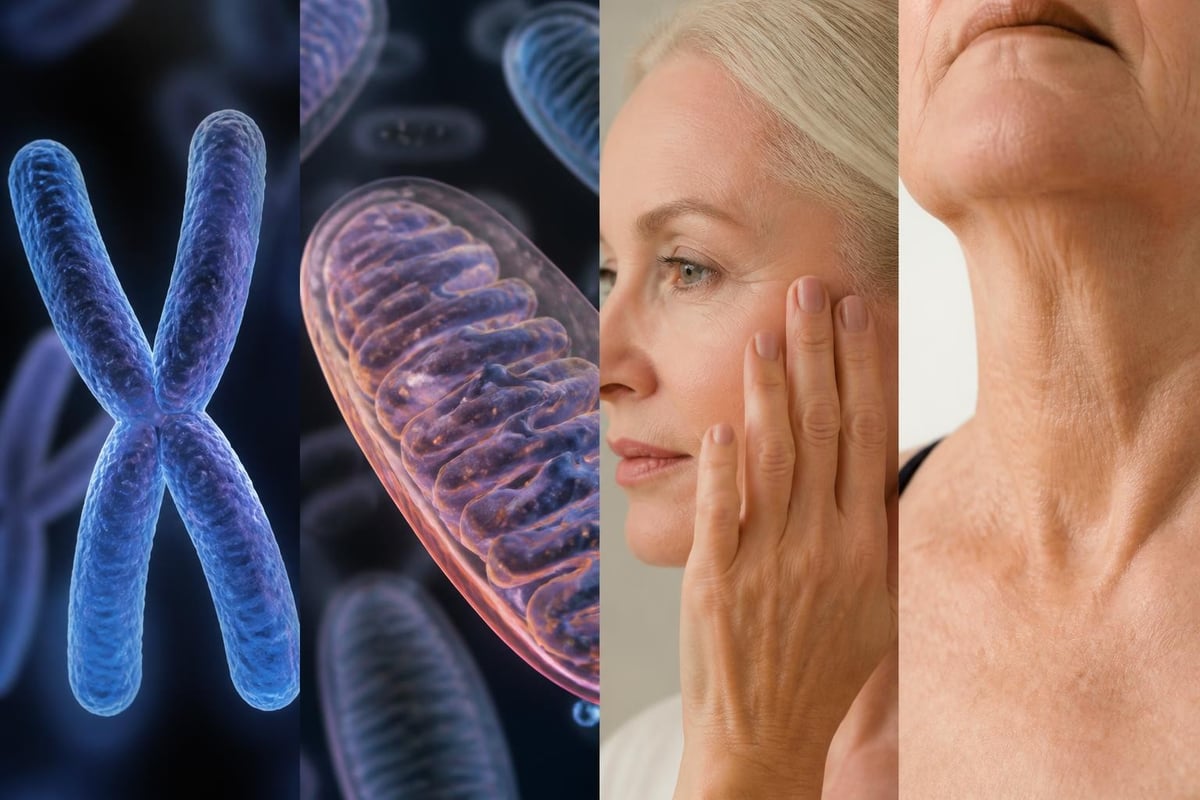
Cortisol face describes a real physiological process: prolonged cortisol elevation leading to fluid retention, collagen loss, and fat redistribution in the face. The term is informal, but the biology is documented. Management begins with measurement-testing cortisol in context with other biomarkers-and continues with targeted lifestyle change overseen by a physician. Healthi Life offers physician-led programs built on up to 300 biomarkers, reviewed one-to-one at the house in Ekkamai, Bangkok, for residents and international visitors who want their health managed continuously.
This page is for information only and is not medical advice. Medical consultation and prescription are available online and on site at Healthi Life, Ekkamai, Bangkok.
Frequently asked questions
What is cortisol face?
Cortisol face describes a rounded, puffy facial appearance attributed to chronically elevated cortisol. The term spread on social media in 2024. It is descriptive, not a diagnosis, and it does not appear in ICD-11 or medical guidelines.
How does cortisol change the face?
At high levels, cortisol promotes sodium and water retention, suppresses type I collagen synthesis in dermal fibroblasts and shifts fat toward central and facial depots. Together these can produce puffiness, thinner skin and a rounder contour, even without major weight gain.
Is cortisol face the same as Cushing syndrome?
No. Moon facies in Cushing syndrome reflects pathologically high cortisol, along with central obesity, purple striae and hypertension. Cortisol face describes a milder, subclinical presentation. Sudden or rapidly worsening puffiness with those symptoms warrants evaluation for Cushing syndrome.
What else can cause a puffy face?
Hypothyroidism, allergic reactions, medication effects such as corticosteroids, certain antidepressants or calcium channel blockers, and high sodium intake can all cause facial puffiness. A physician can tell these apart through history, examination and targeted testing such as TSH.
How can cortisol be reduced?
The article points to sleep of seven to nine hours, stress-management techniques, a stable whole-food diet and balanced exercise with adequate recovery. A meta-analysis of 58 studies found mindfulness and relaxation approaches lowered cortisol with a small-to-medium effect.