
Deep Sleep: What It Is and Why It Matters in 2026
Deep sleep is the stage when your body repairs tissue, consolidates memory, and clears metabolic waste. Learn what it is and how to measure it.
Deep sleep, also called stage N3 or slow-wave sleep, is the stage when the body repairs tissue, consolidates memory, and clears metabolic waste from the brain. Most adults spend 13 to 23 percent of total sleep time in it, roughly 60 to 110 minutes for someone sleeping seven to eight hours.
This page is for general information and does not constitute medical advice, diagnosis, or treatment. Results vary between individuals. Every medicine and peptide listed here is dispensed only after a medical consultation at Healthi Life and on a physician's prescription. Prices are published for transparency, not as an offer to supply. Always consult a qualified physician about your condition. See our full medical disclaimer.
Your body does most of its housekeeping at night. During deep sleep, tissue repairs itself, metabolic waste clears from the brain, and memories move from short-term storage into long-term archives. This is not restorative time spent resting. This is physiological work that cannot happen while you are awake. The quantity and quality of deep sleep you get each night is measurable, and those measurements correlate with cognitive performance, immune function, and metabolic health over time.
What Deep Sleep Is
Sleep is not a single state. It divides into stages that cycle every 90 to 120 minutes throughout the night. This guide is published by the Healthi Life longevity clinic in Bangkok.
Deep sleep is stage N3, also called slow-wave sleep. The stages of sleep move from light (N1 and N2) to deep (N3) to rapid eye movement (REM). During N3, your brain produces large, slow delta waves at a frequency of 0.5 to 2 Hz. Heart rate and breathing slow. Core body temperature drops. Blood pressure falls.
This is when growth hormone pulses into the bloodstream. Tissue repairs. Immune cells circulate and consolidate adaptive responses. The glymphatic system flushes metabolic byproducts from the brain's interstitial space.
How Much Deep Sleep You Need
Most adults spend 13 to 23 percent of total sleep time in deep sleep. That translates to roughly 60 to 110 minutes per night for someone sleeping seven to eight hours.
The percentage declines with age, as shown in a meta-analysis of sleep across the lifespan. A 25-year-old may spend 20 percent of the night in N3. A 65-year-old may spend 10 percent. This is not preference. It is structural change in the brain's capacity to generate slow waves.
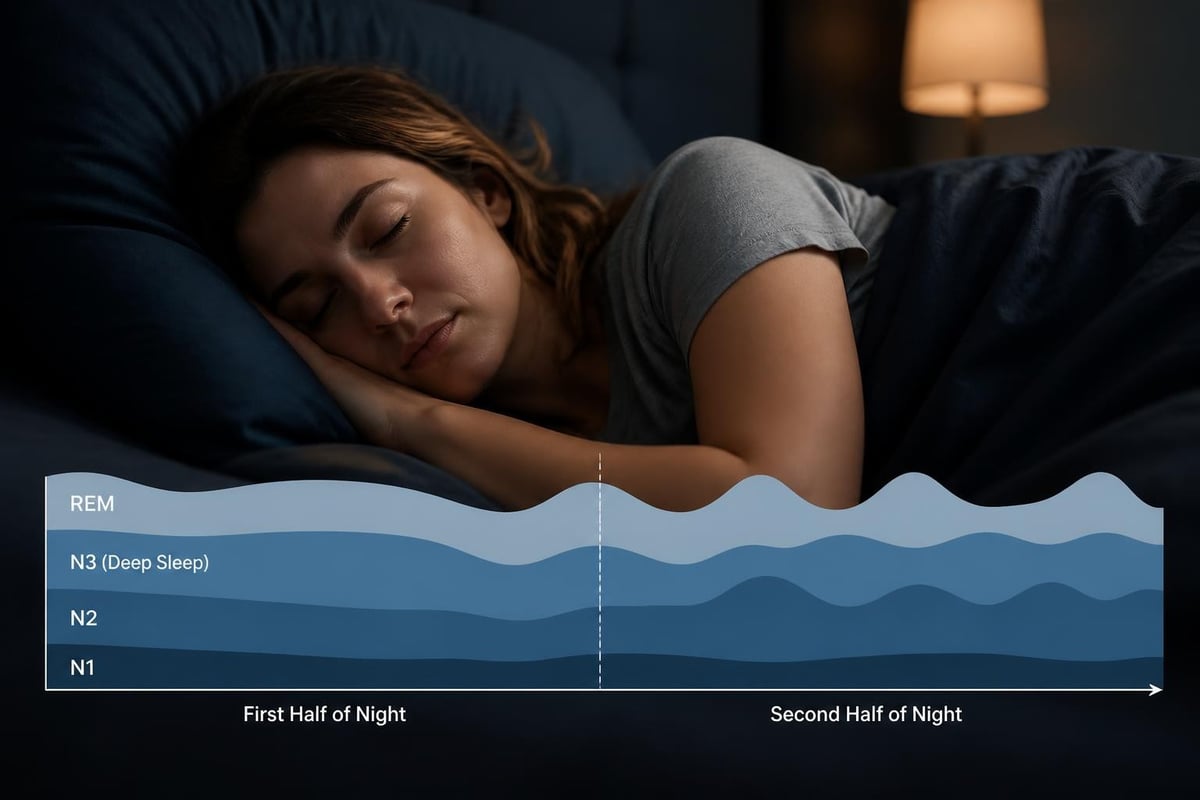
These are population averages. Individual variation exists. The physician decides whether your number matters by reviewing it alongside other biomarkers and symptoms.
Why Deep Sleep Matters
Deep sleep is not optional recovery time. It is when the body performs tasks that must happen in a low-activity metabolic state.
Memory Consolidation
During deep sleep, the hippocampus replays recent activity and transfers information to the cortex for long-term storage. This is not metaphor. Researchers have measured the synchrony between hippocampal and prefrontal regions during slow waves and shown that augmenting this synchrony improves memory consolidation.
Declarative memory-facts, events, spatial information-depends on this transfer. Disrupted deep sleep correlates with impaired recall the next day and with poorer memory formation over months.
Cellular Repair and Immune Function
Growth hormone secretion peaks during the first deep sleep cycle. This hormone drives protein synthesis, tissue repair, and muscle recovery. It also regulates fat metabolism and glucose homeostasis.
Immune memory consolidates during deep sleep. Research suggests slow-wave sleep supports the formation of immune memory. Short sleep has been associated with weaker antibody responses to vaccination.
Metabolic Health
Deep sleep regulates insulin sensitivity. Even one night of partial sleep deprivation reduces glucose tolerance the following day. Experimental suppression of slow-wave sleep reduces insulin sensitivity in healthy adults.
The glymphatic system clears beta-amyloid and tau proteins from the brain during deep sleep. In a PET study of older adults, greater amyloid burden was associated with diminished slow-wave activity.
What Disrupts Deep Sleep
Several factors reduce the quantity or quality of deep sleep. Some are modifiable. Some require medical management.
Age
Slow-wave activity declines with age due to changes in the thalamocortical network. Older adults generate fewer and smaller slow waves. This is structural, not behavioral. No lifestyle intervention fully reverses it.
Alcohol
Alcohol delays REM sleep and fragments the second half of the night. A review of studies in healthy volunteers found that it tends to increase slow-wave sleep in the first half of the night, but overall sleep is more disrupted.
Sleep Apnea
Obstructive sleep apnea fragments sleep with repeated arousals. These arousals prevent progression into or maintenance of deep sleep. The total time in N3 may appear normal on a sleep study, but the continuity is broken. Treatment with continuous positive airway pressure restores slow-wave continuity in most cases.
Medications
Benzodiazepines and related hypnotics increase total sleep time but reduce slow-wave amplitude and alter sleep architecture. The patient feels sedated but does not achieve restorative deep sleep. This is a trade physicians evaluate when prescribing sleep aids.
Stress and Cortisol
Elevated evening cortisol delays sleep onset and reduces time in deep sleep. Chronic stress shifts the cortisol curve, blunting the normal nighttime decline. Managing cortisol through behavioral, hormonal, or pharmacologic means often improves deep sleep as a secondary outcome. For more on cortisol regulation, see how to reduce cortisol.
How Deep Sleep Is Measured
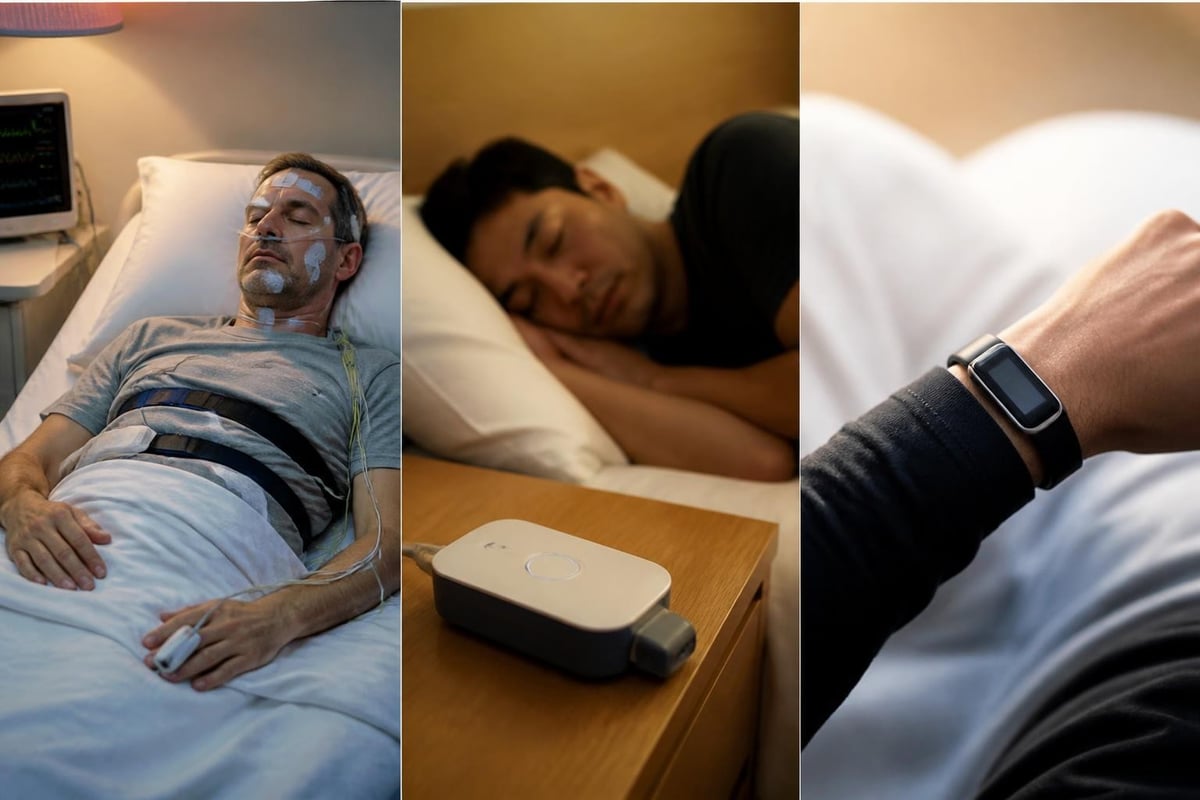
Deep sleep is defined by EEG waveforms. The gold standard is polysomnography (PSG) in a sleep laboratory. Electrodes on the scalp record brain activity. A technician scores the recording by hand, classifying each 30-second epoch as wake, N1, N2, N3, or REM according to standardized criteria.
Home Sleep Tests
Consumer wearables estimate deep sleep using heart rate variability, movement, and sometimes SpO2. These devices do not record EEG. They infer sleep stages from autonomic patterns. Accuracy varies by device and by individual.
Validation studies show that wearables are less accurate for deep sleep than for total sleep time. They can be useful for tracking trends. It is not diagnostic.
Neuroimaging
Researchers use functional MRI, PET, and EEG-fMRI to study the neuroimaging of sleep architecture. These methods reveal which brain regions activate or deactivate during slow waves, how neurotransmitter systems change, and how glymphatic flow accelerates. This is research-grade imaging. It is not part of routine clinical care.
How to Increase Deep Sleep
Most interventions target sleep hygiene, circadian alignment, and removal of disruptors. Effects on deep sleep are generally small. Expecting to double slow-wave time through behavioral change alone is not realistic.
Temperature
Core body temperature must drop for deep sleep to begin. A cool bedroom-16 to 19 degrees Celsius-facilitates this. A hot bath 90 minutes before bed raises core temperature temporarily, then triggers a compensatory drop that aligns with sleep onset.
Light Exposure
Morning bright light anchors the circadian rhythm and improves sleep architecture at night. Evening blue light delays melatonin secretion and shifts sleep onset later. Blocking blue wavelengths after sunset increases total sleep time and, in some studies, increases deep sleep percentage.
Exercise
A single session of exercise produces a small increase in slow-wave sleep the same night, according to a meta-analysis of 66 studies.
Timing matters. A meta-analysis of evening exercise found no overall harm to sleep, although vigorous exercise ending one hour or less before bedtime may impair sleep onset.
Nutrition and Supplements
High glycemic index meals close to bedtime reduce deep sleep. Protein-rich dinners, particularly those high in tryptophan, support serotonin and melatonin synthesis. Magnesium supplementation (300 to 500 mg of elemental magnesium) improves subjective sleep quality and, in some trials, increases deep sleep duration.
Glycine (3 grams before bed) was tested in a small 2007 study that found shorter time to fall asleep and to reach slow-wave sleep, without a change in overall sleep architecture. Larger trials are lacking.
Peptides and Pharmacology
Certain peptides influence sleep architecture. Growth hormone secretagogues such as ipamorelin and CJC-1295 increase endogenous growth hormone pulses, which occur during deep sleep. Whether this increases slow-wave duration or merely amplifies the hormonal response during existing N3 is still debated. For peptide protocols that support recovery and sleep, see peptides for recovery and sleep.
Orexin antagonists (suvorexant, lemborexant) promote sleep without suppressing slow waves as benzodiazepines do. These are prescription medications. The physician prescribes them after reviewing sleep study data and ruling out apnea or other primary sleep disorders.
Deep Sleep in Longevity Programs
Deep sleep is one component of a broader metabolic and neurological assessment. It does not stand alone. A longevity physician evaluates deep sleep duration alongside HbA1c, fasting insulin, inflammatory markers, cortisol rhythm, and cognitive testing.
If deep sleep is reduced and the patient reports fatigue, poor recovery, or memory complaints, the physician investigates. Possible causes include sleep apnea, medication side effects, circadian misalignment, or an underlying endocrine disorder. The investigation begins with a sleep study, often supplemented by continuous glucose monitoring, salivary cortisol sampling, and thyroid function tests.
When deep sleep is optimized, other interventions-peptides, exercise protocols, cognitive training-produce better outcomes. When it is impaired, those same interventions underperform. This is why longevity programs built on continuous biomarker monitoring include sleep as a core metric.
Practical Recommendations
Here is what a physician might recommend after reviewing a sleep study showing reduced deep sleep:
- Confirm the finding. Repeat the test or use a validated wearable for two weeks to establish a baseline.
- Rule out apnea. Home sleep apnea testing or in-lab PSG with oximetry and airflow monitoring.
- Review medications. Adjust or discontinue drugs that suppress slow waves.
- Stabilize the circadian rhythm. Fixed wake time, morning light, evening dim light.
- Address cortisol dysregulation. Test 4-point salivary cortisol; adjust if evening levels are elevated.
- Trial a supplement. Magnesium glycinate 400 mg, glycine 3 g, or both.
- Re-test in 8 to 12 weeks. Measure again to confirm improvement.
This is not a protocol handed to every patient. It is built from the individual's data.
Who Should Measure Deep Sleep
Not everyone needs a sleep study. If you wake rested, perform well cognitively, recover from exercise, and maintain stable weight and metabolic markers, deep sleep is probably adequate. Measuring it adds no actionable information.
Measurement is warranted when symptoms suggest a problem: unrefreshing sleep, daytime fatigue despite adequate time in bed, memory lapses, slow recovery, or biomarkers that suggest metabolic or immune dysfunction without an obvious cause.
High-net-worth individuals managing health as a long-term program often choose to measure deep sleep as part of a baseline diagnostic. The data informs decisions about peptides, cognitive protocols, and recovery strategies. The advanced check-up at Healthi Life includes options for sleep architecture analysis, reviewed by a physician who interprets the result in the context of the full biomarker panel.
The test itself is not the intervention. The decision that follows the test is.
Deep sleep is a measurable physiological state with known effects on memory, metabolism, and cellular repair. Optimizing it requires understanding what disrupts it, testing to confirm the disruption, and applying targeted interventions under medical supervision. Healthi Life offers physician-led longevity programs in Bangkok that include sleep architecture analysis as part of a comprehensive biomarker assessment, with ongoing adjustment based on re-testing. Visit Healthi Life to begin a diagnostic baseline and build a plan that fits your health goals.
This page is for information only and is not medical advice. Medical consultation and prescription are available online and on site at Healthi Life, Ekkamai, Bangkok.
Every medicine named on this page is dispensed only after a medical consultation at Healthi Life and on a physician's prescription. No dosing schedule is published here; the dose is set by the prescribing physician. This page is published for transparency, not as an offer to supply.
Frequently asked questions
How much deep sleep do you need?
Most adults spend 13 to 23 percent of total sleep time in deep sleep, roughly 60 to 110 minutes per night for seven to eight hours of sleep. These are population averages, and the percentage declines with age, so a physician reads your number alongside other biomarkers.
What happens during deep sleep?
The brain produces large, slow delta waves while heart rate, breathing, and core temperature drop. Growth hormone is released, tissue repairs, memories move from short-term to long-term storage, and the glymphatic system flushes metabolic byproducts from the brain.
What disrupts deep sleep?
Age, alcohol, sleep apnea, certain medications such as benzodiazepines, and elevated evening cortisol all reduce the quantity or quality of deep sleep. Age-related decline is structural, while apnea, medications, and stress are factors a physician can evaluate.
How can you increase deep sleep?
Effects are generally small. Helpful steps include a cool bedroom at 16 to 19 degrees Celsius, morning bright light, reduced evening blue light, regular exercise, and avoiding high glycemic meals near bedtime. Magnesium and glycine have been tested, and a physician can guide supplements.
How is deep sleep measured?
The gold standard is polysomnography in a sleep laboratory, where brain activity is recorded and scored in 30-second epochs. Consumer wearables infer sleep stages from heart rate variability and movement, so they are less accurate for deep sleep and are best used for tracking trends.