
HRV: What Heart Rate Variability Tells Your Physician
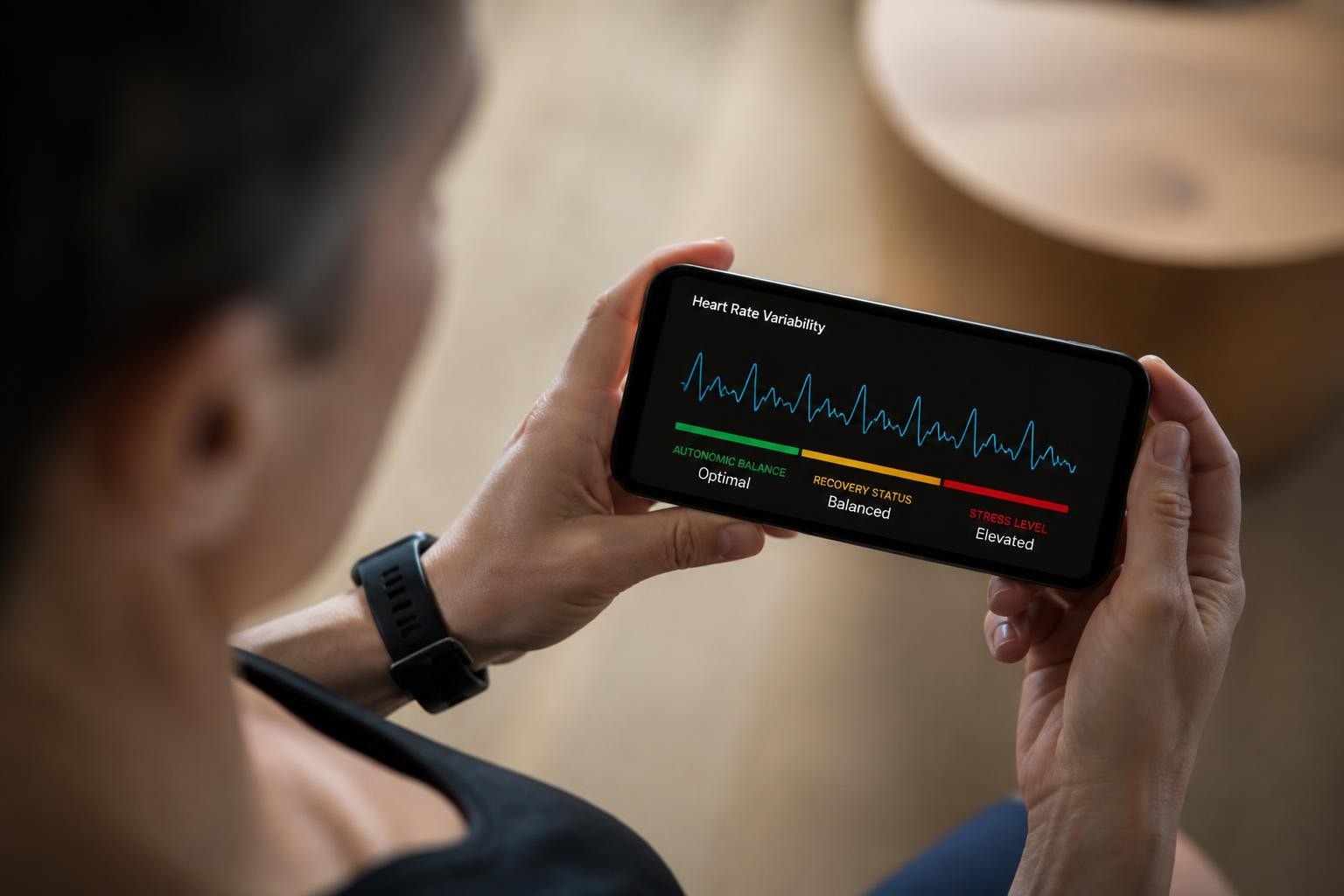
HRV measures beat-to-beat interval changes, revealing autonomic function. Physicians use HRV data to assess recovery, stress load, and readiness.
This page is for general information and does not constitute medical advice, diagnosis, or treatment. Results vary between individuals. Every medicine and peptide listed here is dispensed only after a medical consultation at Healthi Life and on a physician's prescription. Prices are published for transparency, not as an offer to supply. Always consult a qualified physician about your condition. See our full medical disclaimer.
Heart rate variability measures the time difference between each heartbeat. High variability signals a responsive autonomic nervous system. Low variability indicates stress, incomplete recovery, or autonomic dysfunction. A physician interprets HRV alongside biomarkers, symptoms, and context. The number alone does not diagnose, but the trend guides intervention.
What HRV Measures
HRV quantifies the interval between R-peaks on an electrocardiogram, recorded in milliseconds.
The autonomic nervous system controls these intervals. Parasympathetic activation increases variability. Sympathetic activation decreases it. The balance shifts continuously in response to respiration, posture, digestion, stress, and circadian rhythm.
Several metrics exist:
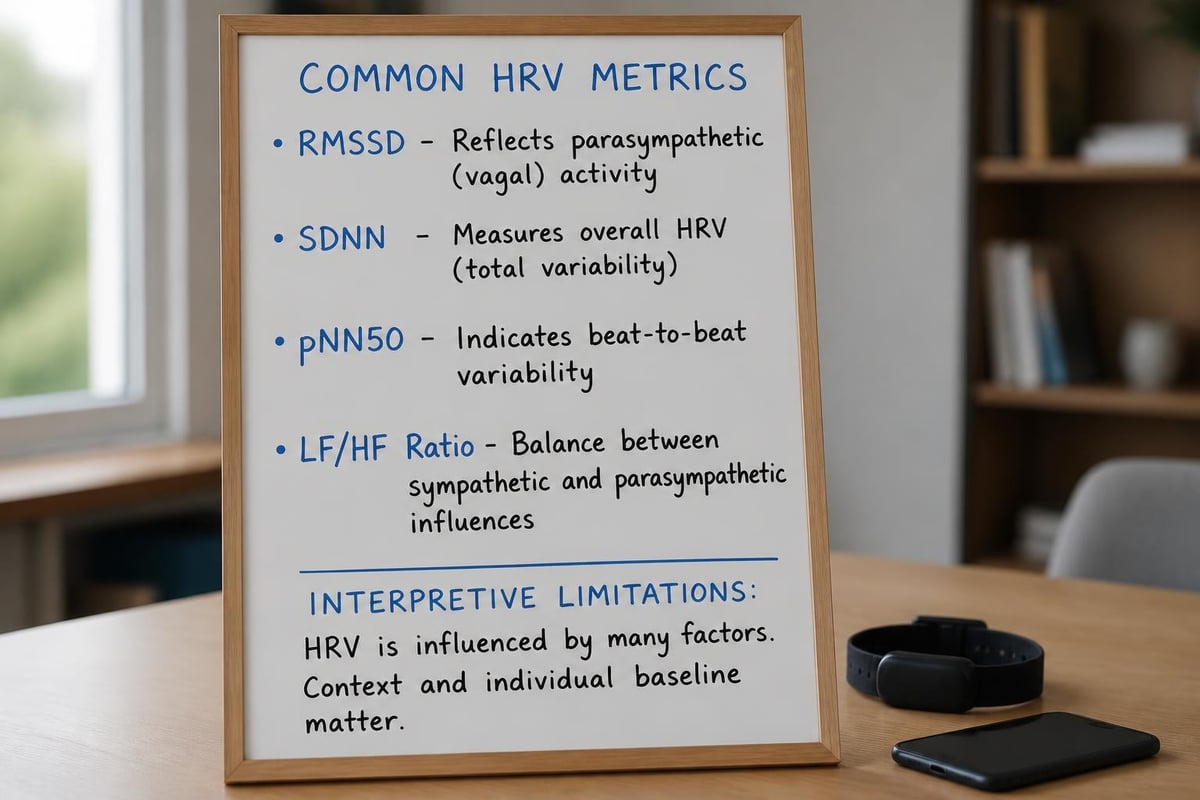
- RMSSD: Root mean square of successive differences between beats. Reflects short-term, parasympathetic-mediated variability.
- SDNN: Standard deviation of all intervals. Reflects total variability across the recording period.
- pNN50: Percentage of intervals differing by more than 50 milliseconds. Another short-term parasympathetic marker.
- LF/HF ratio: Low-frequency to high-frequency power ratio. Previously thought to indicate sympathovagal balance; interpretation is now debated.
Devices measure HRV using chest straps, finger sensors, or wrist-worn photoplethysmography. Chest straps deliver the most accurate R-peak detection. Wrist devices introduce artifact, particularly during movement. Kubios software processes raw data, applies artifact correction, and calculates validated metrics used in research and clinical settings.
Recording duration matters. A five-minute morning measurement captures resting parasympathetic tone. A 24-hour Holter recording captures circadian patterns and total autonomic load. The physician selects the method based on the clinical question.
Why Physicians Track HRV
HRV provides a window into autonomic function without invasive testing.
Autonomic dysfunction appears in cardiovascular disease, metabolic syndrome, chronic stress, and neurodegenerative conditions. It precedes clinical symptoms. A declining HRV trend, measured over weeks, may prompt further investigation: cortisol panels, fasting glucose, inflammatory markers, thyroid function.
Athletes use HRV to assess readiness. A drop below the individual baseline indicates incomplete recovery or accumulated load. Training continues, but volume or intensity adjusts. The HRV value informs the decision; it does not replace clinical judgment. Recovery interventions, including sleep extension, breathwork, or reduced training volume, raise HRV when the stressor is addressed.
Stress and mental health correlate with HRV in controlled studies. Breathwork interventions have been shown to improve HRV, suggesting a bidirectional relationship between autonomic tone and perceived stress. The mechanism involves respiratory sinus arrhythmia: inhalation suppresses vagal tone, exhalation restores it. Controlled breathing at approximately six breaths per minute maximizes this effect.
| Condition | Typical HRV Pattern | Clinical Interpretation |
|---|---|---|
| Overtraining | Persistent low RMSSD | Incomplete recovery, sympathetic dominance |
| Acute infection | Transient drop in SDNN | Immune activation, systemic stress |
| Chronic stress | Low LF and HF power | Autonomic exhaustion |
| Good recovery | Stable or rising RMSSD | Parasympathetic restoration |
HRV does not diagnose disease. It flags deviation from an individual baseline. The physician decides whether to adjust protocol, order further testing, or observe.
How to Measure HRV Accurately
Consistency determines whether the data is interpretable.
Measure at the same time each morning, before standing or caffeine intake. The body is in a stable state. Postural changes and stimulants alter autonomic tone within minutes.
Use a chest strap if precision is required. Wrist devices are convenient but introduce variability. Compare only measurements from the same device using the same protocol. Cross-device comparison is invalid.
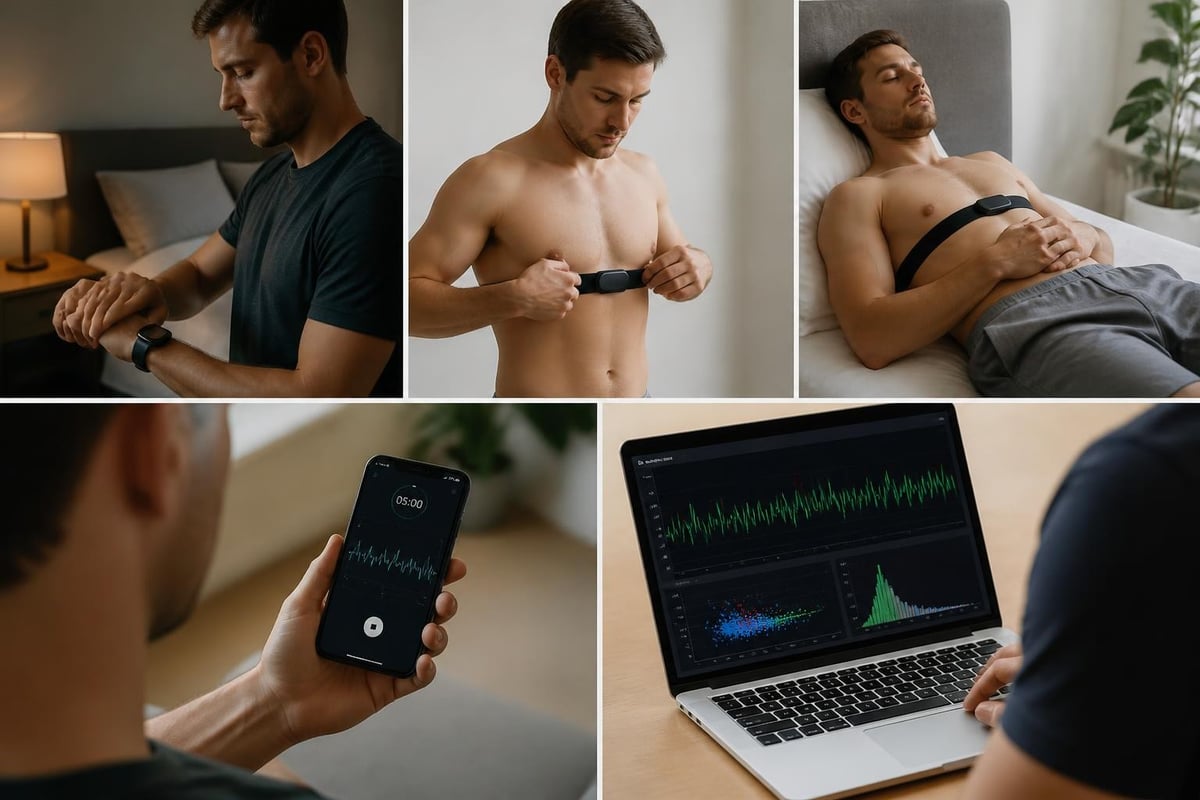
Recording length depends on the metric. RMSSD stabilizes within five minutes. SDNN and frequency-domain measures require longer recordings. A physician reviews the protocol before interpretation.
Avoid single-day interpretation. HRV fluctuates in response to sleep quality, hydration, alcohol intake, and meal timing. A seven-day rolling average smooths noise. A declining trend over two weeks warrants clinical review.
At Healthi Life, HRV data is reviewed alongside biomarker panels, sleep architecture, and symptom reporting. The physician identifies whether low HRV reflects acute stress, training load, metabolic dysfunction, or autonomic pathology. The intervention follows the cause.
Interventions That Change HRV
Modifying autonomic tone requires addressing the underlying stressor.
Sleep extension improves HRV when sleep debt is present. A study participant increasing sleep from six to eight hours per night showed a measurable rise in RMSSD within one week. The effect persisted as long as the sleep schedule held. Sleep fragmentation, measured by wakefulness after sleep onset, correlates inversely with morning HRV. Improving deep sleep supports autonomic recovery.
Controlled breathing techniques raise HRV acutely and, with practice, improve baseline tone. The National Center for Complementary and Integrative Health reviews evidence for HRV biofeedback, noting benefits for stress reduction and cardiovascular outcomes. The technique is simple: inhale for four seconds, exhale for six. Repeat for five minutes daily. The vagal response strengthens with repetition.
Nutritional interventions affect HRV indirectly. Omega-3 supplementation, when correcting a documented deficiency, improves heart rate variability in controlled trials. Magnesium, zinc, and B vitamins influence autonomic tone through enzymatic pathways. The physician orders targeted testing before supplementation.
Training load reduction restores HRV when overtraining is identified. Volume decreases by 20 to 30 percent. Intensity remains moderate. Recovery modalities, including sauna exposure, support the process. Heat exposure triggers parasympathetic activation during the cool-down phase. HRV typically rises within 48 hours if the stressor was training volume rather than systemic illness.
The table below summarizes interventions and expected timelines:
| Intervention | Mechanism | Expected HRV Response | Timeline |
|---|---|---|---|
| Sleep extension | Reduced cortisol, improved parasympathetic tone | RMSSD increase | 3-7 days |
| Breathwork (daily) | Vagal stimulation, respiratory sinus arrhythmia | Acute and baseline RMSSD increase | Immediate and 2-4 weeks |
| Training load reduction | Decreased sympathetic activation | SDNN and RMSSD normalization | 5-10 days |
| Sauna protocol | Heat stress followed by parasympathetic rebound | Transient RMSSD increase post-session | 24-48 hours |
HRV in Longevity Programs
Long-term health monitoring uses HRV as one input among many.
A longevity program built on serial biomarker testing includes HRV trends to assess whether interventions improve autonomic resilience. A participant beginning a protocol to reduce inflammatory markers may see concurrent HRV improvement as systemic stress declines. The physician tracks both.
HRV declines with age. The decline is not uniform. Individuals with high physical activity, low inflammatory markers, and preserved sleep quality maintain higher HRV than sedentary peers. The difference is measurable and clinically meaningful.
Chronic disease accelerates HRV decline. Diabetes, hypertension, and metabolic syndrome reduce autonomic variability years before complications appear. Early intervention, guided by biomarker panels and HRV trends, slows progression. The physician adjusts protocol based on multiple data points, not HRV alone.
Corporate executives in longevity programs use HRV to quantify the physiological cost of travel, sleep disruption, and sustained cognitive load. A participant traveling across multiple time zones sees HRV drop during the trip and recover over the following week. The recovery timeline informs scheduling decisions for high-stakes meetings or presentations.
Limitations and Misinterpretation
HRV is not a standalone health score.
Consumer devices report a single number labeled "recovery" or "readiness." These scores combine HRV with resting heart rate, sleep duration, and activity. The algorithm is proprietary. The physician cannot validate the calculation. Clinical decisions require access to raw HRV metrics, not composite scores.
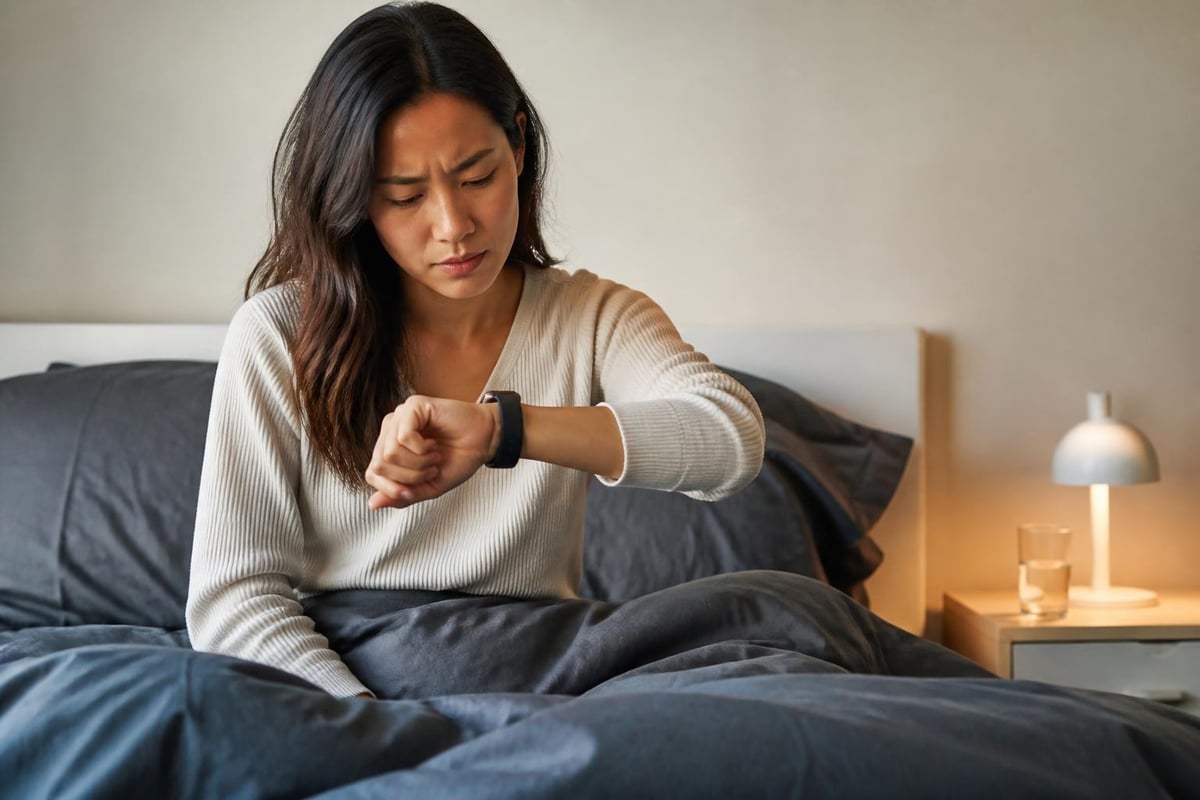
Individual baseline variability is wide. An HRV of 30 milliseconds may be normal for one person and low for another. Comparing absolute values across individuals is invalid. Only within-person trends matter.
Medications alter HRV. Beta-blockers reduce heart rate and narrow beat-to-beat intervals. Stimulants, including prescribed amphetamines and high-dose caffeine, suppress parasympathetic tone. The physician accounts for medication effects when interpreting data.
Acute illness drops HRV before symptoms appear. A participant measuring HRV during viral incubation may see a decline 24 to 48 hours before fever or fatigue. The body is responding; the HRV reflects immune activation. The intervention is rest, not training adjustment.
Practical Application
HRV is most useful when integrated into a broader assessment.
A physician reviewing HRV data asks: Is the trend stable, rising, or falling? What changed in the participant's routine over the same period? Are biomarkers consistent with the HRV direction? Is sleep quality documented?
The participant provides context. A week of low HRV following international travel, poor sleep, and irregular meals is expected. Recovery interventions begin immediately. A week of low HRV without identifiable stressors prompts laboratory testing: complete blood count, comprehensive metabolic panel, thyroid function, cortisol.
| Clinical Scenario | HRV Finding | Physician Action |
|---|---|---|
| Post-travel fatigue | Low RMSSD for 5 days | Observation, sleep optimization |
| Unexplained low HRV | Persistent drop over 14 days | Order CBC, CMP, cortisol, TSH |
| Overtraining symptoms | RMSSD below baseline, elevated resting HR | Reduce training volume 30%, reassess in 7 days |
| Stress-related insomnia | Low HF power, normal RMSSD | Breathwork protocol, consider magnesium testing |
The physician interprets. The participant provides data and reports symptoms. The decision follows.
Frequently Asked Questions
What is a normal HRV value?
Normal HRV varies by age, fitness level, and individual baseline. Values range from 20 to over 100 milliseconds for RMSSD. A physician establishes your baseline over two weeks of consistent measurement, then tracks deviation from that baseline rather than comparing you to population norms.
Can I improve my HRV?
Yes, when the cause of low HRV is identified. Sleep extension, breathwork, training load adjustment, and stress reduction raise HRV. The physician reviews your data, identifies the stressor, and recommends targeted intervention. Improvement typically appears within one to two weeks if the intervention addresses the root cause.
Does low HRV mean I am sick?
Not necessarily. Low HRV indicates autonomic stress, which may result from training, travel, poor sleep, or illness. A single low reading is not diagnostic. A sustained decline over two weeks warrants clinical review and biomarker testing to rule out metabolic or inflammatory conditions.
Which device should I use to measure HRV?
Use a chest strap for accurate R-peak detection. Wrist devices are convenient but less precise. Choose one device and use it consistently. Cross-device comparison is unreliable. The physician needs reproducible data from a single validated source.
Integration With Biomarker Testing
HRV data gains clinical value when paired with laboratory results.
A participant with declining HRV and rising high-sensitivity C-reactive protein has documented systemic inflammation. The physician orders additional testing: lipid panel, fasting glucose, hemoglobin A1c. Interventions target the inflammation. HRV is monitored as one measure of response.
Thyroid dysfunction alters HRV. Hypothyroidism lowers parasympathetic tone. Hyperthyroidism elevates resting heart rate and reduces variability. TSH, free T3, and free T4 are tested when HRV changes without clear behavioral cause.
Cortisol dysregulation appears in HRV trends. Chronic stress elevates morning cortisol and flattens the diurnal curve. A four-point salivary cortisol test, paired with HRV tracking, identifies whether the autonomic dysfunction is stress-mediated. Intervention may include cognitive behavioral techniques, schedule modification, or adaptogenic support under physician supervision.
At Healthi Life, HRV trends are reviewed during follow-up consultations within longevity programs. The physician compares the current trend to baseline, examines recent biomarker results, and adjusts protocol accordingly. The participant sees how interventions, whether nutritional, pharmacologic, or behavioral, affect autonomic tone over time.
HRV is a metric, not a verdict. The physician interprets the trend alongside symptoms, biomarkers, and context. When HRV declines without explanation, further investigation identifies the cause. When intervention raises HRV, the body is recovering. Healthi Life integrates HRV tracking into physician-supervised longevity programs, where continuous biomarker monitoring and clinical review turn data into decisions. This page is for information only and is not medical advice. Medical consultation and prescription are available online and on site at Healthi Life, Ekkamai, Bangkok.