
Muscle Mass After 40: What Changes and What to Do

Muscle mass after 40 declines 3–8% per decade without intervention. Learn what changes, which biomarkers to track, and how to preserve lean tissue.
This page is for general information and does not constitute medical advice, diagnosis, or treatment. Results vary between individuals. BPC-157 peptide is a prescription medicine, dispensed and administered only after assessment by a licensed physician. This page is medical information, not an advertisement or an offer of treatment. Every medicine and peptide listed here is dispensed only after a medical consultation at Healthi Life and on a physician's prescription. Prices are published for transparency, not as an offer to supply. Always consult a qualified physician about your condition. See our full medical disclaimer.
Muscle mass after 40 begins to decline at a rate of three to eight percent per decade, a process called sarcopenia. This is not cosmetic. Lean tissue governs metabolic rate, insulin sensitivity, bone density, balance, and longevity. The decline is not inevitable, but it is conditional: it happens when the signal to build muscle weakens and the body prioritizes other demands. What follows is why that happens, what it means for your biology, and what can be measured to reverse it.
Why muscle mass after 40 declines
Muscle protein synthesis slows after the fourth decade. The same meal, the same training session, the same recovery window produces a smaller anabolic response than it did at thirty. This is not a failure of effort. It is a shift in how the body allocates amino acids, energy, and hormonal signals. Healthi Life is a physician-led longevity clinic in Bangkok.
Anabolic resistance is the primary mechanism. Muscle becomes less sensitive to the signals that trigger growth and repair. Leucine, insulin, mechanical tension-all of these still work, but the threshold rises. More protein is required to achieve the same effect. Heavier loads are needed to stimulate the same adaptation.
Hormonal changes compound the issue. Testosterone declines approximately one percent per year after thirty in men. Growth hormone secretion falls. Insulin-like growth factor 1 (IGF-1) decreases. Cortisol often rises due to accumulated stress, sleep disruption, and metabolic strain. Each of these shifts the net protein balance toward catabolism.
Mitochondrial function also declines. Muscle is energetically expensive tissue. As mitochondrial density and efficiency fall, the cost of maintaining lean mass rises. The body adapts by reducing the amount of tissue it supports, unless given a strong opposing signal.
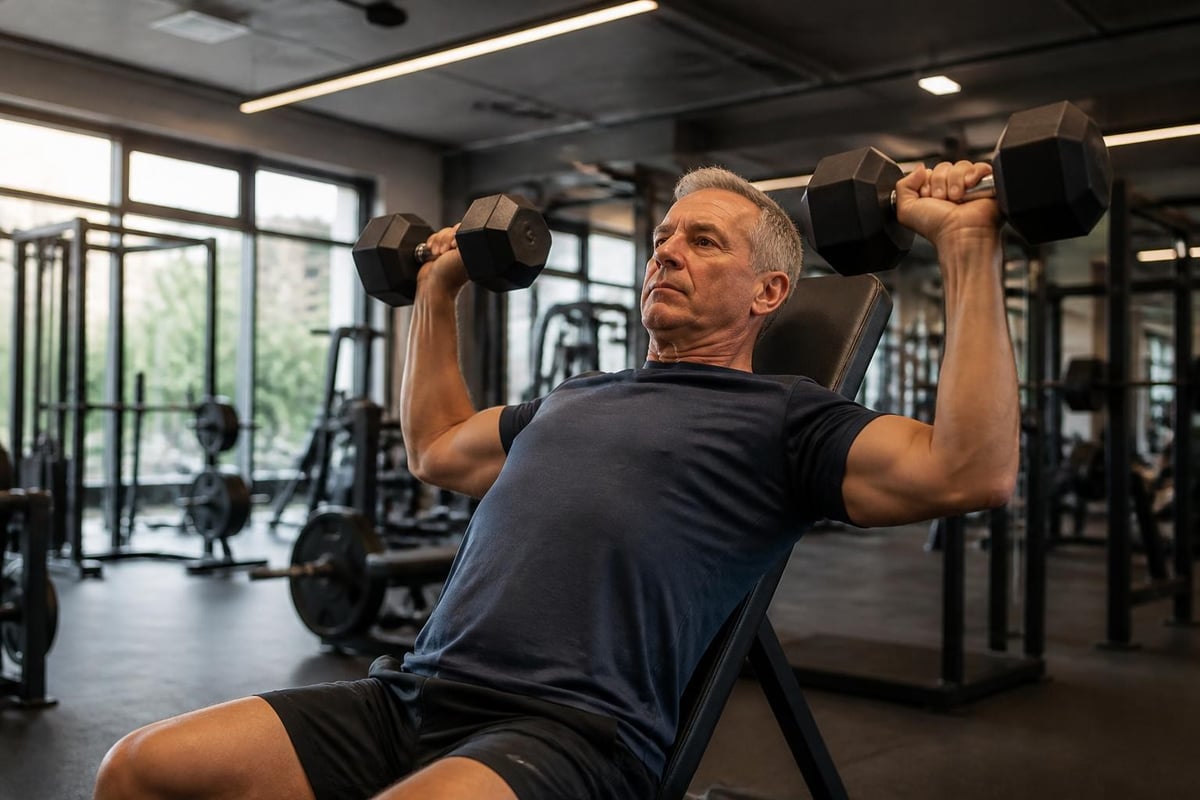
The role of physical activity
Sedentary behavior accelerates muscle loss. Disuse atrophy can exceed fifteen percent of muscle mass within two weeks of immobilization. After forty, even moderate reductions in daily movement-fewer steps, less stair climbing, less time on your feet-create a chronic low-grade disuse signal.
The WHO recommends at least 150 minutes of moderate-intensity aerobic activity per week plus muscle-strengthening activities on two or more days for adults over 40. That is a baseline, not a target. Preservation of muscle mass after 40 requires progressive resistance training: loads that increase over time, movements that challenge multiple muscle groups, and sessions structured to create mechanical tension and metabolic stress.
Aerobic exercise supports mitochondrial health and cardiovascular function, but it does not preserve lean mass on its own. Long-duration endurance work without resistance training can even accelerate loss, particularly in the upper body and trunk. The signal must be specific to the adaptation you want.
What to measure
Muscle mass after 40 should be tracked with the same rigor as lipid panels or glucose. The relevant biomarkers are not subjective. They are quantifiable, reproducible, and interpretable by a physician who knows your history.
| Biomarker | Method | What it tells you |
|---|---|---|
| Lean body mass | DEXA scan | Total muscle mass, regional distribution, change over time |
| Appendicular skeletal muscle mass | DEXA scan or BIA | Muscle in arms and legs; correlates with functional capacity |
| Grip strength | Dynamometry | Proxy for whole-body strength; predicts mortality and frailty |
| Creatinine (blood) | Serum test | Muscle breakdown product; stable levels suggest maintained mass |
| IGF-1 | Serum test | Anabolic signaling; declines with age and low protein intake |
DEXA (dual-energy X-ray absorptiometry) is the reference standard. It separates bone, fat, and lean tissue with precision. Bioelectrical impedance is faster and cheaper but less accurate, particularly in individuals with high fat mass or fluid shifts. A physician interprets the results in context: your training history, your nutritional intake, your hormonal profile, and your goals.
Tracking these markers at baseline and again after six to twelve months reveals whether your protocol is working. Muscle mass does not respond to intention. It responds to stimulus, substrate, and recovery, and the data will show which variable needs adjustment.
The Advanced Health Check-Up at Healthi Life includes DEXA scanning, comprehensive biomarker panels, and a one-to-one review with a physician who builds a written plan from the results.
Protein intake and timing
Protein requirements rise after forty. The threshold to stimulate muscle protein synthesis increases due to anabolic resistance. Research published in Frontiers in Nutrition in 2024 confirms that older adults require higher per-meal protein doses to overcome blunted anabolic signaling.
The general recommendation is 1.6 to 2.2 grams of protein per kilogram of body weight per day for individuals engaged in resistance training. This should be distributed across three to four meals, with each meal containing at least 30 to 40 grams of high-quality protein to reach the leucine threshold.
Key protein strategies for muscle mass after 40:
- Consume 30–40 grams of protein per meal, not spread thinly across the day
- Prioritize leucine-rich sources: animal protein, whey, eggs, dairy
- Time one protein serving within two hours post-training
- Do not rely on plant proteins alone without amino acid fortification or combination
Leucine is the rate-limiting amino acid. It directly activates mTOR (mechanistic target of rapamycin), the central pathway for muscle protein synthesis. A meal with insufficient leucine-below approximately three grams-produces a weak or absent anabolic response regardless of total protein content.
Intermittent fasting and time-restricted eating can work for fat loss, but they often reduce total daily protein intake and the number of anabolic pulses. If your priority is maintaining muscle mass after 40, fasting windows should not compromise protein frequency or total dose.

Training variables that matter
Resistance training is the only non-pharmacologic intervention proven to reverse sarcopenia. A comprehensive review in Nature Reviews Disease Primers details the mechanisms: mechanical tension activates satellite cells, triggers hypertrophy signaling, and increases mitochondrial biogenesis in muscle fibers.
The stimulus must be progressive. Lifting the same weight for the same repetitions every session does not create adaptation. The body adapts to novelty and stress, then plateaus. Progression can mean more weight, more sets, more time under tension, or shorter rest intervals. Any of these variables, manipulated systematically, will drive continued growth or preservation.
Program structure
- Train each major muscle group two to three times per week
- Use compound movements: squat, deadlift, press, row, pull-up
- Perform six to twenty repetitions per set, taking sets to or near failure
- Include at least ten sets per muscle group per week at challenging intensity
Volume and intensity both matter. Low volume with high intensity preserves strength but may not maintain size. High volume with insufficient intensity does not recruit high-threshold motor units. The intersection-moderate to high volume at seventy to eighty-five percent of one-rep max-produces the best hypertrophy response in adults over forty.
Recovery becomes the limiting variable. Connective tissue repair slows with age. Tendon and ligament stiffness increases. Training frequency must allow for full recovery between sessions targeting the same muscle group, or chronic inflammation and injury risk will rise. Personalized programming based on recovery biomarkers-C-reactive protein, creatine kinase, heart rate variability-allows for optimization without guesswork.
Sleep and circadian alignment
Sleep deprivation suppresses muscle protein synthesis and raises cortisol. Even partial sleep restriction-six hours instead of eight-reduces anabolic signaling and impairs recovery. A 2025 review in Frontiers in Neuroscience explored how circadian misalignment disrupts muscle regeneration, particularly the overnight growth hormone pulse and the timing of amino acid uptake.
Adults over forty should prioritize:
- Seven to nine hours of sleep per night
- Consistent sleep and wake times, even on weekends
- Training earlier in the day when cortisol is naturally lower
- Avoiding late meals that disrupt overnight autophagy and repair
Muscle is repaired during sleep, not during the training session. The session is the stimulus. Recovery is the adaptation. Without adequate sleep, the signal is wasted.
Hormonal optimization
Testosterone, growth hormone, and thyroid hormones all influence muscle mass. Decline in any of these accelerates sarcopenia. Replacement therapy is an option when levels fall below the reference range and symptoms are present, but it is not the first intervention.
When hormone therapy is appropriate
Testosterone replacement therapy (TRT) may be indicated when total testosterone falls below 300 ng/dL and free testosterone is low in the context of symptoms: fatigue, loss of lean mass, reduced libido, poor recovery. It is not a substitute for training or protein intake. It amplifies the response to those inputs.
Growth hormone and IGF-1 therapy carry higher risk and are used less commonly. Thyroid optimization-when hypothyroidism is confirmed-can improve metabolic rate and muscle protein synthesis. Every hormone decision requires lab work, physician review, and ongoing monitoring.
The role of longevity medicine is to identify subclinical deficiencies before they become clinical, and to intervene at the level of root cause rather than symptom. Hormones are part of the picture, but rarely the whole picture.
Supplements and adjuncts
Most supplements marketed for muscle preservation are either ineffective or redundant if protein intake is adequate. Three have consistent evidence.
Creatine monohydrate increases intramuscular phosphocreatine stores, improves power output, and may enhance muscle protein synthesis. Dose: 5 grams per day. No loading phase required. Effective at all ages.
Vitamin D supports muscle function when baseline levels are low (below 30 ng/mL). The DO-HEALTH trial tested vitamin D, omega-3s, and exercise in older adults and found modest benefits for muscle function when combined with resistance training. Dose: individualized based on serum 25-hydroxyvitamin D levels.
Omega-3 fatty acids (EPA and DHA) may reduce muscle inflammation and improve anabolic signaling. Evidence is mixed, but the risk is low and cardiovascular benefits are well established. Dose: 2 to 3 grams of combined EPA and DHA per day.
Branched-chain amino acid (BCAA) supplements are unnecessary if total protein intake is adequate. They provide leucine, but whole protein sources provide leucine plus all other essential amino acids in optimal ratios.
How muscle loss affects metabolic health
Lean muscle is the largest insulin-sensitive tissue in the body. Loss of muscle mass after 40 directly increases insulin resistance, even in individuals who maintain stable body weight. This raises fasting glucose, HbA1c, and risk of type 2 diabetes.
Muscle also stores glycogen. Reduced muscle mass means reduced glycogen storage capacity, which worsens postprandial glucose spikes and contributes to fat gain over time. The relationship is bidirectional: muscle loss promotes metabolic dysfunction, and metabolic dysfunction accelerates muscle loss.
Preserving lean mass is not a cosmetic goal. It is a metabolic intervention.

Gender-specific considerations
Men and women lose muscle at similar rates after forty, but the mechanisms and impacts differ. Men start with greater baseline muscle mass and higher testosterone, so absolute loss may be larger. Women experience accelerated loss during and after menopause due to the drop in estrogen, which has anabolic and anti-inflammatory effects on muscle.
Estrogen replacement therapy in postmenopausal women may slow muscle loss, though the data are less robust than for testosterone in men. Resistance training and protein intake remain the primary interventions regardless of gender.
Women over forty also face higher rates of osteoporosis. Muscle and bone are mechanically linked: resistance training that preserves muscle also preserves bone density. The same protocol addresses both.
Peptides and advanced interventions
Certain peptides are used off-label to support muscle preservation and recovery. These are dispensed only after medical consultation and lab review.
Growth hormone secretagogues (e.g., ipamorelin, CJC-1295) stimulate endogenous growth hormone release. They may improve lean mass and recovery in individuals with low IGF-1 or poor response to standard interventions.
BPC-157 is studied for tissue repair and may accelerate recovery from tendon or ligament injury, allowing more consistent training.
Thymosin beta-4 supports regeneration and reduces inflammation.
Every medicine and peptide listed here is dispensed only after a medical consultation at Healthi Life and on a physician's prescription.
Peptides are adjuncts, not replacements. They enhance the response to training and nutrition but do not create results in their absence.
Inflammatory markers and muscle loss
Chronic low-grade inflammation accelerates muscle breakdown. Elevated C-reactive protein (CRP), interleukin-6 (IL-6), and tumor necrosis factor-alpha (TNF-α) shift the balance toward catabolism. Sources of chronic inflammation include poor diet, lack of sleep, chronic stress, untreated infections, and metabolic disease.
Measuring inflammatory markers at baseline and during follow-up allows for targeted intervention. Reducing inflammation-through diet, omega-3 supplementation, stress management, or treatment of underlying conditions-improves muscle protein balance even without changes to training.
Practical implementation
The protocol for preserving muscle mass after 40 is not complex, but it is precise. It requires measurement, adherence, and adjustment over time. The steps are:
- Obtain baseline data: DEXA scan, lean body mass, grip strength, IGF-1, testosterone, vitamin D, CRP
- Establish a resistance training program with progressive overload, minimum two sessions per week
- Consume 1.6 to 2.2 grams of protein per kilogram body weight per day, distributed across meals
- Sleep seven to nine hours per night with consistent timing
- Retest at six to twelve months to measure change and adjust protocol
This is not a one-time intervention. Muscle mass after 40 requires ongoing management. What worked at baseline may not work two years later as hormones shift, training adaptations plateau, or life stress increases. The intervention must evolve with the data.
The Physical Activity Guidelines for Americans outline minimum recommendations, but these are designed for population health, not individual optimization. A personalized protocol, built on your biomarkers and reviewed by a physician, outperforms generic advice.
When to get tested
Muscle mass should be measured at baseline for anyone over forty and remeasured annually or after any significant change in training, diet, or health status. The test is DEXA (dual-energy X-ray absorptiometry). It quantifies lean mass, fat mass, and bone density in a single scan.
Biomarker testing should include:
- Total and free testosterone
- IGF-1
- Vitamin D (25-hydroxyvitamin D)
- Thyroid-stimulating hormone (TSH) and free T3
- C-reactive protein (CRP)
- Creatinine
These markers, interpreted together, reveal whether muscle loss is driven by hormonal deficiency, inflammation, inadequate recovery, or insufficient stimulus. A physician reviews the results and determines the intervention.
Testing is the starting point, not the endpoint. The data tell you where you are. The protocol tells you what to do next.
Frequently asked questions
How much muscle mass do I lose per year after 40?
Three to eight percent per decade on average without intervention. The rate accelerates after 60. Resistance training and adequate protein intake can slow or reverse this.
Can I build muscle after 40 or only maintain it?
You can build muscle at any age if the stimulus is sufficient. Anabolic resistance means the threshold is higher, but hypertrophy is possible with progressive resistance training and adequate protein.
Is cardio bad for muscle mass after 40?
No. Moderate aerobic exercise supports cardiovascular and mitochondrial health. Excessive endurance training without resistance work can accelerate muscle loss. Balance both.
Do I need testosterone therapy to maintain muscle after 40?
Most individuals do not. Optimize training, protein, sleep, and stress first. Testosterone replacement is appropriate when levels are clinically low and symptoms are present, confirmed by lab work and physician review.
How long does it take to see results from a muscle-building protocol?
Measurable changes in lean mass appear within 8 to 12 weeks with consistent resistance training and protein intake. Strength gains appear sooner. DEXA scanning at six months provides objective confirmation.
Reference ranges and targets
| Metric | Healthy range (men) | Healthy range (women) | Target for preservation |
|---|---|---|---|
| Lean body mass (kg) | 55–75 | 40–55 | Stable or increasing year-over-year |
| Appendicular skeletal muscle (kg) | 25–35 | 15–22 | Within or above reference for age |
| Grip strength (kg) | 40–50 | 25–35 | Maintained or improved vs. baseline |
| Total testosterone (ng/dL) | 300–900 | 15–70 | Mid-range or higher for age |
| IGF-1 (ng/mL) | 90–250 | 80–220 | Upper half of reference range |
Targets are individualized. A 45-year-old former athlete may have different goals than a 55-year-old executive who has never trained. The physician sets the target based on history, biomarkers, and realistic trajectory.
Muscle mass after 40 declines unless you create a continuous signal to preserve it. That signal is built from training, protein, recovery, and the biomarkers that confirm whether the protocol is working. Healthi Life in Ekkamai, Bangkok measures up to 300 biomarkers, reviews them one-to-one with a physician, and builds a written protocol designed for your biology-not a population average. Walk-in consultations and longevity programs are available now.
Every medicine named on this page is dispensed only after a medical consultation at Healthi Life and on a physician's prescription. No dosing schedule is published here; the dose is set by the prescribing physician. This page is published for transparency, not as an offer to supply.
- 5.0 Google Rating · 238 reviews
- 2,500+ Guests
- 50+ Countries
- 2025 Regenerative Clinic of the Year in Asia-Pacific — GlobalHealth Asia-Pacific Awards