
NAD Supplement: What Works, What Doesn't in 2026
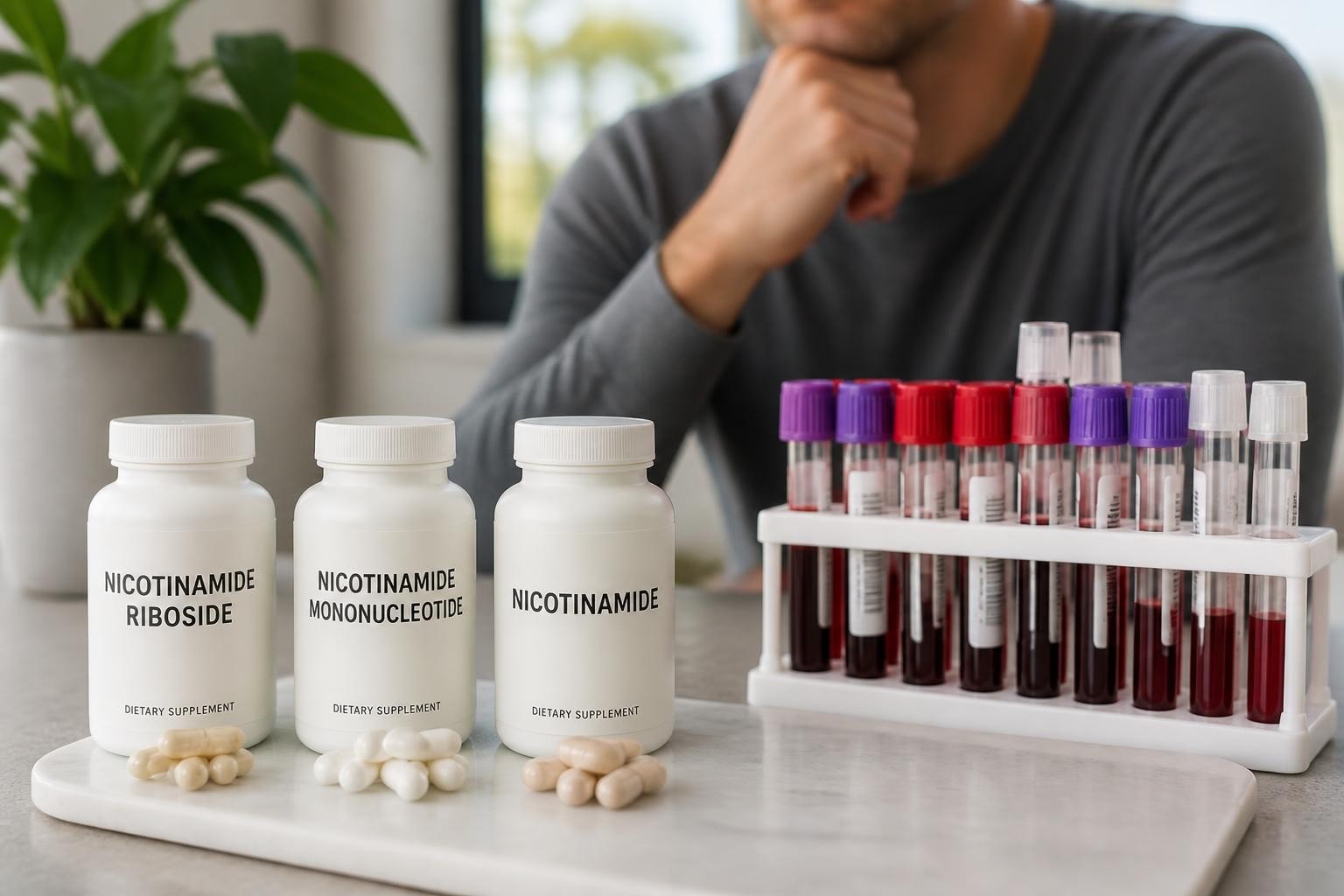
NAD supplement forms compared: absorption, dosing, clinical evidence and what physicians measure before prescribing. Data from trials, not marketing.
A NAD supplement does not deliver NAD+ directly. It provides precursors such as nicotinamide riboside, NMN, or nicotinamide that convert to NAD+ inside cells. Trials show reliable increases in blood NAD+ and good tolerability, but evidence for functional improvement in healthy adults remains weak or unclear.
This page is for general information and does not constitute medical advice, diagnosis, or treatment. Results vary between individuals. Every medicine and peptide listed here is dispensed only after a medical consultation at Healthi Life and on a physician's prescription. Prices are published for transparency, not as an offer to supply. Always consult a qualified physician about your condition. See our full medical disclaimer.
NAD+ is a coenzyme in every cell. It accepts and donates electrons in hundreds of reactions. Energy production, DNA repair, circadian regulation and immune signaling all depend on it. NAD+ levels drop with age. Lower NAD+ has been linked to mitochondrial dysfunction and features of aging, largely in animal and cell studies. The question is not whether NAD+ matters. The question is whether a nad supplement restores what declines, and which form does it in a person whose baseline is already measured.
What NAD+ Does and Why Levels Fall
NAD+ participates in glycolysis, the citric acid cycle and oxidative phosphorylation. Without it, mitochondria cannot convert glucose or fat into ATP. It also serves as substrate for three enzyme families: sirtuins, poly(ADP-ribose) polymerases (PARPs) and CD38. These enzymes consume NAD+ when they repair DNA, silence transposons or regulate inflammation. The more they work, the less NAD+ remains for energy production. Healthi Life is a physician-led longevity clinic in Bangkok.
Why NAD+ declines:
- Reduced synthesis from tryptophan and nicotinamide
- Increased consumption by PARPs responding to DNA damage
- Rising CD38 expression in adipose and immune tissue
- Lower activity of the salvage pathway enzyme NAMPT
Research published in Nature Reviews Molecular Cell Biology details the pathways that maintain NAD+ and the points where they fail during aging.
Precursor Forms and Conversion Pathways
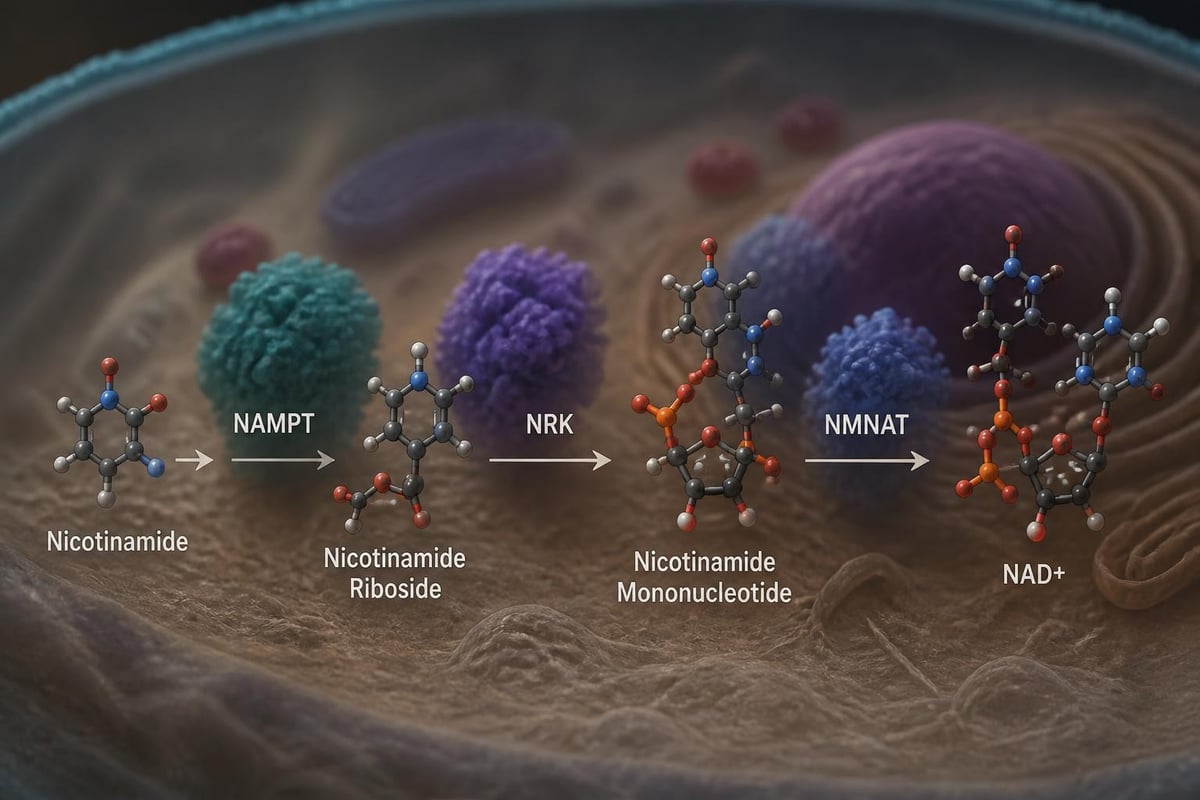
A nad supplement does not deliver NAD+ directly. NAD+ is a large, charged molecule. Oral NAD+ breaks down in the gut. Precursors are smaller. They enter cells and convert to NAD+ through salvage or de novo pathways.
The main oral precursors are:
- Nicotinamide (NAM): Converted by NAMPT to nicotinamide mononucleotide (NMN), then to NAD+
- Nicotinamide riboside (NR): Phosphorylated by NRK enzymes to NMN, then to NAD+
- Nicotinamide mononucleotide (NMN): Converted directly to NAD+ by NMNAT enzymes, or dephosphorylated to NR before cell entry
- Nicotinic acid (NA): Follows the Preiss-Handler pathway through NAMN to NAAD to NAD+
Each pathway has a rate-limiting enzyme. NAMPT limits the salvage pathway. NRK1 and NRK2 limit NR conversion. Oral dosing floods these pathways, but whether that raises tissue NAD+ depends on enzyme capacity and NAD+ consumption rate.
Clinical Evidence: What Human Trials Show
Most nad supplement trials test nicotinamide riboside or nicotinamide mononucleotide. Duration ranges from single doses to 12 weeks. Primary endpoints include whole-blood NAD+, peripheral blood mononuclear cell (PBMC) NAD+ and metabolomic profiles. Secondary endpoints vary: insulin sensitivity, blood pressure, skeletal muscle function, cognitive measures.
Dosing is set by the prescribing physician after a medical consultation. No dosing schedule is published here.
A randomized trial in patients with peripheral artery disease (the NICE trial, 90 participants) tested nicotinamide riboside, with or without resveratrol, for six months. Compared with placebo, nicotinamide riboside improved 6-minute walk distance, and resveratrol added no benefit. The authors called for a larger trial to confirm the findings.
What the Meta-Analyses Report
A 2024 systematic review in Nutrition & Metabolism pooled 45 controlled trials of NAD+ precursors (9,256 participants). Supplementation was associated with a small increase in fasting glucose and HbA1c and a decrease in C-reactive protein, with no significant change in insulin, insulin resistance, or liver enzymes.
A critical review published in PMC assessed nicotinamide riboside trials through 2023. It found reliable evidence that NR raises blood NAD+ and is well tolerated. It found weak or absent evidence for functional improvement in healthy adults. Trials in disease populations (heart failure, Parkinson disease, obesity) showed mixed results. The authors noted that dose, timing and baseline NAD+ are rarely matched across studies.
Dosing, Bioavailability and What the Physician Measures
A nad supplement reaches peak blood concentration 1 to 3 hours after oral dosing. NR and NMN are absorbed in the small intestine. NMN may be dephosphorylated to NR before crossing the intestinal barrier, though transporter data remain incomplete. NAM absorbs rapidly and saturates at moderate doses.
Standard oral doses in clinical use:
- NR: 300 to 1000 mg once or twice daily
- NMN: 250 to 500 mg once daily
- Nicotinamide: 500 to 1000 mg once daily
Blood NAD+ rises within hours and returns toward baseline within 24 hours unless dosing is continuous. Tissue NAD+ is harder to measure. Muscle biopsy studies show variable increases. Brain NAD+ is being studied in humans with phosphorus MR spectroscopy, for example in a registered pharmacokinetic study of nicotinamide riboside and NMN.
Before prescribing any nad supplement, the physician orders whole-blood NAD+ or PBMC NAD+. There is no validated clinical cutoff for low blood NAD+, so results are interpreted alongside symptoms and other biomarkers. If baseline is normal, other interventions (sleep, exercise, caloric restriction) may raise NAD+ without supplementation.

Forms, Formulations and What to Avoid
Oral capsules are the most common delivery. Sublingual forms claim faster absorption but have no published pharmacokinetic advantage over capsules. Liposomal formulations promise improved bioavailability. No head-to-head trial has confirmed this. Powder forms dissolve in water. They offer flexible dosing but degrade faster when exposed to humidity.
What is sold as nad supplement:
- Nicotinamide riboside chloride (most studied, EU novel food approval)
- β-Nicotinamide mononucleotide (less regulatory clarity, widely sold)
- Nicotinamide (niacin form, cheap, NAMPT-limited)
- Blends combining NR or NMN with resveratrol, quercetin or pterostilbene
Third-party testing matters. Supplement quality varies between manufacturers. A physician does not prescribe based on marketing. The physician requests a certificate of analysis covering purity, endotoxin and heavy metal testing.
Regulatory Status in 2026
Nicotinamide riboside chloride was first authorized in the European Union as a novel food for food supplements in 2020, and a 2023 regulation extended its uses. It is sold as a dietary supplement in the United States. NMN has not received novel food authorization in the EU. In the US, the FDA stated in 2022 that NMN was excluded from the dietary supplement definition because it had been authorized for investigation as a drug, then reversed that position in September 2025. The physician prescribes based on clinical need, not availability.
NAD+ Infusion vs Oral Precursor
NAD+ given intravenously bypasses the gut. Plasma NAD+ peaks within minutes. Duration is short. NAD+ is consumed by circulating enzymes or taken up by tissues within 2 to 4 hours. Infusion protocols range from 250 mg to 1000 mg per session. Frequency is once or twice weekly. No published trial has compared chronic NAD+ infusion to oral precursor for tissue NAD+ or clinical outcomes.
Differences between infusion and oral:
| Route | Plasma NAD+ | Duration | Tissue Uptake | Evidence Level |
|---|---|---|---|---|
| IV NAD+ | Rises during infusion; limited human data | 2-4 hours | Uncertain | Case series, no RCTs |
| Oral NR/NMN | Increase reported in trials | Not well characterized | Confirmed in PBMC, variable in muscle | Multiple RCTs |
At Healthi Life's Recovery & Performance service in Ekkamai, the physician reviews baseline blood work and decides whether oral supplementation, NAD+ infusion or a combination protocol is appropriate. The choice depends on measured NAD+ levels, symptom profile and whether the goal is acute support (post-travel, post-illness) or sustained optimization.

Risks, Side Effects and Drug Interactions
Nicotinamide riboside and NMN are generally well tolerated at doses up to 1000 mg daily. Reported side effects are mild: nausea, flushing, headache. Nicotinamide at high doses (>1500 mg/d) can cause flushing, liver enzyme elevation and insulin resistance. Nicotinic acid (niacin) commonly causes flushing at supplemental doses.
Drug interactions to note:
- Chemotherapy agents: NAD+ supports DNA repair; theoretical concern that it could protect cancer cells. Clinical significance unknown. Oncologist consultation required.
- Anticoagulants: No documented interaction, but NAD-dependent enzymes affect platelet function. Monitoring advised.
- Diabetes medications: NAD precursors may alter glucose metabolism. Dose adjustment may be needed.
Contraindications include active malignancy (relative), liver disease (for high-dose nicotinamide) and known hypersensitivity to niacin derivatives. The physician reviews medication history before prescribing.
What Happens After Supplementation Stops
Blood NAD+ is expected to fall back toward baseline after supplementation stops, but long-term follow-up data are limited. Whether years of continuous use alters feedback regulation is unknown.
Measuring Response and Adjusting Protocol
The physician may repeat NAD+ testing during supplementation. There is no validated response threshold, so dose or form is reviewed alongside symptoms and other biomarkers. If NAD+ rises but symptoms do not improve, other pathways are investigated: mitochondrial function tests, inflammation markers, sleep architecture, cortisol rhythm.
Biomarkers tracked during nad supplement therapy:
- Whole-blood NAD+ or PBMC NAD+
- Fasting glucose and HbA1c
- Lipid panel (LDL, HDL, triglycerides)
- High-sensitivity CRP
- Liver enzymes (ALT, AST)
- Subjective energy and cognitive scores
Response is individual. Some patients report improved energy and sleep within two weeks. Others show biomarker change without subjective benefit. The physician does not continue therapy without measured response.
Who Should Consider a NAD Supplement
Supplementation is considered when baseline NAD+ is low and symptoms align: chronic fatigue not explained by sleep, thyroid or anemia; cognitive slowing without structural brain changes; poor recovery from exercise or illness. Age alone is not an indication. A 60-year-old with normal NAD+ and good function does not need it. A 40-year-old with burnout, low NAD+ and metabolic drift may benefit.
Profiles where testing is warranted:
- Chronic fatigue or post-viral syndrome with confirmed low NAD+
- Metabolic syndrome with HbA1c trending upward despite lifestyle measures
- High-performance professionals or athletes tracking recovery markers
- Patients on structured longevity programs seeking to optimize cellular function
A narrative review in PMC summarized human trials and concluded that NAD+ precursors are safe, well tolerated and can raise NAD+ in several tissues, but that evidence for improved physiological function remains unclear because doses, durations and sample sizes vary widely. Marketing claims outpace evidence. The physician does not prescribe to everyone.
What Physicians Still Do Not Know
Whether chronic NAD+ elevation is safe beyond 12 months is not established in controlled trials. Whether it alters cancer risk is theoretical but unstudied in long-term human cohorts. Whether brain NAD+ increases meaningfully with oral dosing is uncertain. Muscle biopsy data are sparse. Most trials measure blood, not the tissues where NAD+ function matters most.
Ongoing trials listed by the National Cancer Institute focus on cancer research; separate trials have studied nicotinamide riboside in other conditions such as heart failure and Parkinson disease. Results will clarify which populations benefit and which do not. Until then, the physician weighs individual data, not population assumptions.
NAD+ matters, but the route to restoring it depends on what the numbers show. A nad supplement is one tool in a broader protocol, used when baseline is measured, response is tracked and the physician adjusts based on data, not hope. Healthi Life builds every recovery and longevity protocol on measured biomarkers, reviewed with a physician in the Ekkamai house. Walk-in consultations are available for Bangkok residents and international visitors who want to decide from evidence, not marketing.
This page is for information only and is not medical advice. Medical consultation and prescription are available online and on site at Healthi Life, Ekkamai, Bangkok.
Every medicine named on this page is dispensed only after a medical consultation at Healthi Life and on a physician's prescription. No dosing schedule is published here; the dose is set by the prescribing physician. This page is published for transparency, not as an offer to supply.
Frequently asked questions
What is the best form of NAD supplement?
The main oral precursors are nicotinamide riboside, nicotinamide mononucleotide, nicotinamide, and nicotinic acid. Nicotinamide riboside is the most studied form. A physician chooses based on measured NAD+ levels, symptoms, and the quality of the product, not on marketing.
Does a NAD supplement actually work?
It raises blood NAD+ reliably and is well tolerated. However, a critical review found weak or absent evidence for functional improvement in healthy adults, and trials in disease populations showed mixed results. Marketing claims currently outpace the evidence.
Why can't you take NAD+ directly by mouth?
NAD+ is a large, charged molecule that breaks down in the gut. Precursors are smaller, so they enter cells and convert to NAD+ through salvage or de novo pathways. This is why oral products supply precursors rather than NAD+ itself.
What tests come before starting a NAD supplement?
The physician orders whole-blood NAD+ or PBMC NAD+ first. There is no validated clinical cutoff for low blood NAD+, so results are interpreted with symptoms and other biomarkers such as glucose, HbA1c, lipids, hs-CRP, and liver enzymes.
What are the side effects and risks of NAD precursors?
Nicotinamide riboside and NMN are generally well tolerated up to 1000 mg daily, with mild nausea, flushing, or headache reported. High-dose nicotinamide can cause flushing and liver enzyme elevation. The physician reviews medication history, including diabetes drugs and chemotherapy, before prescribing.