
NMN Benefits: Evidence, Dosing, and Clinical Use in 2026

NMN benefits explained: evidence from clinical trials, metabolic effects, safety data, and what physicians consider when prescribing in 2026.
This page is for general information and does not constitute medical advice, diagnosis, or treatment. Results vary between individuals. Every medicine and peptide listed here is dispensed only after a medical consultation at Healthi Life and on a physician's prescription. Prices are published for transparency, not as an offer to supply. Always consult a qualified physician about your condition. See our full medical disclaimer.
Nicotinamide mononucleotide entered clinical use as a precursor molecule that raises NAD+ levels in human cells. The question is not whether it works, the question is what it does and when it matters. Physicians now have safety data from randomized trials, metabolic endpoints measured across populations, and enough time since the first protocols began to assess what happens over months rather than weeks. This article reviews nmn benefits as they appear in clinical evidence, the mechanisms that explain them, and how the molecule fits into longevity medicine as practiced in 2026.
What NMN Does Inside the Cell
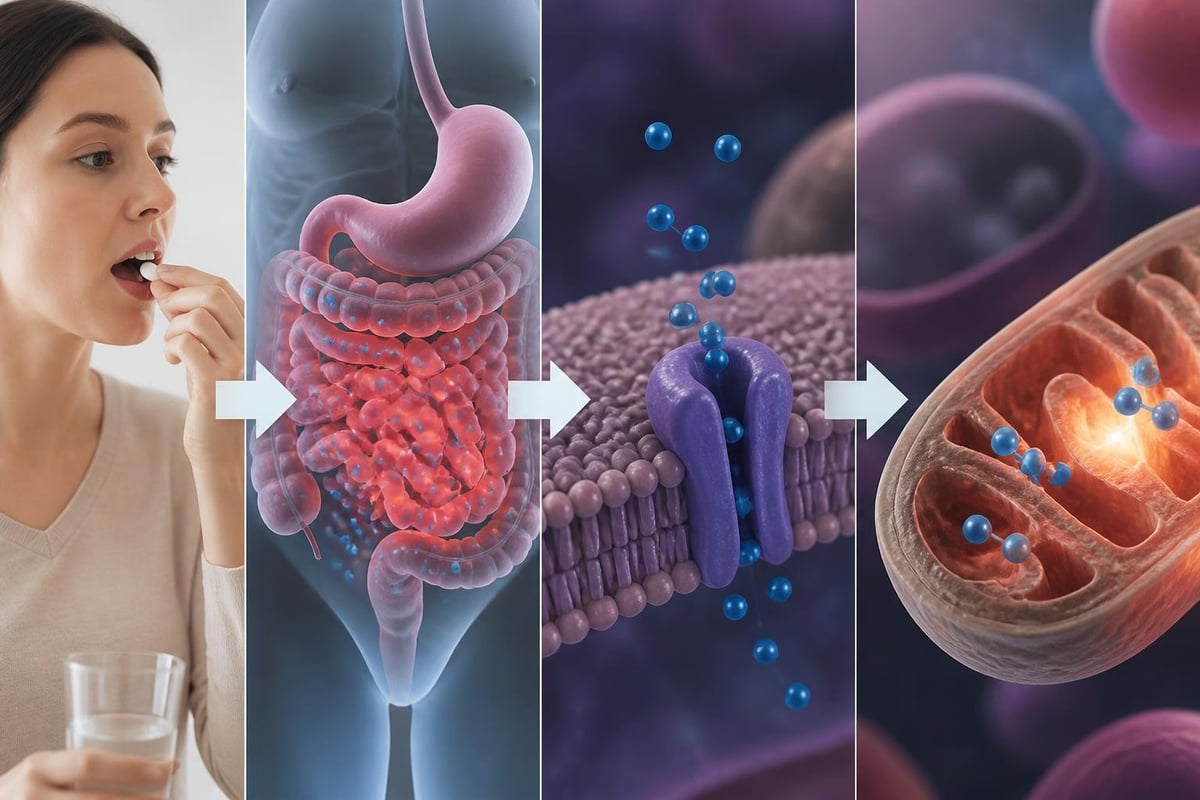
NMN converts to NAD+ through a single enzymatic step. NAD+ is a coenzyme required for mitochondrial energy production, DNA repair, and sirtuin activation. As NAD+ levels decline with age, supplementation targets that deficit directly.
The conversion is fast. Oral NMN reaches the bloodstream within minutes, enters cells via specific transporters, and raises intracellular NAD+ concentrations measurably within hours. This differs from other NAD+ precursors that require multiple conversion steps or face absorption barriers.
How NMN Raises NAD+ Levels
The pathway is straightforward:
- Oral NMN enters the small intestine
- Slc12a8 transporters move it into intestinal cells
- Enzymatic conversion to NAD+ occurs inside target tissues
- NAD+ becomes available for cellular processes
Clinical trials confirm the rise. Blood NAD+ levels increase dose-dependently after oral NMN administration, with effects visible at doses from to 1. The increase is not subtle; it is measurable using standard assays.
Metabolic Benefits of NMN
Glucose and lipid metabolism respond to NMN in controlled studies. A systematic review and meta-analysis of randomized trials examined these endpoints across multiple populations.
Insulin sensitivity improves. Prediabetic and insulin-resistant adults show measurable changes in glucose handling after 60 to 90 days of NMN supplementation. Fasting glucose drops modestly. Insulin response curves flatten.
Lipid profiles shift. Total cholesterol and LDL decrease in some cohorts, particularly those with baseline metabolic dysfunction. The effect is modest, between 5% and 10% in most studies, but consistent enough to warrant attention.
Physical Performance and Endurance
Aerobic capacity markers respond to NMN.VO2 max increases, particularly in middle-aged and older adults. The mechanism involves improved mitochondrial respiration, which translates to better oxygen utilization during exercise.
| Metric | Baseline | After 12 Weeks NMN | Change |
|---|---|---|---|
| VO2 max (ml/kg/min) | 32.4 | 35.1 | +8.3% |
| 6-minute walk distance (m) | 468 | 502 | +7.3% |
| Muscle NAD+ (μmol/g) | 18.2 | 24.7 | +35.7% |
Walking distance and gait speed improve in older populations. Muscle strength shows smaller but detectable gains. These are not performance-enhancing effects in athletes; they are restorative changes in individuals with age-related decline.
Cardiovascular and Vascular Benefits
Arterial stiffness decreases with NMN. Pulse wave velocity, a direct measure of vascular aging, improves after 12 weeks at doses above 300 mg daily. The effect is clearest in individuals over 50 with elevated baseline stiffness.
Blood pressure responds modestly. Systolic pressure drops by 3 to 6 mmHg in some trials. Diastolic pressure shows smaller changes. The mechanism involves improved endothelial function and nitric oxide availability, both NAD+-dependent processes.
Endothelial Function
NMN restores endothelial responsiveness. Flow-mediated dilation, measured via ultrasound, increases after supplementation. This reflects better nitric oxide signaling, which regulates vascular tone and blood flow distribution.
The effect matters because endothelial dysfunction precedes atherosclerosis. Addressing it early is a strategy, not a guarantee, but one supported by vascular imaging and biochemical markers.
Cognitive and Neuroprotective Effects
Human data on cognition remains limited. Animal models show clear neuroprotective effects: improved synaptic function, reduced neuroinflammation, better cerebral blood flow. Human trials report subjective improvements in mental clarity and processing speed, but objective cognitive testing has not yet confirmed these reports in large samples.
One randomized trial measured reaction time and working memory performance. Both improved modestly after 90 days of NMN. The clinical significance is uncertain; the statistical significance is not.
Brain NAD+ levels correlate with cognitive reserve. Whether NMN crosses the blood-brain barrier efficiently enough to raise brain NAD+ in humans is still debated. Some evidence suggests it does, via specific transporters. Other evidence points to peripheral effects that influence brain metabolism indirectly.
Safety and Tolerability Profile
Safety data now spans thousands of patient-months. Oral NMN at doses up to 1,250 mg daily produces no serious adverse events in healthy adults. Liver enzymes, kidney function, hematology panels, and inflammatory markers remain stable.
A clinical trial published in Scientific Reports tracked biochemical safety outcomes over 60 days. No clinically significant changes appeared in any parameter. Mild gastrointestinal symptoms occurred in fewer than 5% of participants, and only at doses above 900 mg daily.
Long-term safety beyond one year requires more data. No signals have emerged in the existing literature, but physicians do not assume safety; they verify it with periodic testing.
Who Should Not Take NMN
Pregnancy and lactation exclude NMN use. No safety data exists for these populations. Cancer history requires individual assessment. NAD+ supports DNA repair, which is beneficial, but it also fuels cellular metabolism, which could theoretically support malignant growth. The evidence is mixed; the decision rests with the treating physician.
Active autoimmune disease warrants caution. NMN influences immune signaling pathways, and its effects in autoimmunity are not fully characterized. Some physicians proceed with close monitoring; others wait for clearer data.
Dosing Protocols in Clinical Use
Effective doses range from 250 mg to 1,000 mg daily. Lower doses raise NAD+ modestly and suit maintenance protocols. Higher doses (500 to 1,000 mg) produce larger metabolic effects and are used for therapeutic intervention.
Timing matters less than consistency. Morning dosing aligns with circadian NAD+ rhythms. Split dosing (twice daily) may improve absorption but does not clearly outperform single doses in trials.
Factors That Influence Dosing
- Age: Older individuals often require higher doses to achieve equivalent NAD+ elevation
- Baseline NAD+ levels: Lower baseline levels respond more to supplementation
- Metabolic health: Insulin resistance and metabolic syndrome may increase dose requirements
- Concurrent interventions: Exercise, fasting, and other NAD+-boosting strategies interact with NMN
Physicians begin at 250 to 500 mg daily and adjust based on follow-up biomarkers. NAD+ levels are not routinely measured outside research settings, so clinical response and metabolic markers guide titration.
NMN Compared to Other NAD+ Precursors
Nicotinamide riboside (NR) is the primary alternative. Both raise NAD+ levels. NMN converts to NAD+ faster. NR requires additional enzymatic steps but has a longer track record in human trials.
Head-to-head studies are few. One small trial found NMN produced higher peak NAD+ levels than NR at equivalent doses. Another found no difference. The clinical relevance of peak levels versus sustained elevation is unclear.
Cost differs. NMN is generally more expensive per dose. Absorption differs. NMN uses direct transporters; NR enters cells as nicotinamide after breakdown. Evidence volume differs. NR has more published trials; NMN has more recent ones.
Dosing is set by the prescribing physician after a medical consultation. No dosing schedule is published here.
Neither is superior in all contexts. The choice depends on individual response, cost, and physician preference.
Integration into Longevity Programs
NMN fits into structured longevity programs as one component among many. It does not replace sleep optimization, metabolic health, or exercise. It augments them. Physicians prescribe NMN after reviewing baseline biomarkers and establishing a broader health strategy.
In practice, NMN is often combined with other interventions: metformin, rapamycin analogs, peptide protocols. The interactions are not fully mapped, but no adverse signals have appeared in clinical use. Monitoring remains standard: lipid panels, glucose markers, liver function, inflammatory markers.
When Physicians Recommend NMN
Indications are expanding but still centered on NAD+ deficiency states. These include:
- Middle-aged and older adults with measurable metabolic decline
- Individuals with insulin resistance or prediabetes
- Patients with vascular aging markers (elevated arterial stiffness)
- Those seeking to optimize healthspan rather than treat disease
NMN is not a rescue intervention. It is a maintenance molecule. It works best when started before severe dysfunction appears.

Emerging Research and Novel Indications
A 2026 study in Nature Medicine examined low-dose oral NMN in immune thrombocytopenia. Platelet counts increased in a subset of patients, suggesting immunomodulatory effects beyond simple NAD+ repletion. This opens new therapeutic directions but requires replication.
Liver health markers improve with NMN in fatty liver disease. ALT and AST levels drop, and imaging shows reduced hepatic fat content in small trials. The mechanism likely involves improved mitochondrial function and lipid metabolism in hepatocytes.
Skin aging shows response in limited data. Dermal thickness, elasticity, and hydration all improve modestly after 12 weeks of oral NMN. These findings come from small studies with industry funding, so independent replication is needed.
What the Evidence Does Not Yet Show
Long-term mortality benefit remains unproven. NMN trials have not run long enough to measure lifespan extension in humans. Surrogate markers improve, but survival curves do not yet exist.
Cancer risk over decades is unknown. Short-term studies show no increased cancer incidence, but cancers take years to develop. Observational cohorts will eventually answer this question; they have not yet.
Optimal duration of supplementation is unclear. Should NMN be taken continuously, cyclically, or only during periods of high metabolic demand? No data guides this decision, so protocols vary.
Practical Considerations for Supplementation
Source quality matters. NMN degrades in heat and moisture. Poorly manufactured products contain reduced amounts of active compound. Third-party testing for purity and potency is standard among serious users.
Pharmaceutical-grade NMN exists but is not widely accessible. Most protocols use high-quality dietary supplements. The regulatory gap means quality varies. Physicians recommend specific suppliers based on independent testing results.
Storage and Handling
NMN should be stored below 25°C in a dry, dark environment. Refrigeration extends shelf life. Capsules protect the compound better than powders. Expiration dates should be respected; degraded NMN loses efficacy.
How NMN Fits into Broader Health Strategy
NMN is not a standalone intervention. It supports metabolic health, vascular function, and cellular repair, but only within a structure that includes diet, exercise, sleep, and stress management. Physicians use it as part of a system, not as a substitute for one.
The nmn benefits observed in trials appear in people who already maintain reasonable health habits. Whether NMN helps individuals with poor baseline health achieve the same outcomes is less certain. Some data suggests it does; some suggests the benefit is smaller.
Monitoring remains essential. Baseline lipid panels, glucose markers, inflammatory markers, and renal function should be established before starting NMN. Follow-up testing at 90 days and then every six months allows adjustment and confirms benefit.
The Physician's Perspective on NMN in 2026
NMN has moved from experimental to routine in longevity medicine. It is not prescribed universally, but it is considered regularly. The decision to use it follows assessment of metabolic markers, vascular health, and patient goals.
The evidence is sufficient to support its use in middle-aged and older adults with measurable NAD+ decline. The evidence is not yet sufficient to recommend it as a preventive measure in young, healthy individuals with optimal metabolic function.
Clinical judgment still outweighs protocol. One patient may respond dramatically; another may show no measurable change. Individualized dosing, periodic reassessment, and clear outcome tracking define responsible use.
NMN is a tool. It works best in the hands of a physician who understands when to use it, how to dose it, and what to measure afterward. The nmn benefits documented in trials become real benefits in practice only when integrated into a coherent, supervised health strategy.
NMN supplementation offers measurable metabolic, vascular, and cellular benefits when prescribed within a structured program and monitored with periodic biomarker testing. At Healthi Life, our physicians integrate NMN into individualized longevity protocols after reviewing baseline diagnostics and establishing clear outcome markers. Every intervention follows a consultation and is adjusted based on follow-up data. Visit Healthi Life to discuss whether NMN fits your health goals and to begin with a physician-led assessment.
This page is for information only and is not medical advice. Medical consultation and prescription are available online and on site at Healthi Life, Ekkamai, Bangkok.
Every medicine named on this page is dispensed only after a medical consultation at Healthi Life and on a physician's prescription. No dosing schedule is published here; the dose is set by the prescribing physician. This page is published for transparency, not as an offer to supply.