
A physician-led longevity program in Bangkok begins with a complete diagnostic assessment before any prescription is written. The baseline covers body composition, a comprehensive blood panel, urinalysis, gut microbiome, epigenetic age, cancer screening and heavy metals. A physician reviews the full set of results, and the protocol is then built from that individual's biomarkers, symptoms, goals, and subsequent follow-up results. Individual results vary, and the program is adjusted as the body responds.
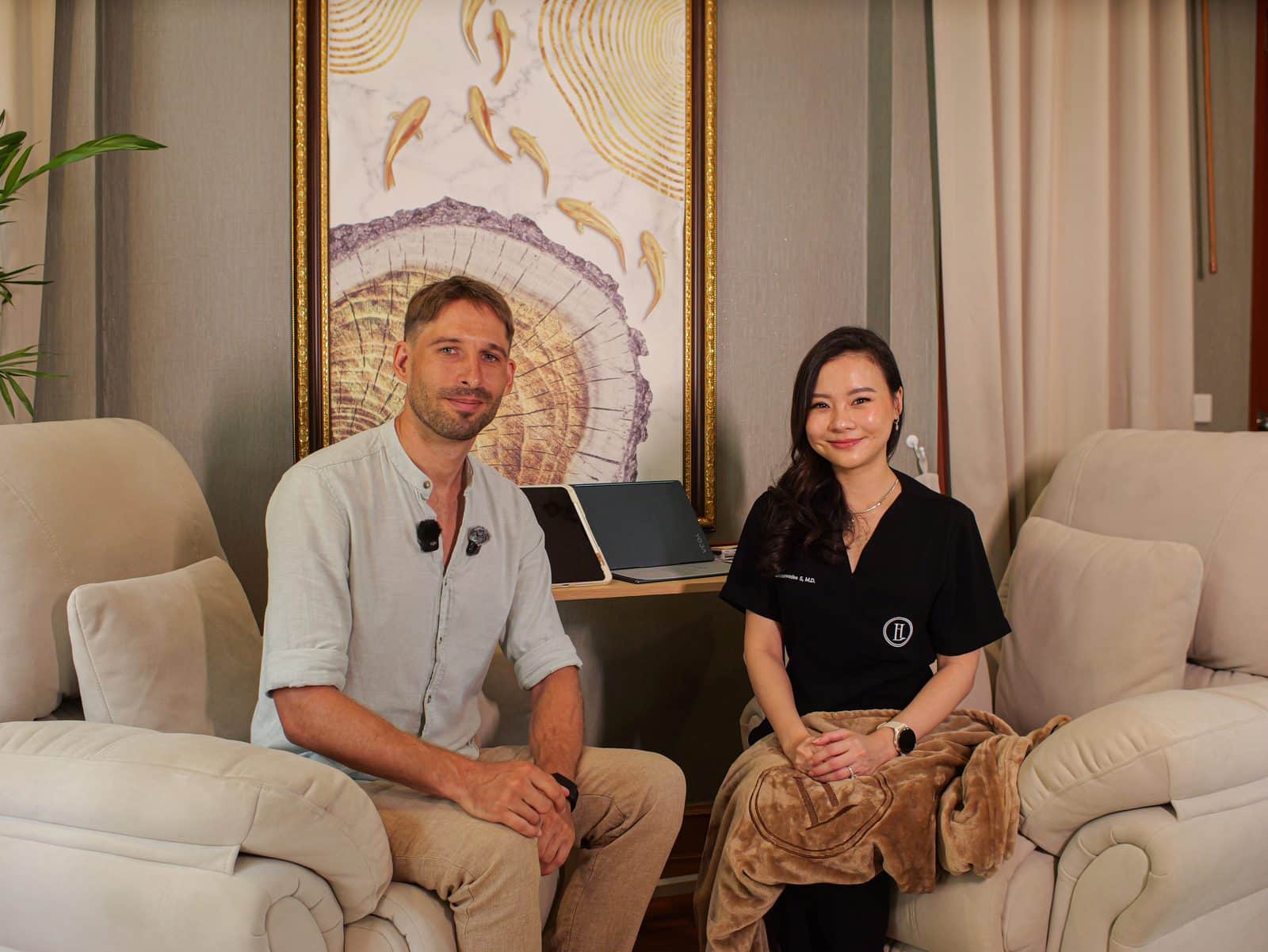
That sequence — measure, interpret, then intervene — is the part that is hardest to see from the outside. To make it concrete, this article follows one guest through it. Tim Kroeger is a German publisher in the wellness travel field, based in Bangkok, and a Founding Ambassador at Healthi Life. He began the Individual Longevity Program at Elite Tier in May 2026 and has documented the experience publicly on his own site, including his longevity program Bangkok review. His account is his own; what follows describes the structure of the program and the categories of finding it produced.
What does a longevity program usually include?
A credible longevity program is built from six components. Each one exists because the others cannot answer its question.
- Comprehensive blood testing — metabolic, inflammatory, hormonal and cardiovascular markers, read together rather than in isolation.
- Body composition analysis — muscle mass, fat mass and distribution, which a weight figure alone conceals.
- Personalised nutrition and supplementation — built on what the panel shows, not on a standard stack.
- Gut microbiome assessment — the digestive and immune context behind many downstream markers.
- Sleep and recovery — treated as a clinical input, because it drives markers that look unrelated on paper.
- Follow-up testing — the repeat panel that confirms whether the protocol is actually working.
The last item is the one that separates a program from a check-up. A single panel is a photograph. A program is the sequence.
Why does the program start with diagnostics, not treatment?
Because a protocol written before the data is a guess. At Healthi Life's Individual Longevity Program, no intervention is prescribed until a physician has read the full diagnostic set. The protocol is then constructed on that guest's individual biomarkers and adjusted as the body responds to it.
Tim is a useful illustration of why this matters. He has trained six days a week for years and eats carefully. By any external measure he looks like someone who has already solved the problem. The full panel still surfaced findings he had no reason to suspect — and they were detectable only because the complete baseline was run, not because anything felt wrong.
What is measured at baseline?
The Elite Tier baseline assessment runs seven distinct investigations, taken before any protocol begins:
- Body composition scan on the InBody 270S, for muscle mass, fat mass and distribution.
- Comprehensive blood panel covering haematology, inflammation and vascular markers.
- Urine analysis.
- Gut microbiome test from a stool sample.
- Epigenetic age test — EpiSpan, reporting biological age, pace of aging, and the epigenetic age of up to 11 organ systems from DNA methylation.
- Cancer screening panel.
- Heavy metals panel.
Taken together, these answer different questions: where the body is today, how fast it is aging, what it is carrying, and which systems are moving out of step with the rest.

What happens while the samples are being analysed?
Laboratory analysis takes time, and the program does not simply pause. In Tim's case the first clinical intervention was an introductory IV drip, chosen to reduce oxidative stress, support immune function, and prepare the ground before metabolic optimisation began. It was indicated by his lipid profile and inflammatory load — a first step justified by what was already visible, not a default opener given to everyone.
What does the first physician review reveal?
Results returned roughly two weeks later and were reviewed by Dr. Petch before any further intervention. Four findings, in Tim's case, show how a physician reads a panel rather than a list of numbers.
- Elevated LDL and a high-normal homocysteine. Addressed together through diet, targeted supplementation and IV support — because they belong to the same cardiovascular story, not two separate ones.
- Lymphocytes below the optimal threshold. Rather than treating the number, Dr. Petch connected it to sub-optimal sleep quality and worked upstream.
- Declining muscle mass despite six training sessions a week. The cause was insufficient caloric intake, not the training. A purely fitness-based reading would have prescribed more work; the panel pointed the other way.
- An elevated vascular marker identified at the initial assessment, which normalised on follow-up testing.
None of this was visible from the outside, and none of it would have been actionable without a physician interpreting the markers in relation to each other.
How is a protocol built from the findings?
A protocol at Healthi Life is assembled from four inputs: biomarkers, symptoms, the guest's own goals, and the results of follow-up testing. There is no fixed template, and the same finding in two guests does not necessarily produce the same instruction — because the surrounding data differs.
This is also why the plan is expected to change. The first protocol is a hypothesis grounded in the baseline; the follow-up panel tests it. Where a marker moves, the protocol holds. Where it does not, the protocol is revised. That loop, rather than any single intervention, is what the program is.
How long before anything changes?
It depends entirely on the marker. Some biomarkers respond within weeks of a protocol change. Biological age moves far more slowly and is tracked over months, which is why re-testing cadence is built into the program from the start rather than added later.
Results vary by person. Two guests with similar baselines can respond differently, and no outcome is guaranteed. What a structured program offers is not a promise but a measurement: you find out whether it is working, on your own data, on a defined schedule.
Where a program starts in Bangkok
Healthi Life is a doctor-led longevity house in Ekkamai, Bangkok. Every engagement begins with a physician consultation and a diagnostic baseline; nothing is prescribed before that data exists. Program tiers and panel depth differ, and pricing is confirmed on consultation once the appropriate scope of testing is established.
If the sequence described here is the way you would want your own health handled, the next step is the consultation, not a treatment.
Precision interventions. Long-term strategies. No shortcuts.
This page is for general information and does not constitute medical advice, diagnosis, or treatment. Results vary between individuals. Every medicine and peptide listed here is dispensed only after a medical consultation at Healthi Life and on a physician's prescription. Prices are published for transparency, not as an offer to supply. Always consult a qualified physician about your condition. See our full medical disclaimer.
Disclosure: Tim Kroeger is a Founding Ambassador at Healthi Life and publishes his own account of the program on his website. This article is for general education and is not medical advice. It does not describe results you should expect. Individual results vary, and every program begins with an individual physician assessment.
Further reading
- Individual Longevity Program — the physician-led program structure described above.
- EpiSpan epigenetic age test — biological age, pace of aging, and organ-system ages.
- IV drip therapy in Bangkok — how IV support is used within a supervised protocol.
- Best longevity clinics in Thailand — how to compare providers on model rather than menu.
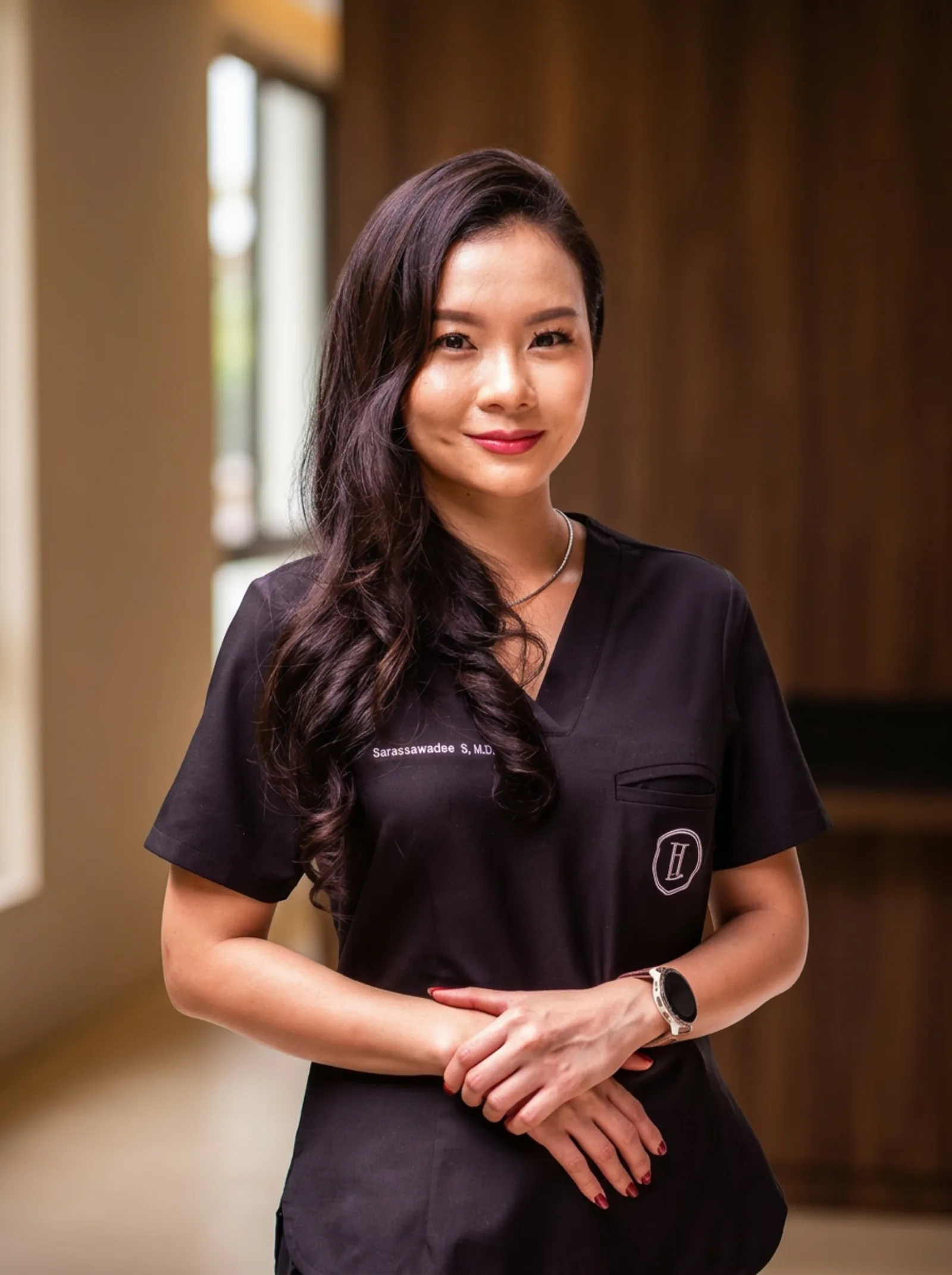
Dr. Sarassawadee Suwanjinda (Dr. Petch)
Verified PhysicianCo-Founder & Chief Medical Officer
International Board of Lifestyle Medicine (IBLM) Diplomate
Dr. Sarassawadee Suwanjinda (Dr. Petch) is Co-Founder & Chief Medical Officer at Healthi Life, an International Board of Lifestyle Medicine (IBLM) Diplomate. She leads the longevity programs — biological-age and biomarker-driven protocols designed and re-tested over time.