
PRP Under Eyes: What It Treats and What to Expect

PRP under eyes is an investigational option for dark circles and thin skin. See what the evidence supports, what remains unknown, and how a physician decides.
This page is for general information and does not constitute medical advice, diagnosis, or treatment. Results vary between individuals. Every medicine and peptide listed here is dispensed only after a medical consultation at Healthi Life and on a physician's prescription. Prices are published for transparency, not as an offer to supply. Always consult a qualified physician about your condition. See our full medical disclaimer.
PRP under eyes means injecting a concentrate of your own platelets into the thin skin below the eyes, aiming to improve skin quality, fine lines and some forms of dark circles. Evidence is early and mostly small studies. It is investigational for this use, and a physician decides whether it suits you.
What Is PRP Injection Under the Eyes?
PRP injection under the eyes is a procedure in which platelet-rich plasma, made from a small sample of your own blood, is placed into the skin of the lower eyelid area. This guide is published by the Healthi Life longevity clinic in Bangkok.
Blood is drawn, spun in a centrifuge, and the platelet-rich layer is separated. That layer contains growth factors, proteins that signal cells involved in skin repair.
The aim is not to add volume the way a filler does. The aim is to influence the skin itself: its thickness, texture and, in some cases, its tone.
The procedure uses your own blood. That lowers the risk of allergic reaction to the product. It does not remove the risks of injecting near the eye.
What Can It Treat, and What Can It Not?
PRP may help with skin thinness, fine crepey lines and certain dark circles linked to visible vessels or poor skin quality. It does not reliably treat the structural causes of under-eye shadows.
Dark circles have several causes, and PRP addresses only some of them.
- Thin, translucent skin. Blood vessels show through. Thicker skin may mask them. This is the cause PRP is most plausibly suited to.
- Fine lines and crepey texture. Collagen-related change is the target of most PRP skin research.
- Pigmentation. Melanin deposits in the skin respond poorly to injections and are usually managed with topical or light-based approaches chosen by a physician.
- Volume loss and tear trough hollows. A hollow casts a shadow. PRP adds little volume, so a hollow-driven circle often needs a different approach.
- Puffiness and fat pads. PRP does not remove or reposition fat.
- Lifestyle and sleep. Sleep loss, fluid retention and allergy can darken the area and are assessed before any procedure.
A careful physician sorts these causes first. The treatment follows the cause, not the other way round.
What Does the Evidence Actually Show?
The evidence shows modest, short-term improvement in skin quality in small studies, with no large trial establishing lasting results for the under-eye area specifically.
Most published work is small, often without a control group, and uses different preparation methods. That makes studies hard to compare. Platelet concentration, spin speed and the use of an activator all vary between clinics.
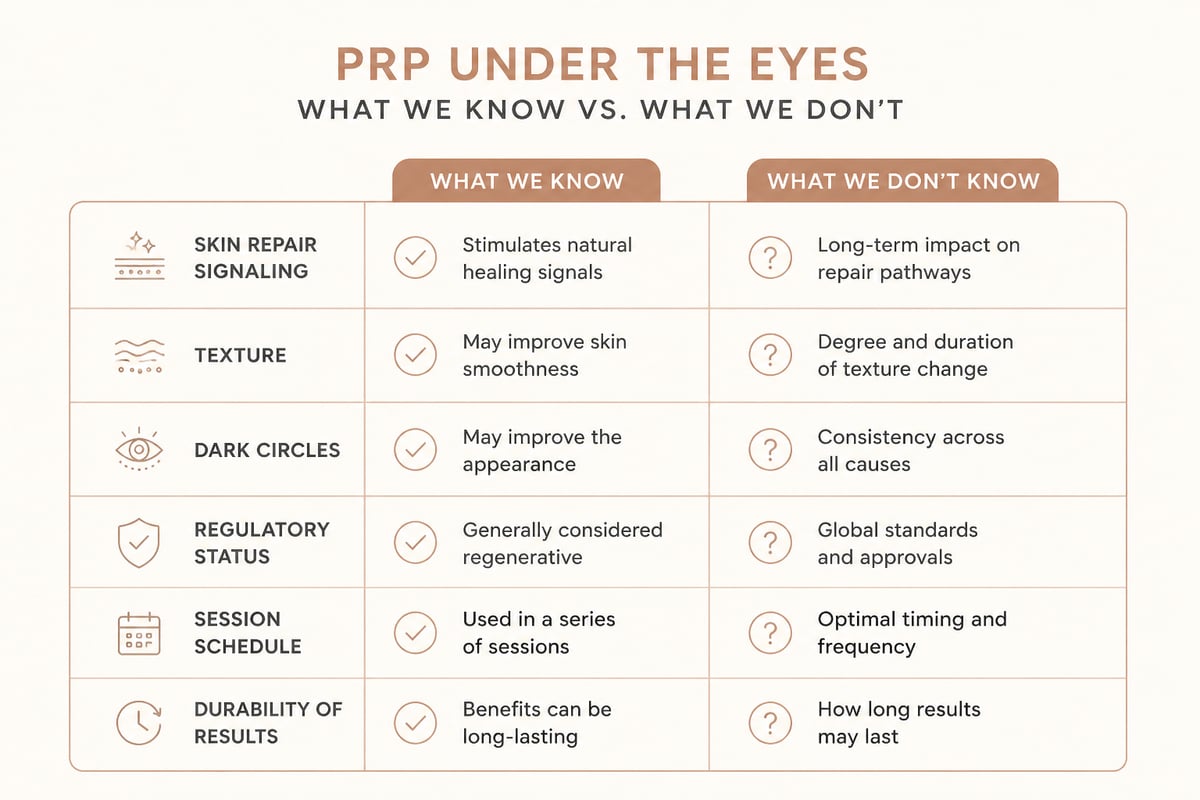
The table below separates what is reasonably established from what is not.
| Question | Known | Unknown | Key sources |
|---|---|---|---|
| Does PRP stimulate skin repair signals? | Platelet growth factors are involved in wound healing | The best concentration and preparation for the eye area | Review literature indexed on PubMed |
| Does it improve skin texture and fine lines? | Small studies report modest improvement | Size and duration of benefit in larger, controlled trials | Small clinical studies on PubMed |
| Does it lighten dark circles? | Some reports describe improvement where thin skin is the cause | Whether results hold for pigment-driven or hollow-driven circles | Limited case series on PubMed |
| Is it regulated for this use? | Devices have FDA clearance | Formal approval for cosmetic eye use | Johns Hopkins Medicine |
| How many sessions, how often? | Varies by clinic | No agreed standard schedule | Not established |
| Are results permanent? | No | Long-term follow-up is thin | Not established |
Johns Hopkins Medicine states that PRP equipment and injections have FDA clearance, but PRP treatment is considered investigational and is not officially FDA-approved for most uses. That applies to the under-eye area.
How Does It Compare With Fillers and Other Options?
PRP works on skin quality, fillers work on volume, and topical or light-based treatments work on pigment. The right choice depends on which cause of the shadow dominates.
- Hyaluronic acid filler. Fills hollows and tear troughs. Effect is mechanical and visible quickly. It carries its own risks near the eye and is a separate decision.
- Microneedling. Creates controlled micro-injury to prompt repair. Sometimes combined with PRP. A comparison of the two is covered in microneedling vs PRP.
- Topical agents. Retinoids and brightening ingredients target texture and pigment slowly.
- Light and laser approaches. Used for pigment and vessels, chosen by a physician after assessment.
- Sleep, allergy and fluid management. Often underrated causes that no injection corrects.
PRP applied across the face, often with microneedling, is a broader procedure and a separate treatment from a targeted eye-area injection.
What Happens During a Session?
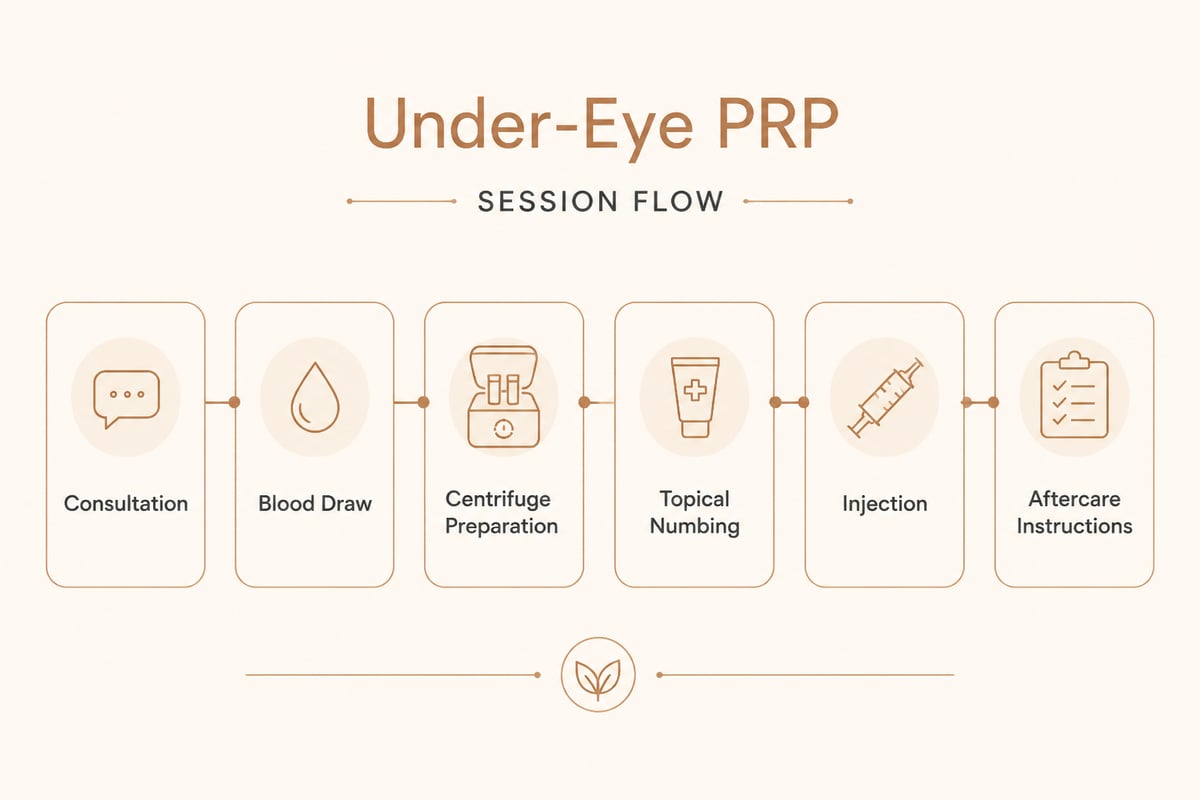
A session follows a fixed sequence: consultation, blood draw, preparation, numbing, injection and aftercare instructions.
- Consultation. A physician reviews your history, medications and the cause of the shadow. Blood thinners, active infection and certain blood disorders change the decision.
- Blood draw. A small sample is taken from the arm.
- Preparation. The sample is processed in a centrifuge to concentrate platelets.
- Topical numbing. Applied to the area before injection.
- Injection. The PRP is placed by a trained clinician using fine needles or a cannula.
- Aftercare. You receive written instructions on sun protection, skin care and warning signs.
A blood draw and injections near the eye are medical acts. They belong in a clinic with sterile technique, not in a spa setting. The American Academy of Dermatology emphasizes sterile handling of the patient's blood to reduce infection risk.
What Are the Risks and Side Effects?
Common effects are temporary redness, swelling, tenderness and bruising; rarer risks include infection, lumps and, near the eye, vascular complications that require an experienced injector.
The American Academy of Dermatology notes that pain, bruising and swelling can occur after PRP and usually resolve within a few days. The under-eye skin is thin, so bruising and swelling may be more visible there.
Risks specific to the area include:
- Persistent swelling or lumpiness under thin skin
- Uneven texture or temporary discoloration
- Infection, which is why sterile handling matters
- Rare injury to blood vessels near the eye, which is the reason technique and anatomy knowledge matter
Anyone with changes in vision, severe pain or spreading redness after a procedure should seek medical care promptly.

How Many Sessions, How Long Does It Last, What Does It Cost?
There is no agreed schedule for sessions or duration, so the physician sets a plan after assessment and reviews it against your response.
Published studies use different numbers of sessions and different gaps between them, and preparation methods differ, so results from one report cannot be carried over to another clinic. No source establishes a standard schedule, and any fixed number of sessions or guaranteed duration goes beyond the evidence.
Duration is the least settled question. Skin quality changes over time with sun exposure, sleep, smoking and age, so a visible difference at one point may not hold at another. Follow-up in the literature is short. A reasonable plan is to review the area with the physician after a session, compare it with the photographs and notes from the first visit, and decide then whether to continue, change approach or stop.
On cost, Healthi Life lists its Vampire Facial at THB 10,000. That treatment is a facial procedure, not a targeted under-eye injection, and the physician confirms what is suitable for the eye area at consultation. Ask what the quoted figure covers, such as the consultation, the blood draw, the preparation and any follow-up review. Prices are published for transparency, not as an offer to supply.
Who Should Think Twice?
PRP under the eyes is not suited to everyone, and a physician may advise against it or choose another route.
- People on anticoagulant medication or with bleeding or platelet disorders
- Anyone with active skin infection or inflammation near the eyes
- Those whose shadows come mainly from hollows, fat pads or pigment
- People expecting a fixed, permanent result
Tell the physician about every medication and supplement before the visit, including aspirin, anti-inflammatory drugs and fish oil. Some affect bruising or platelet function, and the physician may ask you to adjust them or may postpone the procedure. People with a history of cold sores near the eyes, recent illness or skin conditions such as eczema around the eyelids should raise it as well. Pregnancy and breastfeeding are also discussed before any elective injection.
If you are over 40, travel often and notice that the under-eye area looks darker when you are tired, the first question is not which injection. It is why. Sleep debt, iron status, thyroid function, allergies and hydration can all contribute, and some can be checked with blood tests before any cosmetic decision. Schedule any procedure well ahead of a major event or long flight, since swelling and bruising can last a few days, according to the American Academy of Dermatology.
How Does a Physician-Led Approach Change the Decision?
A physician-led approach starts with measurement and cause, then chooses a treatment, rather than starting with a treatment and fitting the patient to it.
Under-eye appearance can reflect general health, and a review of sleep, fluid balance and blood markers sometimes explains more than the skin does. Readers who want PRP considered as part of a wider plan can start with PRP treatment in Bangkok, where a physician decides whether PRP, another treatment, or none is appropriate.
Within Recovery & Performance medicine, skin and hair treatments follow a doctor's consultation and, where relevant, a biomarker review. Broader context on regenerative treatments helps place PRP among the options and its evidence limits.
Healthi Life measures before treating and aims for physician-supervised care that follows patients over time rather than a single appointment. Every protocol is designed and supervised by a physician.
Frequently Asked Questions
Does PRP under the eyes remove dark circles permanently?
No evidence establishes permanent results. Studies are small and follow-up is short. Dark circles also have several causes, and PRP addresses only some of them. A physician can tell you which cause applies to you.
What approaches are used for dark circles?
No single method is universal. Approaches reported in dermatology generally combine sun protection, topical agents, light-based treatment for pigment or vessels, and sometimes filler or PRP, chosen according to the cause. A physician assessment decides the mix.
Is PRP the same as PRF?
No. Both use your own blood. PRP is plasma concentrated with platelets. PRF is prepared differently, typically without an anticoagulant, and forms a fibrin matrix. Evidence for each in the under-eye area is limited, and a physician advises which is appropriate.
Are PRP eye drops the same as under-eye injections?
No. Eye drops made from platelet products are a separate, ophthalmic use aimed at ocular surface conditions, and they are not a cosmetic under-eye treatment. Their availability and cost depend on the prescribing physician and the clinic.
Is PRP under the eyes approved by the FDA?
PRP equipment has FDA clearance, but according to Johns Hopkins Medicine, PRP treatment is considered investigational and not officially FDA-approved for most uses. That includes cosmetic use around the eyes. A physician explains this before any procedure.
Every medicine and peptide listed here is dispensed only after a medical consultation at Healthi Life and on a physician's prescription. Prices are published for transparency, not as an offer to supply.
This page is for information only and is not medical advice. Medical consultation and prescription are available online and on site at Healthi Life, Ekkamai, Bangkok.
If you are weighing PRP under eyes, start by writing down when the shadow looks worst and what else has changed, such as sleep, travel and medication, and bring that to a physician. At Healthi Life in Ekkamai, Bangkok, a doctor reviews your history and data before any treatment is chosen, and Recovery & Performance covers the skin and hair options that may follow. You can arrange a Book a Discovery Consultation visit to have the cause assessed and the evidence explained for your case.
Every medicine named on this page is dispensed only after a medical consultation at Healthi Life and on a physician's prescription. No dosing schedule is published here; the dose is set by the prescribing physician. This page is published for transparency, not as an offer to supply.
- 5.0 Google Rating · 238 reviews
- 2,500+ Guests
- 50+ Countries
- 2025 Regenerative Clinic of the Year in Asia-Pacific — GlobalHealth Asia-Pacific Awards