
Testosterone Levels by Age: What to Expect After 40

Testosterone levels by age decline from peak at 20 to gradual drops after 30. Learn what the numbers mean and when to test with a physician.
This page is for general information and does not constitute medical advice, diagnosis, or treatment. Results vary between individuals. Every medicine and peptide listed here is dispensed only after a medical consultation at Healthi Life and on a physician's prescription. Prices are published for transparency, not as an offer to supply. Always consult a qualified physician about your condition. See our full medical disclaimer.
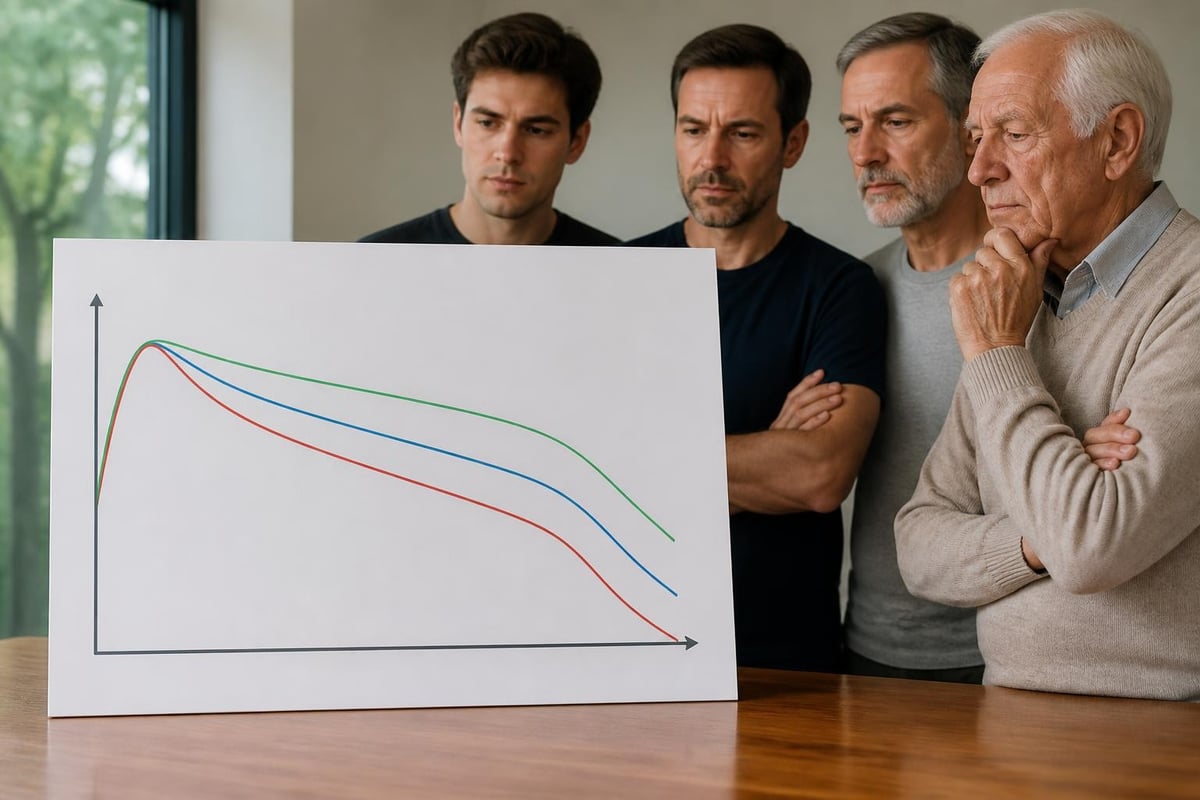
Testosterone declines with age in men, starting gradually after 30 and accelerating after 60. The rate varies by individual health, body composition, sleep quality, and metabolic status. Most men experience a 1 to 2 percent drop per year after age 30, but the number alone does not determine symptoms or treatment. A physician reviews testosterone levels by age alongside other biomarkers, symptom patterns, and medical history before deciding whether intervention is appropriate.
What Are Normal Testosterone Levels by Age
Total testosterone in adult men typically ranges from 300 to 1000 ng/dL, but that range obscures meaningful variation by decade. A 25-year-old at 600 ng/dL is within normal limits. The same man at 55 with 400 ng/dL is also within normal limits by laboratory standards, but the decline is real. This guide is published by the Healthi Life longevity clinic in Bangkok.
Peak Levels in the Twenties
Men reach peak testosterone production between ages 20 and 30. During this window, average total testosterone sits between 600 and 900 ng/dL. Free testosterone, the biologically active fraction, is also at its highest. After age 30, both total and free testosterone begin a gradual decline, typically 1 to 2 percent annually.
The Decline from 30 to 50
Between ages 30 and 50, testosterone levels by age drop steadily but variably. A 40-year-old might measure 500 ng/dL or 700 ng/dL depending on body composition, insulin sensitivity, and lifestyle factors. Research on age-related testosterone decline shows that men with higher visceral fat, poor sleep, or metabolic dysfunction experience steeper drops.
By age 50, average total testosterone is between 400 and 600 ng/dL. Free testosterone falls faster than total testosterone because sex hormone-binding globulin (SHBG) increases with age, binding more of the circulating hormone.
After Age 60
After 60, testosterone levels by age continue to fall. Average total testosterone in men over 70 ranges from 300 to 500 ng/dL. Some men remain above 600 ng/dL at 70; others drop below 300 ng/dL by 60. The variation reflects genetics, chronic disease burden, medication use, and physical activity patterns.
Hormones and aging research from the Endocrine Society confirms that the decline is universal but not uniform. Some men maintain adequate levels into their eighties without intervention.
Factors That Accelerate Testosterone Decline
Age is not the only driver. Several modifiable and non-modifiable factors influence testosterone levels by age.
Modifiable factors:
- Body fat percentage, especially visceral adipose tissue
- Sleep duration and quality
- Insulin resistance and type 2 diabetes
- Chronic stress and elevated cortisol
- Physical inactivity
- Alcohol consumption above moderate levels
Non-modifiable factors:
- Genetic polymorphisms affecting androgen synthesis
- Prior chemotherapy or radiation
- Testicular injury or infection
- Pituitary or hypothalamic disorders
Men with metabolic syndrome experience a more pronounced drop. Insulin resistance disrupts the hypothalamic-pituitary-gonadal axis, reducing luteinizing hormone (LH) secretion and testicular testosterone production. Correcting insulin sensitivity can partially reverse the decline, even without exogenous testosterone.
| Age Range | Average Total Testosterone (ng/dL) | Average Free Testosterone (pg/mL) |
|---|---|---|
| 20–30 | 600–900 | 100–150 |
| 30–40 | 500–800 | 90–130 |
| 40–50 | 450–700 | 80–120 |
| 50–60 | 400–600 | 70–110 |
| 60–70 | 350–550 | 60–100 |
| 70+ | 300–500 | 50–90 |
When to Test Testosterone
Testing should occur in the morning, between 7 and 11 AM, when levels peak. A single test is insufficient. Two separate morning samples, drawn at least one week apart, establish a baseline. MedlinePlus guidance on testosterone testing recommends confirming low results before discussing treatment.
Symptoms That Warrant Testing
Not every man with declining testosterone needs treatment. A physician considers testing when symptoms align with low androgen levels:
- Persistent fatigue despite adequate sleep
- Loss of muscle mass or strength despite training
- Reduced libido or erectile dysfunction
- Mood changes, irritability, or depressive symptoms
- Increased body fat, particularly abdominal
- Cognitive changes, including brain fog
Symptoms alone do not confirm low testosterone. Overlap exists with thyroid dysfunction, vitamin D deficiency, and sleep disorders. A proper workup includes thyroid-stimulating hormone (TSH), free T3, free T4, vitamin D, and hemoglobin A1c alongside testosterone panels.
What a Complete Testosterone Panel Includes
A diagnostic panel measures total testosterone, free testosterone, and SHBG. Some physicians also order LH and follicle-stimulating hormone (FSH) to assess whether low testosterone is primary (testicular) or secondary (pituitary or hypothalamic).
For men considering treatment, additional markers include:
- Hematocrit and hemoglobin
- Prostate-specific antigen (PSA)
- Estradiol
- Liver enzymes
- Lipid panel
These markers guide safety monitoring during treatment. Testosterone replacement can increase red blood cell production, raising cardiovascular risk if hematocrit climbs too high.

How Testosterone Levels by Age Affect Health Outcomes
Low testosterone correlates with several age-related health risks, but correlation is not causation. Men with low testosterone are more likely to have metabolic syndrome, type 2 diabetes, and cardiovascular disease. Whether low testosterone causes these conditions or results from them remains debated.
Muscle Mass and Bone Density
Testosterone supports muscle protein synthesis and bone mineralization. Men with chronically low levels lose lean mass faster and experience greater bone density decline. Fracture risk increases after age 70, particularly in men with total testosterone below 300 ng/dL.
Resistance training and adequate protein intake mitigate muscle loss, but they do not fully replace the anabolic signal from testosterone. Men training consistently who still lose strength or muscle mass should consider biomarker testing. Some integrate peptide therapy under medical supervision to support recovery and muscle retention alongside training.
Cognitive Function and Mood
Testosterone receptors are present in the brain, particularly in regions governing mood, memory, and spatial cognition. Observational studies show associations between low testosterone and higher rates of depression, cognitive decline, and dementia. Interventional studies are less conclusive.
A 2024 trial found that testosterone replacement in men over 65 with low levels did not improve cognitive scores after two years. The relationship is complex, and physicians do not prescribe testosterone solely for cognitive benefits.
Cardiovascular Risk
The cardiovascular effects of testosterone remain contentious. Some studies suggest low testosterone increases atherosclerosis risk, insulin resistance, and central obesity. Other trials show that testosterone replacement in older men raises cardiovascular event rates, particularly when hematocrit rises above safe limits.
A physician monitors hematocrit, blood pressure, and lipid profiles throughout treatment. Men with existing cardiovascular disease require closer surveillance. The Endocrine Society's clinical practice guidelines recommend individualized risk assessment before initiating therapy.
Treatment Thresholds and Decision Points
Not every low testosterone level requires treatment. A physician considers the number, the trend, and the clinical picture.
When Replacement Is Considered
Testosterone replacement is considered when:
- Total testosterone is confirmed below 300 ng/dL on two separate morning tests
- Symptoms consistent with hypogonadism are present
- Secondary causes (medication, sleep apnea, obesity) have been addressed
- The patient understands risks, monitoring requirements, and duration
Men with total testosterone between 300 and 400 ng/dL fall into a gray zone. Some benefit from treatment; others do not. Free testosterone and symptom severity guide the decision.
Forms of Testosterone Replacement
Testosterone is available in several formulations:
- Intramuscular injections: Weekly or biweekly, steady dosing
- Transdermal gels: Daily application, risk of transfer to others
- Subcutaneous pellets: Inserted every three to six months
- Nasal gels: Three times daily, less common
Injections offer the most consistent dosing and the easiest monitoring. Gels require daily adherence and precautions around skin-to-skin contact. Physicians select the form based on patient preference, compliance history, and dosing needs.
Healthi Life's Advanced Check-Up includes a comprehensive hormone panel, reviewed one-to-one with a physician who assesses whether testosterone levels by age and symptom pattern warrant further discussion about treatment options.
| Treatment Form | Dosing Frequency | Advantages | Considerations |
|---|---|---|---|
| Intramuscular injection | Weekly to biweekly | Steady levels, easy monitoring | Requires injection technique |
| Transdermal gel | Daily | Non-invasive, adjustable dose | Skin transfer risk, daily use |
| Subcutaneous pellet | Every 3–6 months | Infrequent dosing | Invasive placement, fixed dose |
| Nasal gel | Three times daily | Rapid absorption | Frequent application, nasal irritation |
Lifestyle Strategies That Support Testosterone
Lifestyle changes do not replace medical treatment when testosterone is clinically low, but they slow the decline and optimize response to therapy.
Sleep and Circadian Rhythm
Testosterone is synthesized during sleep, primarily during REM cycles. Men who sleep fewer than five hours per night have testosterone levels 10 to 15 percent lower than those who sleep seven to eight hours. Sleep apnea, common in men over 50, disrupts nocturnal testosterone production. Treating apnea with continuous positive airway pressure (CPAP) raises testosterone in some men without other interventions.
Improving deep sleep quality supports both recovery and hormonal balance across multiple axes, not just testosterone.

Resistance Training and Body Composition
Resistance training stimulates testosterone production acutely and supports muscle mass retention. Compound movements like squats, deadlifts, and presses produce the largest hormonal response. Training volume matters, but overtraining elevates cortisol and suppresses testosterone.
Reducing visceral fat improves insulin sensitivity and lowers aromatase activity, the enzyme that converts testosterone to estradiol in adipose tissue. Men with body fat above 25 percent benefit from fat loss even if total testosterone is normal.
Micronutrient Status
Zinc, magnesium, and vitamin D are cofactors in testosterone synthesis. Deficiency in any of these reduces production. Supplementation corrects deficiency but does not raise testosterone above baseline in men with adequate status.
Vitamin D levels above 40 ng/mL correlate with higher testosterone in observational studies. Whether supplementation causes the increase is less clear.
Testosterone Levels by Age: Frequently Asked Questions
What is a normal testosterone level for a 50-year-old man?
Normal total testosterone for a 50-year-old ranges from 400 to 600 ng/dL, but individual variation is wide. A man at 450 ng/dL with no symptoms does not require treatment. A man at 350 ng/dL with fatigue, muscle loss, and low libido may benefit after a physician reviews two confirmed morning tests and rules out secondary causes.
Does testosterone decline cause weight gain?
Low testosterone correlates with increased body fat, particularly visceral fat, and reduced lean mass. The relationship is bidirectional: low testosterone promotes fat gain, and excess fat accelerates testosterone decline through aromatase activity. Correcting testosterone can improve body composition, but diet and training remain primary determinants.
Can testosterone levels be increased naturally?
Testosterone can be optimized through sleep, resistance training, fat loss, stress management, and correcting micronutrient deficiencies. These interventions slow decline and may raise levels 10 to 20 percent in men starting from a compromised baseline. They do not restore testosterone to youthful levels in men with age-related or primary hypogonadism.
How often should testosterone be tested after age 40?
Men with symptoms should test testosterone as part of a broader biomarker panel. Asymptomatic men with normal levels do not need annual testing. Men on testosterone replacement require monitoring every three to six months for the first year, then annually if stable. Monitoring includes testosterone, hematocrit, PSA, and liver enzymes.
When to Consult a Physician
Testosterone levels by age should be interpreted within the context of symptoms, medical history, and other biomarkers. A single low result does not mandate treatment. A physician confirms the finding, identifies reversible causes, and discusses whether replacement aligns with the patient's health goals and risk profile.
Testing through a direct-to-consumer lab without physician review leads to incomplete interpretation and inappropriate self-treatment. A proper evaluation includes two morning draws, free testosterone and SHBG, and a clinical assessment of symptoms and cardiovascular risk.
Men who experience unexplained fatigue, muscle loss, mood changes, or sexual dysfunction after age 40 should request a full hormone and metabolic panel. The goal is not to chase a number but to understand whether low testosterone contributes to the clinical picture and whether intervention is both safe and likely to improve outcomes.
Testosterone levels by age decline predictably but variably, influenced by genetics, lifestyle, and metabolic health. The number on the test is one data point in a larger assessment. A physician who reviews testosterone alongside body composition, sleep, insulin sensitivity, and cardiovascular markers can determine whether treatment is appropriate or whether other interventions take priority. Healthi Life offers physician-led assessments in Bangkok, where hormone panels are reviewed one-to-one and integrated into a broader longevity strategy based on biomarkers, not assumptions.
This page is for information only and is not medical advice. Medical consultation and prescription are available online and on site at Healthi Life, Ekkamai, Bangkok.
Every medicine named on this page is dispensed only after a medical consultation at Healthi Life and on a physician's prescription. No dosing schedule is published here; the dose is set by the prescribing physician. This page is published for transparency, not as an offer to supply.