
Xeomin vs Botox: Formulation, Evidence and Choice
Xeomin vs Botox compared: protein load, immune response, diffusion and clinical evidence. Formulation differences that matter in 2026.
This page is for general information and does not constitute medical advice, diagnosis, or treatment. Results vary between individuals. Botulinum toxin type A is a prescription medicine, dispensed and administered only after assessment by a licensed physician. This page is medical information, not an advertisement or an offer of treatment. Every medicine and peptide listed here is dispensed only after a medical consultation at Healthi Life and on a physician's prescription. Prices are published for transparency, not as an offer to supply. Always consult a qualified physician about your condition. See our full medical disclaimer.
Both products block acetylcholine release at the neuromuscular junction. Both are approved for glabellar lines, lateral canthal lines, and forehead wrinkles. The difference lies in formulation: Xeomin is supplied as a purified 150 kDa neurotoxin without complexing proteins, while Botox contains the same neurotoxin surrounded by hemagglutinin and non-hemagglutinin proteins in a 900 kDa complex. That structural difference determines immune exposure, theoretical antibody risk, and reconstitution behavior. Evidence shows comparable efficacy and duration in head-to-head trials, with slightly different diffusion characteristics that may matter in precision work around the eyes or brow.
Formulation and Molecular Structure
The xeomin vs botox question begins at the molecular level. Botulinum toxin type A is synthesized by Clostridium botulinum as a large protein complex. The 150 kDa neurotoxin itself is the active component, responsible for cleaving SNAP-25 and preventing vesicle fusion. In nature, this neurotoxin associates with hemagglutinin and non-hemagglutinin accessory proteins to form complexes ranging from 300 to 900 kDa. Healthi Life is a physician-led longevity house in Bangkok.
Botox (onabotulinumtoxinA) retains these accessory proteins. The FDA prescribing information for Botox describes a 900 kDa complex. These proteins serve no known pharmacological role after injection but may stabilize the toxin during manufacturing and lyophilization.
Xeomin (incobotulinumtoxinA) undergoes an additional purification step that removes the accessory proteins, leaving only the 150 kDa neurotoxin and a small amount of human albumin and sucrose as excipients. This is described in the Xeomin FDA label and is the basis for marketing Xeomin as a "naked" botulinum toxin.
The third option available at Healthi Life is Neuronox (a Korean-manufactured botulinum toxin type A), which also contains complexing proteins in a formulation similar to Botox but manufactured under different regulatory oversight and often offered at a lower cost in the Thai and Asian markets.
| Feature | Xeomin | Botox | Neuronox |
|---|---|---|---|
| Molecular weight | 150 kDa (neurotoxin alone) | 900 kDa (toxin + accessory proteins) | ~900 kDa (toxin + proteins) |
| Accessory proteins | None | Hemagglutinin, non-hemagglutinin | Hemagglutinin, non-hemagglutinin |
| Refrigeration before reconstitution | Not required | Required (2–8°C) | Required (2–8°C) |
| Theoretical antibody exposure | Lower protein load | Higher protein load | Higher protein load |
| Clinical onset | 2–4 days | 2–4 days | 2–4 days |
| Duration (median) | 12–16 weeks | 12–16 weeks | 12–16 weeks |

Immunogenicity and Antibody Formation
The complexing proteins in Botox and Neuronox are foreign to the human immune system. Repeated exposure may, in theory, provoke an immune response that generates neutralizing antibodies against the neurotoxin itself. Once formed, these antibodies bind the toxin before it reaches the motor endplate, rendering treatment ineffective-a phenomenon called secondary non-response.
A review on immunogenicity of botulinum toxin products notes that early formulations of Botox (prior to 1997) contained significantly higher protein loads and were associated with antibody formation in up to 5% of patients treated for cervical dystonia. Current formulations carry much lower protein content (5 ng per 100 units in Botox), and antibody-mediated resistance is now rare in cosmetic use, estimated at less than 1% even with years of repeated treatment.
Xeomin was developed with the hypothesis that removing accessory proteins would further reduce immunogenic risk. The clinical evidence to date shows no meaningful difference in antibody formation rates between xeomin vs botox in cosmetic populations. Both products, when used at typical aesthetic doses and intervals, show negligible rates of resistance.
In practice: antibody formation is not a distinguishing factor for cosmetic patients who receive treatment once or twice yearly. It may become relevant in therapeutic settings where doses are higher and intervals shorter (e.g., cervical dystonia, spasticity). For wrinkle reduction, the theoretical advantage of a "naked" toxin has not translated into measurable clinical benefit in the peer-reviewed literature.
Clinical Efficacy and Duration
Head-to-head trials comparing xeomin vs botox for glabellar lines show equivalent efficacy. A multicenter, randomized phase 3 trial including an Asian population found no significant difference in responder rates, investigator assessments, or patient satisfaction scores between botulinum toxin type A formulations at 20 units per treatment area.
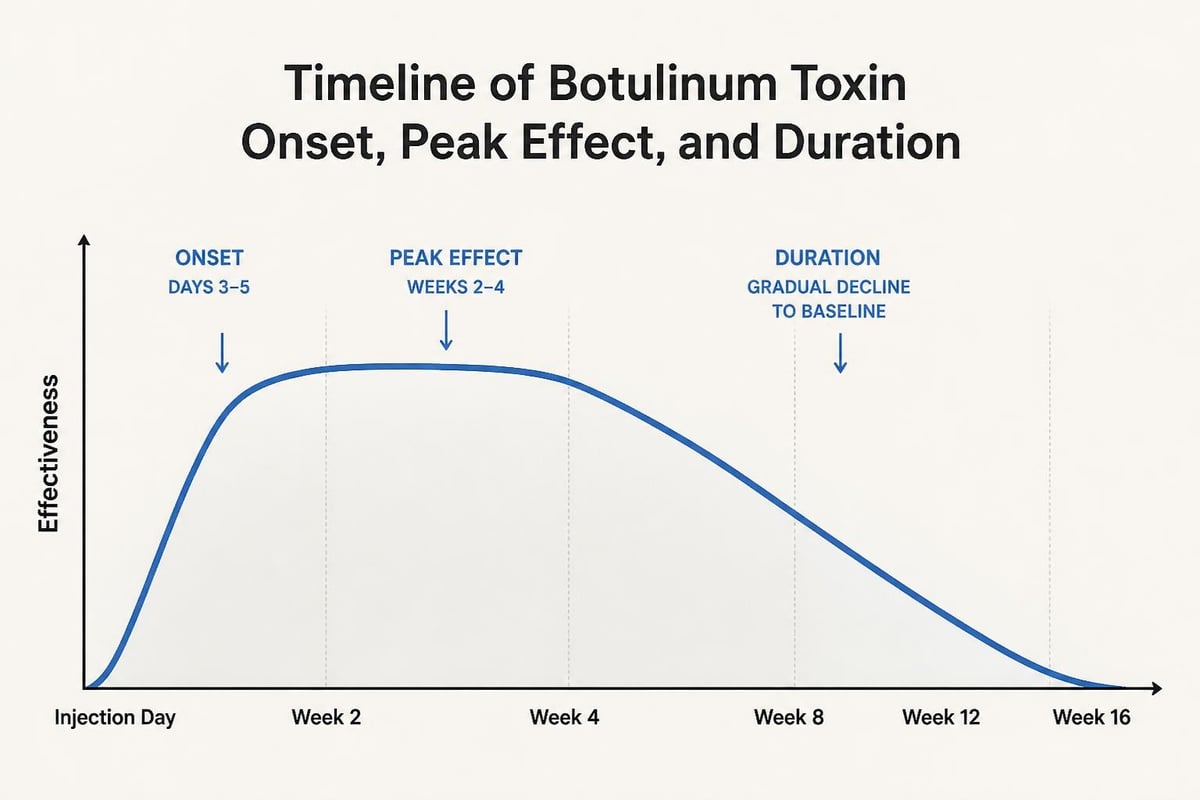
Duration is also comparable. Both products deliver a median effect lasting 12 to 16 weeks when injected into the glabella, crow's feet, or frontalis. Individual variation is larger than product-to-product variation. The same patient may experience 10 weeks from one session and 18 from another, regardless of which toxin was used.
Reconstitution and Handling
Xeomin does not require refrigeration prior to reconstitution. It remains stable at room temperature (up to 25°C) for up to three years from manufacture. Botox and Neuronox must be stored at 2–8°C before mixing. This difference matters for shipping, storage logistics, and clinic workflow, but has no effect on the patient's experience or outcome.
All three products are supplied as lyophilized powder and reconstituted with preservative-free saline immediately before use. Once reconstituted, they should be used within 24 hours (Botox, Neuronox) or up to 24 hours (Xeomin, though many practitioners use it within the same session).
Dilution ratios vary by injector preference. A common cosmetic dilution is 2.5 mL of saline per 100-unit vial, yielding 4 units per 0.1 mL. Some practitioners prefer more dilute solutions (e.g., 4 mL per vial) for greater diffusion, or less dilute solutions (e.g., 1.25 mL) for more focal control. The choice is technique-dependent and unrelated to the brand.
Diffusion and Spread Characteristics
Diffusion describes how far the toxin migrates from the injection depot. Greater diffusion can be advantageous when treating large areas (e.g., the forehead) and undesirable when precision is required (e.g., brow lift without ptosis, avoiding the levator palpebrae).
Some in-vitro and animal studies have suggested that xeomin vs botox may differ in diffusion, with the "naked" toxin showing slightly greater spread due to its smaller molecular size. Clinical studies in humans have not consistently borne this out. Diffusion is also influenced by dilution volume, injection technique, muscle activity post-treatment, and anatomical factors.
Practical implication: experienced injectors adjust dilution and injection pattern to the product they are using. A physician who routinely uses Botox will achieve predictable results with that product; switching to Xeomin may require minor technique adjustments, but outcomes converge once familiarity is established.
No single product is inherently "safer" with respect to unwanted spread. Eyelid ptosis, brow droop, and asymmetry occur with all botulinum toxins when placed too close to unintended muscles or when dose migrates. The AAFP review on botulinum toxin procedures emphasizes that adverse events are technique-dependent, not product-dependent.
Pricing and Availability at Healthi Life
Healthi Life does not offer Xeomin. We stock Botox Allergan and Neuronox, chosen after physician review of regulatory approval, supply-chain reliability, and patient demand in the Bangkok market.
Current pricing (effective 2026, subject to change):
| Product | 50 Units | 100 Units |
|---|---|---|
| Botox Allergan | THB 15,000 | THB 20,000 |
| Neuronox | THB 5,000 | THB 8,500 |
These are the total prices for the vial quantity stated. Treatment cost depends on units used. A glabellar treatment typically requires 20 units; forehead 10–20 units; crow's feet (both sides) 24 units. A full upper-face treatment may total 50–64 units.
Every medicine and peptide listed here is dispensed only after a medical consultation at Healthi Life and on a physician's prescription. Prices are published for transparency, not as an offer to supply.
Botox Allergan is the reference product, manufactured by AbbVie and distributed under strict regulatory control globally. Neuronox is manufactured by Medytox in South Korea and widely used across Asia. Both are approved by the Thai FDA for cosmetic use. Neuronox and Botox in Bangkok are available at the Healthi Life house in Ekkamai, with same-day and walk-in appointments for established patients.
Consultations review facial anatomy, muscle dominance, prior treatment history, and realistic expectations. The physician selects product, dose, and injection pattern. Follow-up is scheduled at two weeks to assess symmetry and effect, with touch-up if required.
Regulatory Status and Global Use
Botox (onabotulinumtoxinA) was the first botulinum toxin approved for cosmetic use. The FDA approved it for glabellar lines in 2002, lateral canthal lines in 2013, and forehead lines in 2017. It holds equivalent approvals from Health Canada, the European Medicines Agency, and regulators across Asia, including Thailand.
Xeomin (incobotulinumtoxinA) received FDA approval for glabellar lines in 2011. The Health Canada product monograph for Botox and similar documents from other jurisdictions provide formulation and safety data used in comparative assessments.
Neuronox is approved by the Korean Ministry of Food and Drug Safety (MFDS) and by the Thai FDA. It is widely used in South Korea, Thailand, the Philippines, and other markets in Southeast Asia. It is not approved by the FDA or EMA, so availability in North America and Europe is limited.
When evaluating xeomin vs botox, regulatory history and post-market surveillance matter. Botox has the longest track record: more than 20 years of cosmetic use, tens of millions of treatments, and a well-characterized safety profile. Xeomin has been on the market for 15 years with similarly strong safety data in both cosmetic and therapeutic indications. Neuronox has a shorter but growing evidence base, concentrated in Asian populations.
All three products carry a boxed warning regarding the risk of distant spread of toxin effect, which can cause symptoms resembling botulism (muscle weakness, dysphagia, respiratory compromise). This risk is associated with off-label use at high doses (e.g., cerebral palsy treatment in children) and has not been reported in cosmetic use at approved doses. The warning appears on every botulinum toxin label worldwide.
Treatment Protocol and Downtime
The xeomin vs botox debate rarely affects the patient experience on the day of treatment.
Onset begins at 24–48 hours. Visible improvement appears at days 3–5. Peak effect is reached at 10–14 days. This timeline is consistent across botulinum toxin type A products.
Downtime is minimal. Mild erythema and swelling at injection sites resolve within an hour. Bruising occurs in approximately 10–20% of patients and resolves in 3–7 days. Ice is applied immediately before and after injection to reduce discomfort and vascular trauma. Patients return to work or social activities immediately.
Post-treatment instructions are standard:
- Avoid lying flat for 4 hours.
- No vigorous exercise for 24 hours.
- No massage or pressure over treated areas for 24 hours.
- Headache (10–15% incidence) is managed with paracetamol; avoid NSAIDs if bruising is present.
A two-week review is scheduled. If asymmetry or incomplete response is noted, a small adjustment (2–4 units) may be placed. This is uncommon but routine practice.
Re-treatment intervals are typically 12–16 weeks. Some patients prefer re-treatment at the first sign of movement return (often around 10 weeks); others wait until the effect has fully worn off. Longevity improves slightly with repeated treatments as targeted muscles atrophy.
At Healthi Life, botox treatment in Bangkok follows the same measured approach applied across the house: consultation with biomarker review when relevant (e.g., testosterone, cortisol, thyroid in patients with muscle or skin changes), photography for before-and-after documentation, and written notes on dose, dilution, and injection pattern so the protocol can be replicated or refined at the next session.
Choosing Between Products
For most cosmetic patients, the choice between xeomin vs botox is not medically significant. Efficacy, safety, and duration are equivalent. The decision rests on availability, cost, physician familiarity, and patient preference.
Scenarios where Xeomin may be preferred:
- Prior history of secondary non-response to Botox (rare in cosmetic use, more common in therapeutic).
- Patient preference for a product without accessory proteins (often based on marketing rather than clinical need).
- Logistical advantage in settings where refrigeration is unreliable.
Scenarios where Botox may be preferred:
- Longest clinical track record and post-market data.
- Widest global regulatory approval.
- Established technique and familiarity among most injectors.
Scenarios where Neuronox may be preferred:
- Cost sensitivity.
- Treatment in a jurisdiction where Neuronox is the dominant or preferred product (e.g., South Korea, Thailand).
- No prior adverse response to Botox or other toxins.
At Healthi Life, we stock Botox Allergan and Neuronox. The physician will discuss both during consultation, taking into account treatment area, dose, prior history, and cost. We do not stock Xeomin at this time due to supply considerations and demand patterns in the Bangkok market.
Patients who have used Xeomin elsewhere and wish to continue with that product are informed of the equivalence with Botox and offered a trial treatment. Transition between products is smooth; no "washout" or waiting period is required.
Combination with Other Treatments
Botulinum toxin treats dynamic wrinkles-lines that form with muscle contraction. It does not address volume loss, skin laxity, or static lines present at rest. For comprehensive facial rejuvenation, it is often combined with:
- Dermal fillers (hyaluronic acid, calcium hydroxylapatite, poly-L-lactic acid) to restore volume in the cheeks, temples, under-eye hollows, and perioral region.
- Biostimulators such as Juvelook vs Sculptra to stimulate collagen and improve skin quality over months.
- Laser or energy-based devices (fractional CO₂, radiofrequency microneedling) to address texture, pigmentation, and pore size.
- Skincare protocols including retinoids, antioxidants, and sunscreen to maintain results and slow further aging.
Timing matters. Botulinum toxin can be performed on the same day as filler or biostimulator if injection sites do not overlap. Laser and energy treatments are typically separated by at least two weeks to avoid inflammation affecting toxin diffusion or filler placement.
Some patients integrate botulinum toxin into a broader longevity program that includes biomarker monitoring, peptide therapy, and hormonal optimization. For example, a patient on a Longevity Programme may receive botox as part of a skin and aesthetics protocol alongside growth-hormone-releasing peptides for tissue repair, NAD+ for cellular energy, and an adjusted skincare regimen based on collagen and elastin biomarkers. The physician supervises the full stack, adjusting each component based on re-testing at scheduled intervals.
Contraindications and Safety
Botulinum toxin is contraindicated in:
- Pregnancy or breastfeeding.
- Infection at the proposed injection site.
- Known hypersensitivity to botulinum toxin or formulation components (albumin in Xeomin, lactose in some Botox presentations).
- Neuromuscular disorders (myasthenia gravis, Lambert-Eaton syndrome, amyotrophic lateral sclerosis) where even cosmetic doses may precipitate weakness.
Relative caution is advised in patients taking aminoglycoside antibiotics, anticoagulants (increased bruising risk), or other agents that affect neuromuscular transmission.
The most common adverse events are bruising, headache, and transient eyelid or brow ptosis. Ptosis occurs in 1–5% of glabellar treatments and resolves spontaneously as the toxin effect wears off, typically within 2–4 weeks. It can be partially managed with apraclonidine eye drops, which stimulate Müller's muscle and elevate the upper lid slightly.
Systemic spread from cosmetic doses has never been convincingly documented in the peer-reviewed literature. The boxed warning on all labels reflects theoretical risk and events at high therapeutic doses, not cosmetic use.
Patients are asked to report any muscle weakness, difficulty swallowing, vision changes, or breathing difficulty immediately. These symptoms warrant urgent evaluation, though their occurrence after cosmetic facial injection is exceedingly rare.
Frequently Asked Questions
Does Xeomin last longer than Botox?
No. Clinical trials show equivalent duration, with median effect lasting 12–16 weeks for both products. Individual variation depends on metabolism, muscle mass, dose, and injection technique, not the brand of toxin.
Is Xeomin safer because it has no accessory proteins?
In cosmetic use, the safety profiles are equivalent. Antibody-mediated resistance is rare with both products. The theoretical advantage of lower protein load has not translated into measurable differences in adverse-event rates or patient outcomes in published trials.
Can I switch from Botox to Xeomin or Neuronox?
Yes. No waiting period is required. The physician will adjust dose and dilution based on your prior response and the product's diffusion characteristics. Most patients experience identical results after one or two sessions with the new product.
Why does Healthi Life not offer Xeomin?
Supply reliability, regulatory familiarity, and patient demand in the Bangkok market favor Botox Allergan and Neuronox. Both products meet our clinical and safety standards. Xeomin may be introduced if demand or supply conditions change.
How much does botulinum toxin cost for a full face?
Treating the upper face (forehead, glabella, crow's feet) typically requires 50–64 units. At Botox Allergan pricing, this totals THB 20,000 for 100 units. At Neuronox pricing, THB 8,500 for 100 units. The lower face (masseter reduction, perioral lines, neck bands) adds 20–100 units depending on indication. Final cost is determined after consultation and physician assessment.
The xeomin vs botox comparison centers on formulation differences that matter more in theory than in practice. Efficacy, duration, and safety are equivalent when the products are used at cosmetic doses by a trained physician. At Healthi Life in Ekkamai, Bangkok, botulinum toxin is one element within a broader approach to facial aging and tissue health, supervised as part of an ongoing relationship rather than a transactional appointment. Every protocol follows a physician consultation, biomarker review when relevant, and adjustment based on your response over time.
Every medicine named on this page is dispensed only after a medical consultation at Healthi Life and on a physician's prescription. No dosing schedule is published here; the dose is set by the prescribing physician. This page is published for transparency, not as an offer to supply.
- 5.0 Google Rating · 238 reviews
- 2,500+ Guests
- 50+ Countries
- 2025 Regenerative Clinic of the Year in Asia-Pacific — GlobalHealth Asia-Pacific Awards