
ApoB Test: Particle Count, Risk Thresholds and Treatment
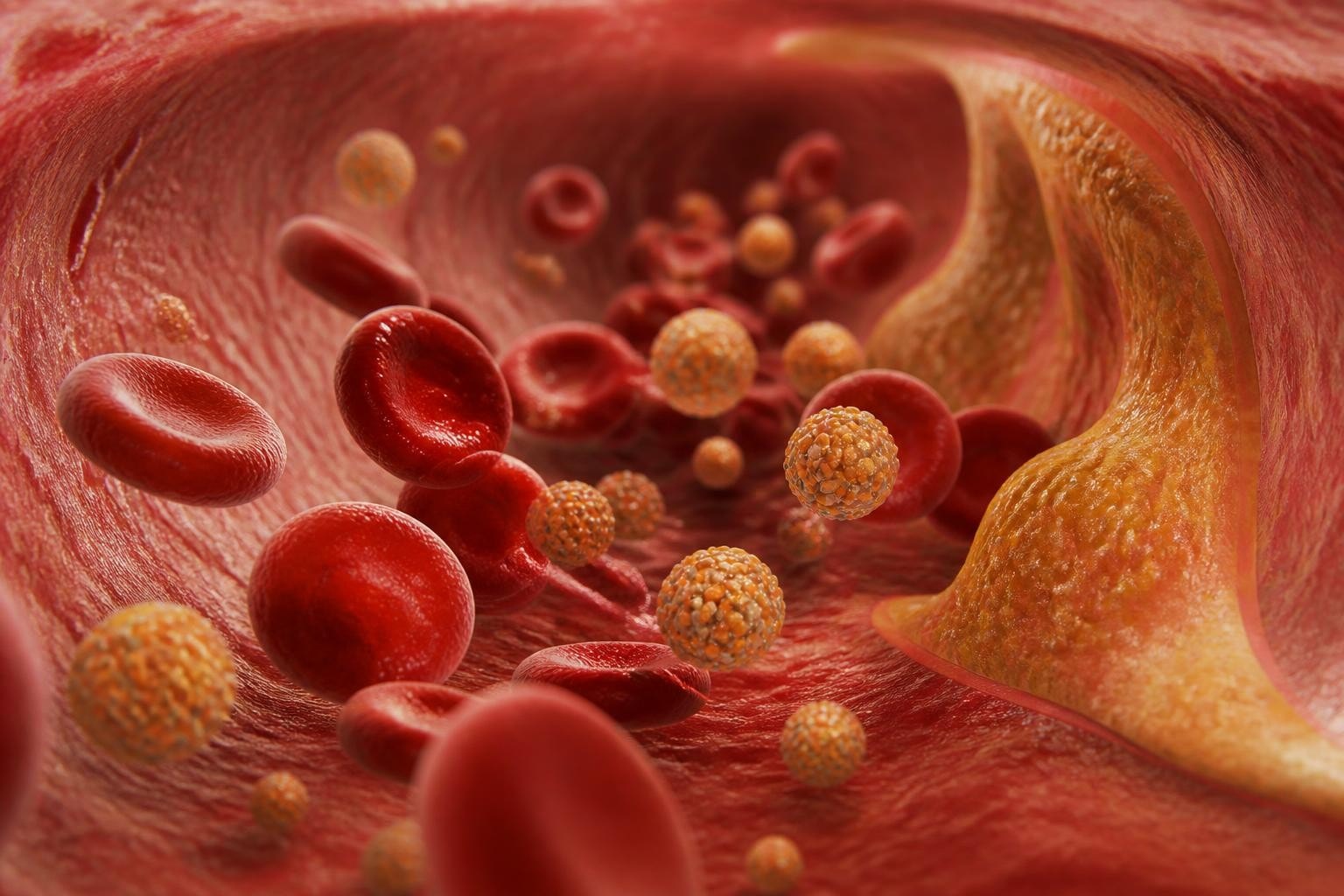
The apoB test counts atherogenic lipoprotein particles, not cholesterol. When to measure it, what the numbers mean, and how physicians use it.
This page is for general information and does not constitute medical advice, diagnosis, or treatment. Results vary between individuals. Every medicine and peptide listed here is dispensed only after a medical consultation at Healthi Life and on a physician's prescription. Prices are published for transparency, not as an offer to supply. Always consult a qualified physician about your condition. See our full medical disclaimer.
An apob test measures the concentration of apolipoprotein B in blood. Each atherogenic lipoprotein particle carries exactly one apoB molecule, so the test counts particles directly rather than estimating cholesterol mass. High particle count drives atherosclerosis even when LDL cholesterol appears normal, which is why the apob test is increasingly used to stratify cardiovascular risk and guide lipid-lowering therapy in clinical practice.
What Apolipoprotein B Measures
Apolipoprotein B is a structural protein embedded in the surface of very-low-density lipoprotein (VLDL), intermediate-density lipoprotein (IDL), low-density lipoprotein (LDL), and lipoprotein(a). Because each particle carries one apoB molecule, measuring apoB concentration is equivalent to counting the total number of atherogenic particles. A standard lipid panel reports LDL cholesterol, which is the mass of cholesterol inside LDL particles, not the number of particles. Two patients with identical LDL cholesterol may have different particle counts: one may have many small, cholesterol-poor particles and high apoB, the other fewer large particles and low apoB. The mechanistic link between apoB-containing lipoproteins and atherogenesis explains why particle count, not cholesterol mass, is the primary determinant of arterial wall retention and plaque formation. This guide is published by the Healthi Life longevity clinic in Bangkok.
ApoB Versus LDL Cholesterol
LDL cholesterol is calculated from total cholesterol, HDL cholesterol and triglycerides using the Friedewald equation, or measured directly in some laboratories. The calculation assumes an average cholesterol content per particle, which fails when particle size distribution is skewed. ApoB does not rely on assumptions. It is measured by immunoassay and reports the actual particle count in units of milligrams per deciliter or grams per liter.
Discordance between LDL cholesterol and apoB occurs in approximately one-quarter of individuals. When LDL cholesterol is low but apoB is high, cardiovascular risk is underestimated if treatment decisions rely on LDL cholesterol alone. Conversely, high LDL cholesterol with low apoB suggests fewer large particles, which carry lower risk per unit of cholesterol mass.

Reference Ranges and Treatment Targets
A comprehensive recent review summarizes clinical interpretation of apoB levels. Laboratories typically report reference ranges of 40-100 mg/dL for adults, but optimal targets for cardiovascular risk reduction are lower. The European Atherosclerosis Society and the National Lipid Association recommend apoB below 65 mg/dL for most individuals and below 55 mg/dL for those at elevated cardiovascular risk. Patients with established coronary disease, diabetes, or familial hypercholesterolemia may benefit from targets below 50 mg/dL.
Risk Stratification by ApoB Concentration
| ApoB (mg/dL) | Interpretation | Typical Action |
|---|---|---|
| < 65 | Optimal for general population | Continue lifestyle measures |
| 65-79 | Moderate risk | Consider pharmacotherapy if additional risk factors present |
| 80-99 | Elevated risk | Initiate lipid-lowering therapy in most patients |
| ≥ 100 | High risk | Aggressive treatment; target < 65 mg/dL or lower |
| ≥ 130 | Very high risk | Suspect familial hypercholesterolemia; target < 50 mg/dL |
These thresholds are derived from prospective cohort studies and intervention trials demonstrating that apoB concentration predicts future cardiovascular events independent of LDL cholesterol. Lower apoB correlates with lower event rates in a continuous, log-linear relationship.
When an ApoB Test Is Indicated
Not every patient requires an apob test. Routine lipid screening uses total cholesterol, LDL cholesterol, HDL cholesterol and triglycerides. An apob test becomes valuable in specific clinical scenarios where standard panels do not fully clarify risk or guide therapy.
Clinical Situations for ApoB Measurement
- Metabolic syndrome or type 2 diabetes: Small, dense LDL particles are common; apoB may exceed 80 mg/dL even when LDL cholesterol is near target.
- Hypertriglyceridemia: Triglycerides above 200 mg/dL invalidate the Friedewald calculation; apoB provides an accurate particle count.
- Discordance between LDL cholesterol and non-HDL cholesterol: When non-HDL cholesterol is disproportionately high, apoB clarifies total atherogenic burden.
- Familial hypercholesterolemia screening: Elevated apoB, especially above 130 mg/dL, supports genetic testing and cascade screening.
- Treatment monitoring: ApoB helps assess whether lipid-lowering therapy has reduced particle count to target, particularly in patients with persistent discordance.
ApoB is also useful when LDL cholesterol is at goal but other risk markers, such as lipoprotein(a), remain elevated. Because Lp(a) particles carry apoB, measuring apoB captures total atherogenic particle burden including Lp(a) contribution.
Healthi Life's Advanced Check-Up includes advanced lipid panels in select tiers, with biomarker interpretation during a one-to-one physician consultation. The Foundation tier starts at 10,500 THB.

How the Test Is Performed
The apob test requires a standard blood draw. No special preparation beyond an eight to twelve hour fast is typically needed, though some protocols permit non-fasting samples when triglycerides are below 400 mg/dL. Plasma or serum is analyzed using immunoturbidimetric or immunonephelometric assays, which use antibodies specific to apoB-100, the form of apoB on VLDL, IDL, LDL and Lp(a).
Results are available within 24 to 48 hours in most reference laboratories. StatPearls provides clinical and biochemistry details on assay methods, reference ranges and interpretation. Standardization has improved in recent years, with most assays now traceable to international reference materials, reducing inter-laboratory variability.
Sample Stability and Timing
ApoB concentration is relatively stable. Unlike LDL cholesterol, which can vary with recent meals, apoB shows minimal postprandial change because the protein structure is not affected by short-term triglyceride flux. This stability makes apoB particularly useful when fasting is impractical or when repeated measurements are needed to track response to therapy.
Physicians typically order apoB alongside a complete lipid panel, glucose, hemoglobin A1c and high-sensitivity C-reactive protein to assess metabolic and inflammatory contributions to cardiovascular risk. The combination allows stratification across multiple pathways and informs whether intervention should prioritize lipid reduction, glycemic control, or inflammation management.
Interpreting ApoB in Context
An apob test does not exist in isolation. The number is interpreted alongside patient age, sex, family history, comorbidities and other biomarkers. A 52-year-old male with apoB of 88 mg/dL, type 2 diabetes, and coronary calcium score of 150 Agatston units faces substantially different risk than a 52-year-old female with apoB of 88 mg/dL, no diabetes, and zero calcium.
Genetic and Environmental Factors
Apolipoprotein B concentration is influenced by genetics, diet, physical activity, adiposity and medication. Variants in genes encoding APOB, PCSK9, LDLR and APOE alter production, clearance and metabolism of apoB-containing lipoproteins. European Atherosclerosis Society consensus documents describe the role of apoB in diagnosing familial hypercholesterolemia, where apoB typically exceeds 130 mg/dL in heterozygous carriers and 200 mg/dL in homozygous cases.
Dietary saturated fat, refined carbohydrate and excess caloric intake raise apoB by increasing hepatic VLDL secretion and reducing LDL receptor activity. Weight loss, aerobic exercise and replacement of saturated fat with polyunsaturated fat lower apoB by 10-20 mg/dL in most individuals. These interventions are first-line therapy when apoB is moderately elevated and cardiovascular risk is not yet high.
Pharmacologic Reduction of ApoB
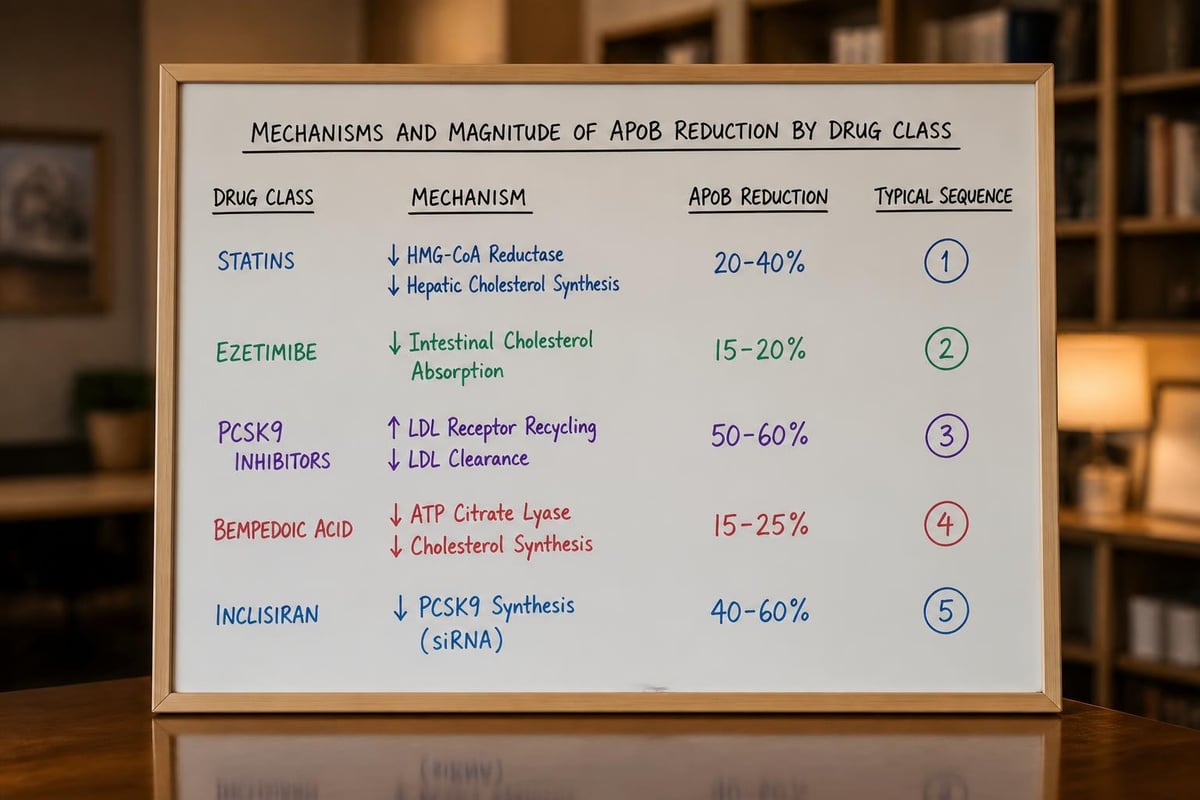
When lifestyle modification does not achieve target apoB, pharmacotherapy is indicated. Statins reduce apoB by 30-50 percent, depending on dose and statin potency. Ezetimibe adds a further 15-20 percent reduction. PCSK9 inhibitors (evolocumab, alirocumab) lower apoB by 50-60 percent when added to statin therapy, achieving levels below 50 mg/dL in most treated patients.
Drug Class and Mechanism
| Drug Class | Mechanism | ApoB Reduction | Typical Indication |
|---|---|---|---|
| Statin | Inhibit HMG-CoA reductase; upregulate LDL receptor | 30-50% | First-line for most patients |
| Ezetimibe | Inhibit intestinal cholesterol absorption | 15-20% | Add-on when statin alone insufficient |
| PCSK9 inhibitor | Increase LDL receptor availability | 50-60% | High risk; statin intolerance; familial hypercholesterolemia |
| Bempedoic acid | Inhibit ATP citrate lyase upstream of HMG-CoA reductase | 15-25% | Statin intolerance; additional reduction needed |
| Inclisiran | siRNA targeting PCSK9 synthesis | 45-55% | Twice-yearly dosing; high risk patients |
Treatment decisions are made by a physician after reviewing the full lipid panel, apoB, imaging results and clinical history. The National Lipid Association expert clinical consensus provides evidence-based recommendations for integrating apoB into treatment algorithms.
Monitoring Treatment Response
Once therapy is initiated, physicians retest apoB at eight to twelve weeks to assess response. The goal is to achieve target apoB while monitoring for adverse effects such as muscle symptoms with statins or injection-site reactions with PCSK9 inhibitors. If apoB remains above target, the physician may increase the dose, add a second agent, or switch to a more potent regimen.
Longitudinal Tracking
Serial apoB measurements track cumulative atherogenic exposure over time. A patient who maintains apoB below 65 mg/dL for a decade has substantially lower plaque burden than one who spends the same decade with apoB above 100 mg/dL. This concept, known as cumulative apoB exposure, parallels hemoglobin A1c in diabetes: both reflect years of pathologic exposure rather than a single snapshot.
Patients enrolled in longevity programs benefit from scheduled retesting and protocol adjustment based on biomarker trends. Continuous physician supervision allows early detection of treatment failure or new risk factors, such as rising lipoprotein(a) or worsening insulin resistance, which may independently drive apoB elevation.
ApoB and Other Cardiovascular Biomarkers
ApoB does not replace other biomarkers. It complements coronary calcium scoring, carotid intima-media thickness, high-sensitivity C-reactive protein and lipoprotein(a). Each test interrogates a different aspect of cardiovascular pathophysiology.
Coronary calcium quantifies existing plaque burden. ApoB predicts future plaque accumulation. A patient with zero calcium but apoB of 110 mg/dL is not free of risk; rather, they are accruing atherogenic particles that will eventually form plaque if untreated. Conversely, a patient with coronary calcium score of 400 Agatston units and apoB of 55 mg/dL on therapy has established disease but reduced ongoing risk.
High-sensitivity C-reactive protein adds information about vascular inflammation, which accelerates plaque rupture and thrombosis. Lipoprotein(a) is a genetically determined risk factor that responds minimally to statins or ezetimibe but contributes to apoB concentration and overall particle burden. MedlinePlus patient-facing guidance explains what abnormal results may mean and when follow-up testing is appropriate.
Limitations of ApoB Testing
ApoB measurement is not universally standardized. Although most assays now use traceable reference materials, variability between laboratories can reach 5-10 percent. This is comparable to LDL cholesterol variability but means that serial measurements should ideally use the same laboratory and assay method.
ApoB does not distinguish between LDL, VLDL, IDL and Lp(a) particles. A high apoB could reflect high LDL particle count, high triglyceride-rich remnants, or elevated Lp(a). Additional testing, such as direct LDL particle measurement by nuclear magnetic resonance or ion mobility, or separate Lp(a) measurement, may be needed to clarify the source of elevated apoB.
Cost and Accessibility
ApoB testing is not included in standard lipid panels in all healthcare systems. Out-of-pocket cost ranges from 500 to 1,500 Thai baht in Bangkok laboratories. Insurance coverage varies; some plans reimburse apoB only when specific criteria are met. Advocacy efforts by professional societies aim to increase access and reduce cost, recognizing that apoB improves risk prediction and may prevent unnecessary imaging or pharmacotherapy in low-risk individuals with discordant LDL cholesterol.
Frequently Asked Questions
What is the difference between apoB and LDL cholesterol?
LDL cholesterol measures the mass of cholesterol inside LDL particles. ApoB counts the number of atherogenic particles, including LDL, VLDL, IDL and Lp(a). Particle count predicts cardiovascular events more accurately than cholesterol mass when the two diverge.
Do I need to fast before an apoB test?
Fasting for eight to twelve hours is recommended when apoB is measured alongside a full lipid panel. ApoB itself changes minimally after meals, but triglycerides and calculated LDL cholesterol are affected by recent food intake. Some protocols permit non-fasting apoB when triglycerides are expected to be below 400 mg/dL.
How often should apoB be retested?
After initiating or changing lipid-lowering therapy, retest apoB at eight to twelve weeks to confirm response. Once stable on treatment, annual or biannual testing is typical. Patients in longevity programs with continuous monitoring may retest every three to six months to track cumulative exposure and adjust protocols.
Can lifestyle changes alone lower apoB to target?
In patients with moderately elevated apoB (70-85 mg/dL) and no other major risk factors, weight loss, aerobic exercise, and dietary modification can reduce apoB by 10-20 mg/dL. When apoB exceeds 100 mg/dL or cardiovascular risk is high, pharmacotherapy is usually required to reach target levels below 65 mg/dL.
ApoB in the Context of Longevity Medicine
Longevity medicine prioritizes cumulative risk reduction over the lifespan, not acute event prevention alone. Measuring apoB in the fourth or fifth decade allows decades of intervention to minimize plaque accumulation. A 48-year-old patient who lowers apoB from 95 mg/dL to 55 mg/dL and maintains that level for twenty years will enter their seventh decade with substantially less atherosclerotic burden than a peer whose apoB remained at 95 mg/dL.
This approach requires longitudinal data, scheduled retesting and physician oversight. It is not compatible with annual check-ups reviewed by the patient alone or with treatment decisions made without biomarker context. NHLBI resources on lipoprotein metabolism describe the population data and research initiatives supporting apoB-guided therapy.
Patients who manage their health as an ongoing program, rather than a yearly event, benefit from early detection of discordance between LDL cholesterol and apoB, proactive titration of therapy, and integration of apoB trends with imaging, epigenetic markers and other longevity biomarkers. A physician who reviews results one-to-one can explain whether elevated apoB reflects small LDL particles, high Lp(a), triglyceride-rich remnants, or metabolic dysfunction, and which intervention addresses the root cause.
The apob test counts atherogenic lipoprotein particles directly, providing a more precise measure of cardiovascular risk than LDL cholesterol alone. Physicians use apoB to identify discordance, guide lipid-lowering therapy, and track cumulative exposure over time. Healthi Life integrates advanced biomarker panels into physician-supervised longevity programs, with scheduled retesting and protocol adjustment built on up to 300 biomarkers. Results are reviewed one-to-one in a private house in Ekkamai, Bangkok, where measurement informs decision and treatment follows consultation.
This page is for information only and is not medical advice. Medical consultation and prescription are available online and on site at Healthi Life, Ekkamai, Bangkok.