
Creatine Benefits: What the Research Shows in 2026

Creatine benefits extend beyond muscle. Review the evidence on strength, cognition, and cellular energy in adults. Data, dosing, and physician use.
This page is for general information and does not constitute medical advice, diagnosis, or treatment. Results vary between individuals. Every medicine and peptide listed here is dispensed only after a medical consultation at Healthi Life and on a physician's prescription. Prices are published for transparency, not as an offer to supply. Always consult a qualified physician about your condition. See our full medical disclaimer.
Creatine is one of the most studied compounds in performance and longevity research. First identified in muscle tissue in the 1800s, it has been the subject of more than 1,000 peer-reviewed studies. The molecule is synthesized endogenously in the liver, kidneys, and pancreas, and stored primarily in skeletal muscle. Its role in adenosine triphosphate regeneration places it at the center of cellular energy metabolism. Supplementation raises intramuscular stores, and the physiological effects extend to muscle function, cognitive performance, and cellular resilience.
What Creatine Does in the Body
Creatine exists in muscle cells as phosphocreatine. When adenosine triphosphate is broken down during high-intensity work, phosphocreatine donates a phosphate group to regenerate ATP. This allows rapid energy turnover during short bursts of effort. Healthi Life is a physician-led longevity clinic in Bangkok.
The body produces approximately 1 to 2 grams of creatine per day. Dietary intake from meat and fish adds another 1 to 2 grams in omnivorous diets. Vegetarians and vegans produce endogenous creatine but consume negligible amounts through food.
Storage and Saturation
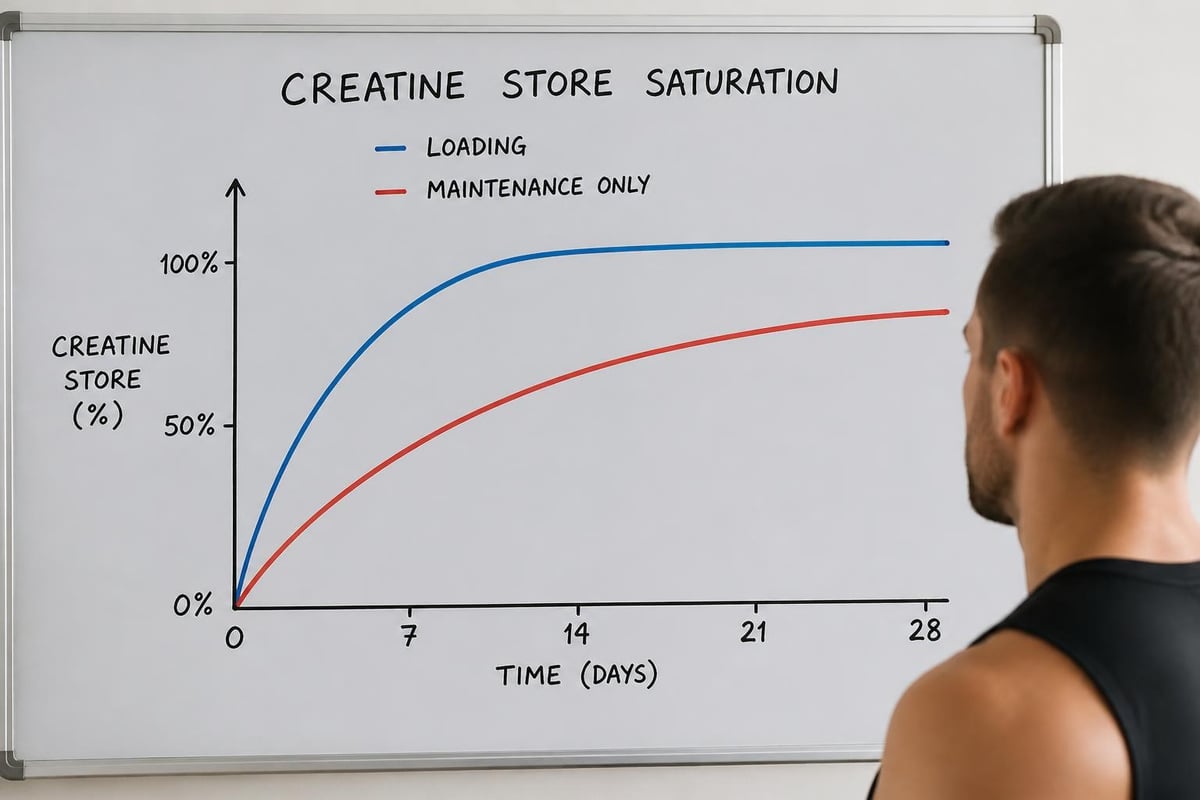
Skeletal muscle holds around 95% of total body creatine. Storage capacity is finite. Supplementation increases creatine concentration by approximately 20% to 40% in individuals with lower baseline stores.
- Typical baseline: 120 mmol/kg dry muscle
- Post-supplementation: 140 to 160 mmol/kg dry muscle
- Saturation plateaus after loading or consistent daily intake

A 2026 proposal for evidence-based dietary reference intakes suggests that endogenous synthesis and dietary intake may not meet physiological needs in all populations, particularly older adults and those avoiding animal products.
Creatine Benefits for Muscle and Strength
The most documented creatine benefits relate to skeletal muscle. Meta-analyses consistently show improvements in strength, power output, and lean mass when combined with resistance training.
A 2023 meta-analysis of 22 studies involving older adults found that creatine supplementation combined with resistance training increased lean mass by an average of 1.37 kg compared to placebo. Strength gains were also greater in the supplemented group.
Mechanisms
Creatine supports muscle performance through several pathways:
- ATP regeneration: Faster phosphocreatine turnover during high-intensity efforts
- Cell volumization: Increased intramuscular water content, which may stimulate protein synthesis
- Myogenic signaling: Upregulation of satellite cell activity and muscle repair pathways
- Reduced protein degradation: Attenuation of muscle breakdown during training or caloric restriction
| Outcome Measure | Typical Improvement | Study Duration |
|---|---|---|
| 1RM bench press | +5% to +8% | 8 to 12 weeks |
| Vertical jump | +4% to +7% | 6 to 10 weeks |
| Lean body mass | +1 to +2 kg | 8 to 16 weeks |
Sarcopenia, the age-related loss of muscle mass and function, becomes clinically significant after age 50. Creatine supplementation in combination with resistance training has been proposed as a countermeasure.
Cognitive and Neuroprotective Effects
Creatine is present in the brain at concentrations of 5 to 10 mmol/kg wet weight. It supports ATP regeneration in neurons and glial cells, particularly during periods of high metabolic demand.
A 2024 systematic review and meta-analysis examined creatine supplementation and cognitive function in adults. The analysis included 19 studies and found modest but statistically significant improvements in memory tasks and processing speed, particularly in older adults and individuals with sleep deprivation.
Brain Energy Metabolism
The brain consumes approximately 20% of resting metabolic energy. Neurons rely on oxidative phosphorylation, and disruptions in energy supply are implicated in neurodegenerative conditions.
Creatine supplementation increases brain phosphocreatine levels by approximately 5% to 10%, based on magnetic resonance spectroscopy studies. This increment is smaller than the 20% to 40% increase observed in muscle, likely due to the blood-brain barrier and slower creatine uptake in neural tissue.
- Short-term memory: Improvements observed in tasks requiring rapid recall
- Attention: Enhanced performance during prolonged cognitive tasks
- Mental fatigue: Reduced subjective fatigue during sleep restriction

A narrative review on the muscle-brain axis published in 2025 suggests that creatine may influence both physical and cognitive performance in older adults, though mechanisms remain under investigation.
Dosing and Loading Protocols
Two dosing strategies are supported by clinical data: loading followed by maintenance, or consistent daily intake without a loading phase.
Loading Phase
The loading protocol involves 20 grams per day, divided into four 5-gram doses, for 5 to 7 days. This saturates muscle creatine stores within one week. After loading, a maintenance dose of 3 to 5 grams per day sustains elevated levels.
Maintenance Without Loading
A daily intake of 3 to 5 grams without a loading phase achieves the same saturation over 3 to 4 weeks. This approach avoids the transient gastrointestinal discomfort some individuals experience during loading.
| Protocol | Daily Dose | Time to Saturation | Notes |
|---|---|---|---|
| Loading + Maintenance | 20 g × 5–7 days, then 3–5 g | 5–7 days | Faster saturation |
| Maintenance Only | 3–5 g | 3–4 weeks | Gradual increase, fewer GI effects |
Creatine monohydrate is the most studied form. It is stable, well-absorbed, and inexpensive. Other formulations, such as creatine ethyl ester or buffered creatine, have not demonstrated superior efficacy in peer-reviewed trials.
When used in a clinical setting, creatine supplementation is reviewed alongside baseline biomarkers and training load. At Healthi Life, such protocols are considered as part of the Advanced Check-Up process, which includes muscle mass assessment, metabolic panels, and one-to-one physician review.
Safety and Long-Term Use
Creatine supplementation has been evaluated in clinical trials lasting up to five years. A 2025 expert review concluded that creatine is safe across the lifespan when used at recommended doses.
Renal Function
Early concerns about renal toxicity have not been substantiated. Studies in healthy adults and in individuals with pre-existing kidney disease show no adverse effects on glomerular filtration rate or creatinine clearance. Serum creatinine may rise slightly due to increased muscle mass, not impaired kidney function.
A 2019 position statement from the International Society of Sports Nutrition reviewed the safety data and found no evidence of harm in healthy populations.
Hydration and Cramping
Creatine increases intramuscular water content. This has led to speculation about dehydration and muscle cramping. Controlled studies have not supported this claim. In fact, some data suggest creatine may improve hydration status during exercise in heat.
- Weight gain: Typically 1 to 2 kg in the first week, due to water retention
- GI distress: Occasional bloating during loading; reduced with smaller, divided doses
- Hair loss: No causal link established in clinical trials
At Healthi Life, supplementation decisions follow biomarker review and physician consultation. Renal function, hydration status, and training goals are assessed before any protocol begins.
Creatine Benefits in Older Adults
Age-related declines in muscle mass, strength, and cognitive function are well documented. Creatine benefits may be particularly relevant after age 50.
A 2022 meta-analysis of 357 older adults found that creatine supplementation combined with resistance training increased muscle thickness, strength, and functional performance more than training alone. The effect was consistent across studies using 5 grams per day for 8 to 12 weeks.
Bone Health
Creatine may also influence bone metabolism. Small studies suggest a positive effect on bone mineral density when combined with resistance training, though data remain preliminary.
Harvard Health Publishing reviewed creatine's potential benefits in 2024, noting that its role in aging populations is an active area of research.
For individuals engaged in zone 2 training or structured resistance work, creatine may complement aerobic and strength adaptations.
Special Populations
Vegetarians and Vegans
Individuals who do not consume meat or fish have lower baseline creatine stores. Supplementation in this group produces larger increases in muscle creatine, strength, and cognitive performance compared to omnivores.
A 2003 study in vegetarian athletes found that creatine supplementation improved work capacity and muscle phosphocreatine content to levels comparable with meat-eaters.
Women
Most creatine research has been conducted in men. Recent studies in women show similar benefits for muscle mass and strength, though women may have slightly higher baseline creatine stores and smaller absolute gains.
Creatine supplementation during perimenopause and menopause has been proposed as a strategy to offset muscle loss and maintain bone density, but data are limited.
Adolescents
Creatine is used by adolescent athletes in team sports. Short-term studies in this age group show improvements in performance without adverse effects, but long-term safety data are lacking.
Frequently Asked Questions
Does creatine require cycling?
No. Continuous supplementation maintains elevated muscle stores. Cycling offers no physiological advantage and results in loss of accumulated creatine.
Will creatine cause kidney damage?
No evidence supports this claim in healthy individuals. Serum creatinine may rise due to increased muscle mass, not impaired renal function. Individuals with pre-existing kidney disease should consult a physician before use.
How long does it take to see creatine benefits?
Strength and power improvements are typically observed within 1 to 2 weeks of saturation. Cognitive effects may take longer. Muscle mass changes become measurable after 4 to 8 weeks when combined with training.
Can creatine be taken with other supplements?
Yes. Creatine is commonly combined with protein, carbohydrate, or caffeine. No adverse interactions have been documented in clinical studies. Timing relative to training does not significantly affect outcomes.
Integrating Creatine Into a Longevity Protocol
Creatine supplementation is not a replacement for training, sleep, or nutrition. It is an adjunct. When integrated into a structured program, it supports adaptations in muscle, brain, and cellular energy systems.
At Healthi Life, creatine is considered within broader protocols that include resistance training, metabolic testing, and biomarker monitoring. Decisions are made after consultation with a licensed physician. No protocol is prescribed without baseline data.
For executives and high-net-worth individuals seeking continuous health management, creatine may be one component of a multi-month program that includes imaging, DNA analysis, and repeated biomarker panels. The goal is not acute performance enhancement. It is sustained function over decades.
Creatine monohydrate costs approximately 500 to 1,000 baht per month at 5 grams per day. It is stable at room temperature and requires no refrigeration. Quality is assessed by third-party testing for purity and heavy metals.
When used appropriately, creatine benefits extend beyond the gym. The compound supports cellular energy in muscle, brain, and other tissues. Its safety profile is established. Its effects are measurable. The decision to use it should follow the same principle that governs every intervention: measure, understand, decide.
Creatine benefits are supported by more than 1,000 peer-reviewed studies. The molecule improves muscle performance, cognitive function, and cellular energy metabolism when used at 3 to 5 grams per day. Every protocol at Healthi Life begins with biomarker testing and physician consultation. If you are a Bangkok resident or international visitor seeking physician-led longevity care, visit Healthi Life to schedule a consultation in our private house in Ekkamai.
This page is for information only and is not medical advice. Medical consultation and prescription are available online and on site at Healthi Life, Ekkamai, Bangkok.