
Sarcopenia: Muscle Loss, Diagnosis and Treatment 2026

Sarcopenia causes progressive muscle loss after 40. Learn how it is diagnosed, what biomarkers matter, and which interventions work.
This page is for general information and does not constitute medical advice, diagnosis, or treatment. Results vary between individuals. Every medicine and peptide listed here is dispensed only after a medical consultation at Healthi Life and on a physician's prescription. Prices are published for transparency, not as an offer to supply. Always consult a qualified physician about your condition. See our full medical disclaimer.
Sarcopenia is the progressive loss of skeletal muscle mass, strength, and function that begins in the fourth decade and accelerates after 60. It is not normal aging. It is a diagnosable condition with measurable thresholds, specific biomarkers, and evidence-based interventions. The name comes from Greek: sarx for flesh, penia for loss. Prevalence varies by definition and population, but estimates range from 10% in community-dwelling adults over 60 to more than 50% in those over 80. The consequences include falls, fractures, metabolic dysfunction, loss of independence, and increased mortality.
What Sarcopenia Is and How It Progresses
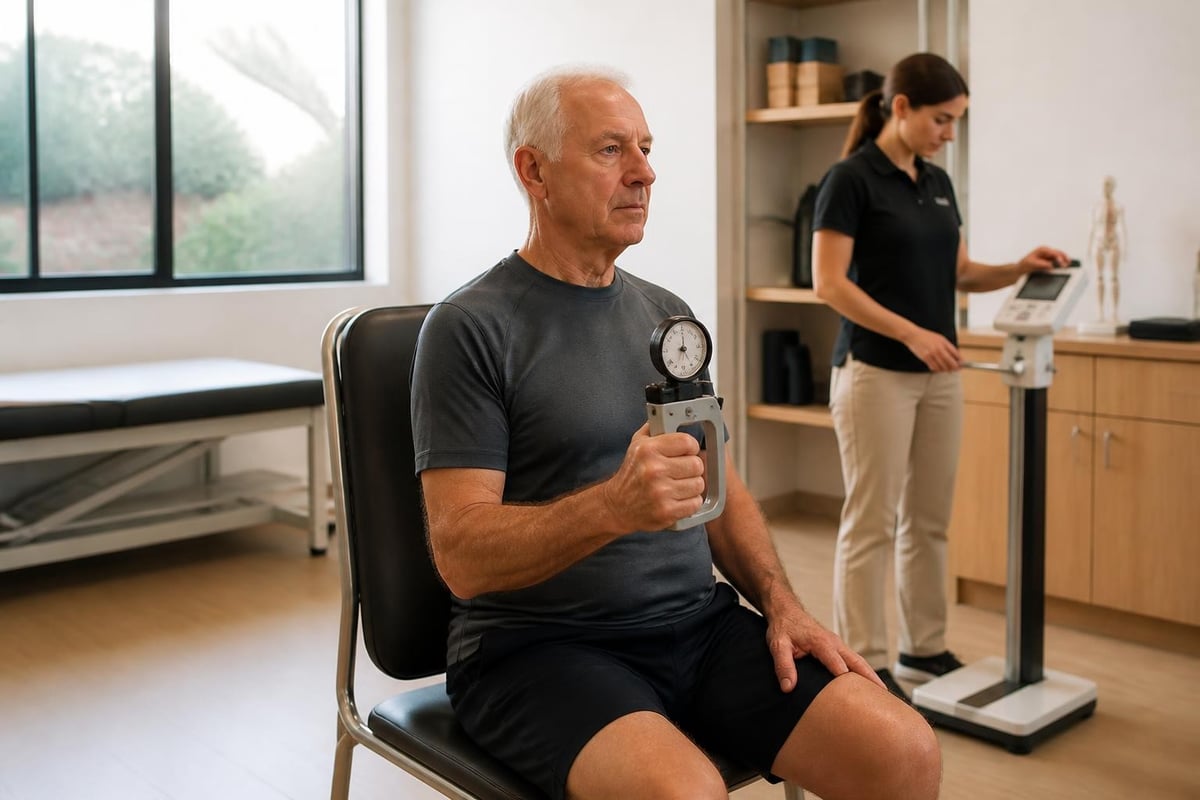
Sarcopenia is defined by three components: low muscle mass, low muscle strength, and low physical performance. All three are measured. Muscle mass is assessed by imaging or bioelectrical impedance. Strength is tested with handgrip dynamometry or chair stand tests. Performance is evaluated through gait speed or the Short Physical Performance Battery. This guide is published by the Healthi Life longevity clinic in Bangkok.
The European Working Group on Sarcopenia in Older People (EWGSOP2) sets the diagnostic threshold at handgrip strength below 27 kg for men and below 16 kg for women. Gait speed below 0.8 meters per second indicates severe sarcopenia. Appendicular skeletal muscle mass, adjusted for height, falls below 7.0 kg/m² in men and 5.5 kg/m² in women.
Muscle loss begins around age 40. The rate is approximately 0.5% to 1% per year initially, then accelerates after 60. By age 80, a previously healthy adult may have lost 30% to 50% of peak muscle mass. The decline is not linear. It accelerates with inactivity, illness, poor nutrition, and hormonal changes.
Mechanisms Behind Muscle Loss
Sarcopenia results from an imbalance between muscle protein synthesis and muscle protein breakdown. Synthesis declines with age. Breakdown increases. The net effect is atrophy.
Anabolic resistance develops over time. Older muscle responds less to dietary protein and resistance exercise. The threshold dose of leucine required to stimulate muscle protein synthesis rises from approximately 2.5 g in young adults to 3.5 g or more after 65. Insulin resistance, mitochondrial dysfunction, inflammation, and reduced satellite cell activity all contribute.
Hormonal changes accelerate the process. Testosterone, growth hormone, and insulin-like growth factor-1 decline. Cortisol and inflammatory cytokines rise. The result is a chronic catabolic state. Studies show that men lose muscle faster than women until menopause, after which the rate in women increases sharply due to estrogen loss.
Neurological factors also matter. Motor units are lost with age. The remaining units enlarge but cannot fully compensate. Muscle fiber denervation leads to atrophy and fibrosis. This is why strength declines faster than mass.
How Sarcopenia Is Diagnosed
Diagnosis requires measurement, not assumption. The International Clinical Practice Guidelines for Sarcopenia recommend a two-step process: screening with a validated questionnaire, followed by confirmation with objective tests.
Screening tools include the SARC-F questionnaire, which asks five questions about strength, assistance with walking, rising from a chair, climbing stairs, and falls. A score of 4 or higher warrants further testing.
Confirmation begins with handgrip strength. This is the single most predictive measure. A Jamar dynamometer is the standard. Three trials per hand, best score recorded. Below the threshold, proceed to muscle mass assessment.
Testing Methods and Accuracy
Dual-energy X-ray absorptiometry (DEXA) is the reference standard for muscle mass. It separates lean tissue from fat and bone with high precision. Appendicular lean mass is the sum of muscle in the arms and legs. This value is divided by height squared to generate the skeletal muscle index.
Bioelectrical impedance analysis (BIA) is faster and less expensive. It estimates muscle mass by measuring electrical conductivity through the body. Accuracy depends on hydration status and device quality. Clinical-grade devices with segmental analysis are reliable when calibrated against DEXA.
CT and MRI provide the most detailed images. They quantify muscle area, density, and fat infiltration. A single slice at the third lumbar vertebra correlates strongly with total body muscle mass. These methods are used in research and when other tests are inconclusive.
| Test | Measures | Precision | Accessibility |
|---|---|---|---|
| Handgrip dynamometry | Strength | High | High |
| DEXA | Muscle mass | Reference standard | Moderate |
| BIA | Muscle mass | Moderate | High |
| CT/MRI | Muscle area and quality | Very high | Low |
Blood biomarkers are not diagnostic but provide context. Vitamin D, testosterone, IGF-1, albumin, and inflammatory markers such as C-reactive protein and interleukin-6 help identify contributing factors. A comprehensive diagnostic check-up that includes these panels, imaging, and functional testing gives a physician the data needed to confirm sarcopenia and design a protocol.
Nutrition Interventions That Work
Protein intake is the first intervention. The PROT-AGE study group recommends at least 1.0 to 1.2 grams per kilogram of body weight per day for older adults, higher than the standard 0.8 g/kg. During illness or recovery, the target rises to 1.2 to 1.5 g/kg.

Leucine is the key amino acid. It activates the mTOR pathway, which drives muscle protein synthesis. Each meal should contain 2.5 to 3.5 grams of leucine. That equates to approximately 25 to 30 grams of high-quality protein per meal. Sources include whey, eggs, chicken, fish, and soy.
Distribution matters. Spreading protein evenly across three or four meals is more effective than concentrating it in one. A 2019 study in the Journal of Nutrition found that even distribution increased 24-hour muscle protein synthesis by 25% compared to skewed intake.
Supplements and Evidence
Whey protein is the most studied. It is rapidly absorbed, high in leucine, and consistently shown to increase muscle mass and strength when combined with resistance training. A 2021 meta-analysis found that supplementation with 20 to 30 grams per day increased lean mass by an average of 0.7 kg over 12 weeks in older adults.
Creatine monohydrate improves strength and muscle mass. The standard dose is 3 to 5 grams per day. It increases phosphocreatine stores in muscle, which enhances ATP production during high-intensity contractions. A 2017 Cochrane review confirmed benefits in older adults, particularly when combined with resistance exercise.
Vitamin D is essential. Deficiency is common in older adults and correlates with low muscle mass and strength. The target serum level is 30 to 40 ng/mL. Supplementation at 1,000 to 2,000 IU per day is standard, though some individuals require higher doses based on testing.
Omega-3 fatty acids may reduce anabolic resistance. Studies are mixed, but a 2015 trial in the American Journal of Clinical Nutrition found that 4 grams per day of EPA and DHA increased muscle protein synthesis in response to amino acids and insulin.
Exercise Protocols and Resistance Training
Resistance training is the only intervention proven to increase muscle mass and strength in older adults. The Nature Reviews Disease Primers overview of sarcopenia identifies it as the cornerstone of treatment.
The prescription is specific. Two to three sessions per week. Six to eight exercises covering all major muscle groups. Two to three sets per exercise. Eight to twelve repetitions per set at 60% to 80% of one-repetition maximum.
Progressive overload is required. Load, volume, or intensity must increase over time. Without progression, adaptation stops. A 2022 systematic review found that programs with structured progression increased strength by 30% to 40% over 12 weeks, compared to 10% to 15% in programs with fixed load.
Combining Exercise and Protein
The post-exercise window matters. Muscle protein synthesis is elevated for 24 to 48 hours after resistance training. Protein consumed within two hours of exercise is used more efficiently than protein consumed at other times. The optimal dose is 20 to 40 grams, depending on body weight and training volume.
A 2020 study in the Journal of Applied Physiology showed that combining whey protein with resistance training doubled the increase in lean mass compared to training alone. The effect was greatest when protein was consumed within 30 minutes post-session.
Power training may be more effective than traditional strength training. Power is the product of force and velocity. It declines faster with age than strength. Exercises performed at high speed with moderate load improve both power and functional performance. A 2018 trial found that power training increased chair rise speed by 18% versus 9% for strength training.
Balance and mobility work reduce fall risk. Tai chi, yoga, and targeted balance exercises improve proprioception and reaction time. The evidence is strong. A 2019 Cochrane review of 108 trials found that multicomponent exercise programs reduced falls by 23%.
Medical and Emerging Treatments
Testosterone replacement increases muscle mass and strength in hypogonadal men. The threshold for treatment is typically below 300 ng/dL on two separate morning tests. A 2020 trial in the Journal of Clinical Endocrinology & Metabolism found that testosterone therapy increased lean mass by 1.8 kg over six months in men over 65.
Women do not benefit from testosterone in the same way. Estrogen replacement during and after menopause may slow muscle loss, though the data are less clear. The Women's Health Initiative found no significant effect on muscle mass, but physical function improved modestly.
Selective androgen receptor modulators (SARMs) are in development. They aim to provide the anabolic effects of testosterone without the androgenic side effects. Enobosarm is the most studied. Phase 2 trials showed increases in lean mass and stair climb power, but regulatory approval has not been granted.
Peptides and Growth Factors
Growth hormone secretagogues are being tested. These include peptides such as ipamorelin and tesamorelin, which stimulate endogenous growth hormone release. A 2019 trial found that tesamorelin increased lean mass by 1.1 kg over six months in adults over 60. The effect was modest and reversed upon discontinuation.
Myostatin inhibitors are another target. Myostatin is a protein that limits muscle growth. Blocking it increases muscle mass in animal models. Bimagrumab, a monoclonal antibody against the activin type II receptor, showed promise in early trials but failed to meet endpoints in Phase 3 due to off-target effects.
The Nature Reviews Drug Discovery article on innovative treatments outlines the current pipeline. Most candidates are years from approval. The emphasis remains on proven interventions: protein, resistance training, and targeted hormone replacement when deficiency is documented.
Peptide therapy is available at physician-led clinics, where protocols are tailored to biomarker results and supervised throughout. The consultation, testing, and prescription process ensures that any intervention is medically appropriate.
Measuring Progress and Adjusting Protocols
Progress is tracked with the same tests used for diagnosis. Handgrip strength is repeated every four to six weeks. DEXA or BIA every three to six months. Gait speed and chair stand tests monthly.
The expected rate of improvement is modest. Strength may increase 1% to 2% per week during the first 12 weeks of resistance training. Muscle mass increases more slowly, typically 0.5 to 1 kg over three months. Functional performance improves faster than mass or strength, often within four to six weeks.
Biomarkers guide adjustment. If vitamin D remains low despite supplementation, the dose is increased or absorption is investigated. If testosterone is below target, the replacement protocol is reviewed. If inflammation markers rise, the physician looks for infection, injury, or overtraining.
- Repeat handgrip strength every four to six weeks
- Reassess muscle mass every three to six months with DEXA or BIA
- Track gait speed and functional tests monthly
- Review blood biomarkers quarterly
Not all individuals respond equally. Genetic variation, medication use, comorbidities, and adherence all affect outcomes. A 2021 study in Experimental Gerontology found that 20% of older adults showed minimal response to resistance training despite good adherence. These cases require deeper investigation and individualized protocols.
| Intervention | Expected Change | Timeframe |
|---|---|---|
| Resistance training | 30-40% strength increase | 12 weeks |
| Protein supplementation | 0.5-1.0 kg lean mass gain | 12 weeks |
| Testosterone replacement (men) | 1.5-2.0 kg lean mass gain | 6 months |
| Combined exercise + protein | 1.0-1.5 kg lean mass gain | 12 weeks |
Sarcopenia in the Context of Longevity
Muscle is an endocrine organ. It secretes myokines that regulate metabolism, inflammation, and cognitive function. Low muscle mass correlates with insulin resistance, cardiovascular disease, osteoporosis, and dementia. A 2018 study in the Journal of the American Medical Directors Association found that sarcopenia doubled the risk of all-cause mortality over ten years.
Maintaining muscle is not about aesthetics. It is about metabolic health, independence, and lifespan. Grip strength predicts mortality more reliably than blood pressure or cholesterol in adults over 65. Gait speed is equally predictive. These are not coincidences. They reflect the central role of muscle in energy balance, immune function, and resilience.
Many individuals focus on skin health as they age, seeking interventions that support tissue integrity and recovery. The same biological pathways that maintain dermal collagen and elasticity also support muscle protein synthesis. Natural skincare products that emphasize hydration and antioxidant support may complement a broader longevity protocol, though the primary driver of muscle and connective tissue health remains nutrition and mechanical load.
Pet owners who prioritize their own health often extend the same attention to their animals. Sarcopenia occurs in dogs as they age, with similar mechanisms: reduced protein synthesis, mitochondrial dysfunction, and hormonal decline. Whole-food supplements for dogs that provide bioavailable protein and micronutrients can help maintain lean mass and mobility in aging pets, mirroring the nutritional strategies used in humans.
Integration with Other Health Metrics
Sarcopenia does not occur in isolation. It often coexists with osteoporosis, frailty, and metabolic syndrome. A comprehensive longevity program addresses all three. Bone density, muscle mass, and metabolic health are interconnected. Weight-bearing exercise improves bone and muscle. Protein supports both. Vitamin D, calcium, and magnesium are essential for both systems.
Hormone optimization is part of the picture. Low testosterone in men and low estrogen in women accelerate both muscle and bone loss. Replacement therapy, when indicated, addresses both. The decision is made after testing and discussion with a physician. Not everyone is a candidate. The risks and benefits vary by individual.
Inflammation is another common thread. Chronic low-grade inflammation, measured by C-reactive protein and interleukin-6, drives muscle breakdown and impairs recovery. Anti-inflammatory interventions, including omega-3 supplementation, polyphenol-rich foods, and stress management, are part of the protocol.
Frequently Asked Questions
Can sarcopenia be reversed?
Yes, if diagnosed early. Resistance training and adequate protein intake increase muscle mass and strength at any age. A 2019 trial in The Lancet showed that adults over 70 gained an average of 1.2 kg of lean mass over 16 weeks with supervised training. Reversal is harder in advanced cases, but improvement is possible.
How much protein is enough?
The target is 1.0 to 1.2 grams per kilogram of body weight per day for maintenance, and 1.2 to 1.5 g/kg during illness or active treatment. For a 70 kg individual, that is 70 to 105 grams per day. Distribution across three to four meals is more effective than consuming it all at once. Each meal should contain 25 to 30 grams.
Is muscle loss normal with age?
Muscle loss is common but not inevitable. The rate is influenced by activity, nutrition, hormones, and genetics. Sedentary individuals lose muscle faster. Those who maintain resistance training and protein intake preserve muscle into their 80s. Hormone levels by age also affect the rate of decline, particularly testosterone in men.
When should I test for sarcopenia?
Screening is recommended starting at age 60, or earlier if there are risk factors such as weight loss, falls, or chronic illness. Handgrip strength and gait speed can be tested in a single visit. If either is below threshold, proceed to imaging and blood work. Testing is repeated annually or when symptoms change.
Sarcopenia is measurable, treatable, and, in many cases, reversible. The interventions are straightforward: resistance training, adequate protein, hormone optimization when deficient, and regular monitoring. Healthi Life builds these into longevity programs that measure muscle mass, strength, and metabolic markers, then track them over months under physician supervision. Visit Healthi Life to begin with a diagnostic assessment and a protocol tailored to your data.
This page is for information only and is not medical advice. Medical consultation and prescription are available online and on site at Healthi Life, Ekkamai, Bangkok.
Every medicine named on this page is dispensed only after a medical consultation at Healthi Life and on a physician's prescription. No dosing schedule is published here; the dose is set by the prescribing physician. This page is published for transparency, not as an offer to supply.