
Homocysteine: Testing and Management in 2026

Homocysteine is an amino acid linked to cardiovascular and cognitive risk. Learn what levels mean, how they're measured, and when to test.
This page is for general information and does not constitute medical advice, diagnosis, or treatment. Results vary between individuals. Every medicine and peptide listed here is dispensed only after a medical consultation at Healthi Life and on a physician's prescription. Prices are published for transparency, not as an offer to supply. Always consult a qualified physician about your condition. See our full medical disclaimer.
Homocysteine is a sulfur-containing amino acid produced during the metabolism of methionine. Elevated levels appear in cardiovascular disease, cognitive decline, and complications of pregnancy. Measurement requires fasting plasma samples and liquid chromatography or immunoassay. Normal ranges sit below 15 micromoles per liter; values above that threshold indicate hyperhomocysteinemia. Treatment focuses on B vitamins: folate, B12, and B6. The clinical question is not whether homocysteine is elevated, but whether lowering it changes outcomes.
What Homocysteine Is and Why It Matters
Homocysteine forms when methionine, an essential amino acid from dietary protein, donates its methyl group in cellular reactions. This guide is published by the Healthi Life longevity clinic in Bangkok.
The body clears homocysteine through two pathways. Remethylation converts it back to methionine using folate and vitamin B12. Transsulfuration diverts it to cysteine and glutathione with the help of vitamin B6. When these pathways falter, homocysteine accumulates in plasma.
Mechanisms of Damage
High homocysteine promotes oxidative stress and endothelial dysfunction. It interferes with nitric oxide signaling, increases reactive oxygen species, and disrupts the extracellular matrix. Protein homocysteinylation modifies lysine residues on circulating and structural proteins, altering their function.
One-carbon metabolism links homocysteine to DNA methylation, histone modification, and phospholipid synthesis. S-adenosylmethionine (SAM) serves as the universal methyl donor; its demethylated product, S-adenosylhomocysteine (SAH), inhibits methyltransferases when it accumulates. Homocysteine is hydrolyzed from SAH, so elevated homocysteine reflects impaired methylation capacity.
Clinical Associations
Population studies associate hyperhomocysteinemia with atherosclerosis, stroke, venous thrombosis, and heart failure. Observational data also link it to cognitive decline, Alzheimer disease, and depression. In pregnancy, high maternal homocysteine correlates with neural tube defects and preeclampsia.
Key associations documented in cohort studies:
- Coronary artery disease and myocardial infarction
- Ischemic and hemorrhagic stroke
- Deep vein thrombosis and pulmonary embolism
- Dementia and cognitive impairment
- Osteoporotic fractures
- Complications of chronic kidney disease
An outcome-wide umbrella review examined meta-analyses and Mendelian randomization studies across multiple outcomes. Observational associations were strong and consistent. Genetic evidence suggested causation for stroke and possibly Alzheimer disease, but confounding and pleiotropy remain concerns.
Who Should Be Tested
Testing is not routine. Guidelines reserve measurement for patients with unexplained thrombosis, early cardiovascular events, or family history of hyperhomocysteinemia.
Indications for Measurement
A physician orders homocysteine when standard risk markers do not explain the clinical picture. Patients under 50 with myocardial infarction or stroke, recurrent pregnancy loss, or venous thrombosis in unusual sites warrant evaluation. Individuals with known MTHFR polymorphisms may be tested if clinical suspicion exists, though screening asymptomatic carriers is not recommended.
Consider testing in:
- Arterial or venous thrombosis before age 50
- Recurrent thromboembolism without clear cause
- Family history of homocystinuria or early cardiovascular disease
- Unexplained cognitive decline or neuropathy
- Chronic kidney disease with vascular complications
Elevated levels in isolation do not establish causation. The test adds information to a broader diagnostic workup.
Similar to lipoprotein(a), homocysteine provides an independent risk marker that may remain hidden when conventional lipid panels and glucose are normal.
Normal and Abnormal Ranges
Reference intervals vary by laboratory method and population. Most labs define normal as 5 to 15 micromoles per liter. Mild hyperhomocysteinemia is 15 to 30, moderate 30 to 100, and severe above 100 micromoles per liter.
Severe elevations suggest homocystinuria, a genetic disorder of methionine metabolism. Moderate elevations appear in renal failure, drug effects, and nutritional deficiency. Mild elevations are common in aging populations and may reflect suboptimal B vitamin status rather than a disease state.
| Range (µmol/L) | Classification | Common Causes |
|---|---|---|
| 5 – 15 | Normal | None |
| 15 – 30 | Mild elevation | B vitamin insufficiency, MTHFR polymorphism, aging |
| 30 – 100 | Moderate elevation | Renal impairment, medication (methotrexate, phenytoin), vitamin deficiency |
| > 100 | Severe elevation | Homocystinuria (CBS, MTHFR, or cobalamin defects) |
Causes of Elevated Homocysteine
Nutritional deficiency, genetic variation, kidney function, and medications all influence plasma concentrations.
Vitamin Deficiencies
Folate, vitamin B12, and vitamin B6 are required for homocysteine clearance. Folate provides the methyl group for remethylation; B12 is the cofactor for methionine synthase; B6 supports cystathionine beta-synthase in transsulfuration. Deficiency in any of these vitamins raises homocysteine.
Clinical reviews confirm that supplementation reliably lowers homocysteine in deficient populations. The dose-response is well characterized, with folate showing the largest effect, followed by B12, then B6.
Genetic Polymorphisms
The MTHFR C677T variant reduces enzyme activity by approximately 30 percent in homozygotes. This common polymorphism raises homocysteine modestly when folate intake is low. The clinical significance remains debated; most carriers have normal cardiovascular outcomes if folate status is adequate.
Rare mutations in cystathionine beta-synthase (CBS) cause homocystinuria, with plasma homocysteine above 100 micromoles per liter. These patients present in childhood with thrombosis, skeletal abnormalities, ectopia lentis, and intellectual disability if untreated.
Kidney Disease
Glomerular filtration and tubular metabolism clear homocysteine. Chronic kidney disease elevates plasma levels proportionally to the decline in function. Dialysis patients frequently have concentrations above 30 micromoles per liter despite normal vitamin levels.
Medications and Lifestyle
Methotrexate, phenytoin, carbamazepine, and nitrous oxide interfere with folate or B12 metabolism and raise homocysteine. High coffee and alcohol consumption correlate with increased levels. Smoking and advancing age also contribute.
How Homocysteine Is Measured
Laboratories use liquid chromatography with tandem mass spectrometry (LC-MS/MS) or immunoassay platforms. Sample handling matters: homocysteine continues to be released from cells after blood draw, so plasma must be separated and frozen within 30 minutes or collected in tubes with inhibitors.
Sample Collection and Stability
Fasting is recommended to minimize dietary methionine effects. EDTA plasma is preferred over serum. Tubes are placed on ice immediately and centrifuged within 30 minutes. Plasma is stored at -20°C or colder if analysis is delayed.
Laboratory standards specify quality controls and calibration protocols. Interlaboratory variation exists; clinicians should interpret results within the reference range provided by the testing facility.
Methodological Considerations
Immunoassays are faster and automated, suitable for high-volume settings. LC-MS/MS offers greater specificity and is considered the reference method. Results from different platforms are generally comparable for clinical decision-making.
Repeat testing is warranted when the initial result is unexpected or when monitoring response to treatment. A single elevated value does not confirm chronic hyperhomocysteinemia.
Treatment and Intervention
Lowering homocysteine is straightforward. Changing outcomes is not.
B Vitamin Supplementation
Daily doses of folic acid (0.4 to 5 milligrams), vitamin B12 (400 to 1000 micrograms), and vitamin B6 (10 to 50 milligrams) reduce plasma homocysteine by 20 to 40 percent. Network meta-analysis of randomized trials quantified these effects across multiple formulations and populations. Betaine (trimethylglycine) also lowers homocysteine through an alternative remethylation pathway.
The biochemical response is consistent. The clinical response is not. Large randomized trials of B vitamin supplementation in patients with cardiovascular disease or cognitive impairment showed no reduction in myocardial infarction, stroke, or dementia incidence, despite successful homocysteine lowering. Cochrane evidence summaries conclude that homocysteine reduction does not prevent cardiovascular events in the general population.
When to Treat
Physicians treat documented B vitamin deficiency regardless of homocysteine level. Patients with genetic homocystinuria receive high-dose vitamins and, in some cases, betaine and dietary methionine restriction.
For mild to moderate hyperhomocysteinemia without deficiency, the decision is individualized. Some physicians supplement in patients with unexplained thrombosis or strong family history, acknowledging that evidence of benefit is absent. Others reserve treatment for cases where deficiency is confirmed or suspected.
Established treatment indications:
- Documented folate, B12, or B6 deficiency
- Homocystinuria (genetic)
- Recurrent thrombosis with no other identifiable cause, after discussion of uncertain benefit
- Pregnancy planning in women with prior neural tube defect-affected pregnancy
Monitoring Response
Recheck homocysteine after 6 to 12 weeks of supplementation. A reduction of 20 to 30 percent confirms adherence and adequate dosing. Persistent elevation suggests kidney disease, genetic defect, or medication interference.
Vitamin levels should be measured before and after treatment to verify repletion. Folate and B12 can be checked in serum; functional markers like methylmalonic acid (for B12) add precision when status is ambiguous.
Role in Longevity and Preventive Medicine
Homocysteine fits the profile of a modifiable biomarker with plausible biological mechanisms and strong observational evidence, yet intervention trials have not confirmed benefit. This pattern is familiar in preventive medicine.
Why Trials May Have Failed
Several explanations have been proposed. Homocysteine may be a marker of underlying pathology rather than a cause. Vitamin supplementation may have come too late in the disease process to reverse established vascular damage. The populations studied may have had adequate baseline vitamin status, leaving little room for benefit. Genetic studies using Mendelian randomization suggest causation for stroke but not for coronary disease, indicating that homocysteine may contribute to specific endpoints only.
Another possibility: methylation disturbances linked to homocysteine affect multiple pathways simultaneously, and correcting one marker does not restore the broader network. Methylation and one-carbon metabolism regulate gene expression, mitochondrial function, and neurotransmitter synthesis. A reductionist approach targeting a single metabolite may miss systemic effects.
Integration into Longevity Programs
Measurement of homocysteine, folate, B12, and methylmalonic acid forms part of a comprehensive metabolic assessment. Elevated homocysteine prompts evaluation of diet, kidney function, medication list, and genetic background. Repletion of deficiencies is standard. Supplementation in the absence of deficiency is discussed on a case-by-case basis, weighing the individual's risk profile and preferences.
At Healthi Life, homocysteine is included in advanced biomarker panels during the diagnostic phase of three- to twelve-month longevity programs. Results are reviewed one-to-one with a physician, who integrates them with imaging, genetic testing, and up to 300 other biomarkers to build an individualized protocol under continuous medical supervision.
The value lies not in a single number, but in the pattern it reveals. Homocysteine above 12 micromoles per liter in a patient with normal kidney function, adequate folate, and no clear genetic cause suggests suboptimal methylation capacity or dietary imbalance. The physician decides whether to supplement, adjust diet, investigate further, or monitor over time.
Dietary and Lifestyle Modification
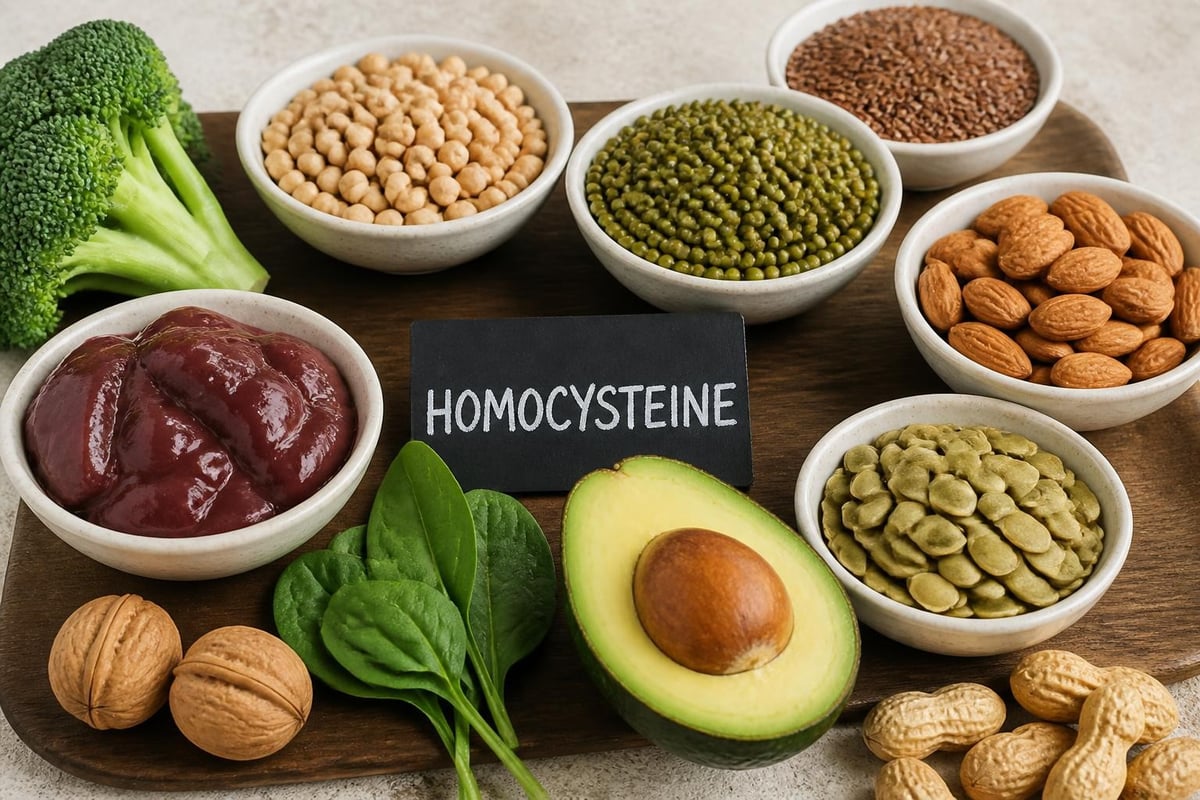
Folate is abundant in leafy greens, legumes, and fortified grains. Vitamin B12 comes from animal products; vegans require supplementation. Vitamin B6 is present in poultry, fish, and potatoes. Coffee and alcohol in moderation do not significantly raise homocysteine in well-nourished individuals.
Dietary sources of key cofactors:
| Vitamin | Food Sources | Typical Daily Requirement |
|---|---|---|
| Folate | Spinach, lentils, asparagus, fortified rice | 400 micrograms |
| Vitamin B12 | Meat, fish, eggs, dairy | 2.4 micrograms |
| Vitamin B6 | Chicken, salmon, chickpeas, bananas | 1.3 to 1.7 milligrams |
Adequate protein intake supports methionine supply, but excessive methionine loading (from very high protein diets) may transiently raise homocysteine. Balance is the goal.
Homocysteine and Specific Conditions
Beyond general cardiovascular and cognitive associations, homocysteine plays a documented role in several clinical scenarios.
Pregnancy and Neural Tube Defects
Periconceptional folate supplementation reduces neural tube defect risk by approximately 70 percent. Elevated maternal homocysteine is one mechanism; impaired methylation during neural tube closure is another. Public health programs mandating folate fortification have reduced homocysteine levels and neural tube defect incidence population-wide.
Women planning pregnancy should achieve folate sufficiency before conception. Those with prior affected pregnancies may require higher doses (4 to 5 milligrams daily).
Cognitive Decline and Dementia
Homocysteine crosses the blood-brain barrier and may contribute to neurodegeneration through oxidative stress, vascular injury, and tau phosphorylation. Observational data link high levels to accelerated brain atrophy and Alzheimer disease risk.
Randomized trials of B vitamins in older adults with mild cognitive impairment showed slower atrophy in brain regions vulnerable to Alzheimer pathology, but no consistent effect on clinical cognitive scores. The disconnect between imaging and function suggests that slowing anatomical change may not translate to preserved cognition if other pathways dominate.
Thrombosis
Hyperhomocysteinemia increases thrombin generation and impairs fibrinolysis. Case-control studies identified it as a risk factor for deep vein thrombosis and pulmonary embolism, with odds ratios similar to factor V Leiden heterozygosity.
Treatment with B vitamins lowers homocysteine but has not been shown to prevent recurrent thrombosis in randomized trials. Anticoagulation remains the evidence-based intervention.
Osteoporosis
Homocysteine accumulates in bone matrix and may interfere with collagen cross-linking. Cohort studies associate elevated levels with increased fracture risk, independent of bone mineral density. Supplementation trials have not demonstrated fracture reduction.
Frequently Asked Questions
What is a normal homocysteine level?
Most laboratories define normal as 5 to 15 micromoles per liter in fasting plasma. Values between 15 and 30 are considered mildly elevated and often reflect B vitamin insufficiency or MTHFR polymorphism. Levels above 30 warrant investigation for kidney disease, severe vitamin deficiency, or genetic disorders.
Should I supplement B vitamins if my homocysteine is high?
Supplementation is appropriate if testing confirms folate, B12, or B6 deficiency. Without documented deficiency, the decision is individualized and made by a physician after reviewing kidney function, diet, medications, and overall risk. Randomized trials have not shown clinical benefit from lowering homocysteine in the absence of deficiency, but some patients and physicians choose to supplement based on observational data and mechanistic rationale.
Does lowering homocysteine prevent heart attacks or stroke?
Large randomized trials in high-risk populations showed that B vitamin supplementation lowers homocysteine reliably but does not reduce the incidence of myocardial infarction or stroke in most groups. Exceptions may exist for specific populations or endpoints, but current evidence does not support supplementation solely to prevent cardiovascular events in people with adequate baseline vitamin status.
How is homocysteine measured, and do I need to fast?
Homocysteine is measured in fasting plasma using liquid chromatography or immunoassay. Fasting for 8 to 12 hours minimizes variation from dietary methionine. Blood is collected in EDTA tubes, placed on ice, and centrifuged within 30 minutes. Plasma is separated and frozen if not analyzed immediately, as homocysteine continues to be released from cells at room temperature.
Homocysteine is a measurable, modifiable biomarker linked to cardiovascular, cognitive, and metabolic health through methylation and oxidative pathways. Nutritional repletion corrects deficiency-related elevations; outcome trials have not confirmed broader benefit from lowering levels in the absence of deficiency. Healthi Life measures homocysteine as part of advanced biomarker panels reviewed one-to-one with a physician, who integrates the result with imaging, genetic data, and clinical context to decide whether intervention is warranted. This page is for information only and is not medical advice. Medical consultation and prescription are available online and on site at Healthi Life, Ekkamai, Bangkok.