
Low Ferritin Symptoms: What to Watch For in 2026

Low ferritin symptoms include fatigue, hair loss, and restless legs. Learn the signs, thresholds, and when biomarker testing is needed.
This page is for general information and does not constitute medical advice, diagnosis, or treatment. Results vary between individuals. Every medicine and peptide listed here is dispensed only after a medical consultation at Healthi Life and on a physician's prescription. Prices are published for transparency, not as an offer to supply. Always consult a qualified physician about your condition. See our full medical disclaimer.
Low ferritin appears before anemia does. Symptoms begin when iron stores drop, sometimes months before red blood cell count falls. Many people attribute fatigue or hair thinning to stress or age when the cause is measurable and correctable. A ferritin test costs less than most supplements, yet it is often the last test ordered.
What Ferritin Measures
Ferritin is a protein that stores iron inside cells. The amount in blood correlates with total body iron stores. When ferritin drops, iron reserves are depleting, even if hemoglobin remains normal. This guide is published by the Healthi Life longevity clinic in Bangkok.
The World Health Organization defines thresholds based on age, sex, and inflammation. Below 15 μg/L indicates depleted stores in adults. Between 15 and 30 μg/L suggests low reserves. Some clinical protocols use 50 μg/L as the threshold for intervention.
Ferritin rises during inflammation. A normal result does not rule out iron deficiency if inflammatory markers are elevated. This is why testing requires interpretation alongside CRP, ESR, or other acute-phase reactants.
Iron Storage and Tissue Function
Iron enables oxygen transport, energy production, and neurotransmitter synthesis. Tissue function depends on iron availability, not just circulating hemoglobin.
When stores fall, the body prioritizes red blood cell production. Muscles, brain, and hair follicles receive less iron. This is when low ferritin symptoms emerge, often before anemia appears on a standard complete blood count.
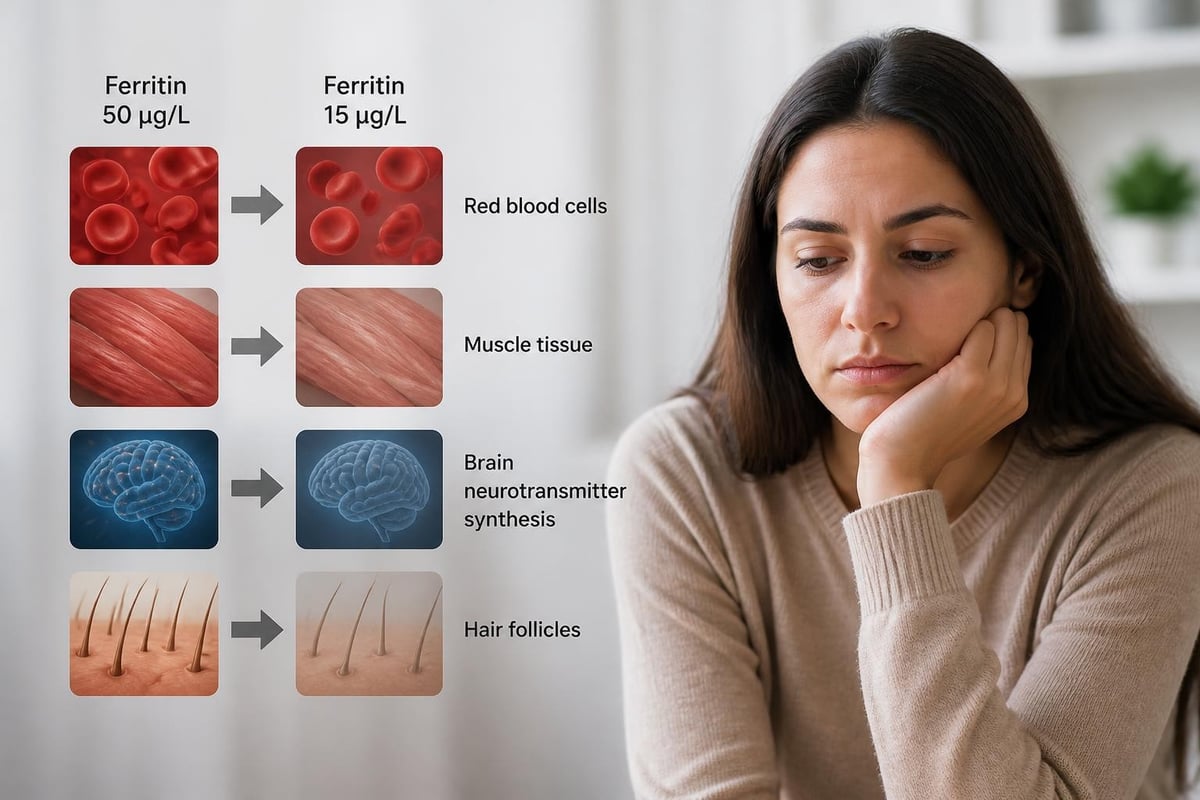
Recognizable Low Ferritin Symptoms
Fatigue is the most common symptom. It is not relieved by sleep and worsens with exertion. Energy drops in the afternoon. Tasks that were routine require rest breaks.
Hair loss occurs when follicles cannot sustain growth. Shedding increases in the shower and on the pillow. Regrowth slows. This happens more often in women, but men experience it as well when ferritin falls below 40 μg/L.
Restless legs and periodic limb movements appear at night. The urge to move the legs interrupts sleep. Symptoms improve with movement and worsen at rest. Iron is required for dopamine synthesis in the brain regions that regulate motor control.
Additional low ferritin symptoms include:
- Difficulty concentrating or remembering
- Cold hands and feet
- Pale skin, nail beds, or inner eyelids
- Brittle nails with vertical ridges or spoon-shaped concavity
- Shortness of breath during routine activity
- Dizziness when standing
- Headaches that occur without clear trigger
- Heart palpitations during mild exertion
MedlinePlus notes that symptoms vary by severity and duration. Sudden blood loss causes different symptoms than gradual depletion over months.
Symptom Onset Relative to Ferritin Level
Not every person experiences symptoms at the same ferritin threshold. Women with heavy menstrual bleeding may tolerate lower levels without fatigue. Athletes under high training loads develop symptoms at higher thresholds.
| Ferritin Level (μg/L) | Likely Symptoms | Hemoglobin Status |
|---|---|---|
| 50–100 | Usually none | Normal |
| 30–50 | Fatigue, exercise intolerance | Normal |
| 15–30 | Fatigue, hair loss, restless legs | Normal or borderline |
| Below 15 | Severe fatigue, cognitive impairment | Often anemic |
The table reflects general patterns. Individual response depends on baseline iron demand, dietary intake, absorption capacity, and ongoing losses.
Who Develops Low Ferritin
Women of reproductive age lose iron through menstruation. Blood loss of 80 mL per cycle exceeds dietary intake in many cases. Ferritin falls gradually over years unless intake increases or losses decrease.
Athletes lose iron through foot-strike hemolysis, gastrointestinal microbleeding, and increased red blood cell turnover. Endurance training raises iron demand. Zone 2 training increases mitochondrial density, which raises iron requirements per muscle fiber.
Vegetarians and vegans rely on non-heme iron, which is absorbed at 2 to 10 percent efficiency compared to 15 to 35 percent for heme iron. Phytates in grains and legumes inhibit absorption further.
Gastrointestinal conditions reduce iron uptake. Celiac disease, inflammatory bowel disease, atrophic gastritis, and Helicobacter pylori infection all impair absorption or cause chronic blood loss.
Frequent blood donors deplete stores unless supplementation or dietary adjustment occurs. A single whole blood donation removes approximately 200 to 250 mg of iron.
Blood Loss That Goes Unnoticed
Gastrointestinal bleeding from ulcers, polyps, or malignancy may be occult. Stool appears normal. Anemia and low ferritin develop over months. Any unexplained ferritin drop in men or postmenopausal women warrants endoscopy.
Heavy menstrual bleeding is often underestimated. Changing a pad or tampon more than once per hour, passing clots larger than a coin, or bleeding for more than seven days depletes iron faster than diet can replace it.
Testing and Interpretation
Ferritin is measured from a blood sample. It is included in some comprehensive panels but not in standard annual physicals. If low ferritin symptoms are present, ferritin should be requested explicitly.
A physician-reviewed biomarker panel includes ferritin alongside hemoglobin, mean corpuscular volume, transferrin saturation, and inflammatory markers. Interpretation requires all values, not ferritin alone.
Testing is performed fasting to reduce variability. Results below 30 μg/L in the absence of inflammation indicate low iron stores. Results between 30 and 50 μg/L may warrant intervention if symptoms are present or iron demand is high.
British Society for Haematology guidelines recommend using 30 μg/L as a threshold for preoperative optimization. Surgery increases iron demand. Starting with low stores delays recovery and raises transfusion risk.
When Ferritin Appears Normal Despite Iron Deficiency
Ferritin is an acute-phase reactant. Infection, autoimmune disease, liver disease, or malignancy elevates ferritin independent of iron status. A ferritin of 60 μg/L may coexist with true iron deficiency if CRP is elevated.
Research published in Nature Reviews Endocrinology discusses the complexity of interpreting ferritin in metabolic dysfunction and chronic inflammation. Transferrin saturation below 20 percent suggests iron deficiency even when ferritin is normal or high.
Obesity raises ferritin through low-grade inflammation. Ferritin of 80 μg/L in an obese patient may reflect inflammation, not adequate stores. Functional iron deficiency occurs when ferritin is normal but iron is sequestered and unavailable for erythropoiesis.

Non-Anemic Iron Deficiency
Iron deficiency without anemia is common. Hemoglobin remains above 12 g/dL in women or 13 g/dL in men, yet ferritin is low and symptoms are present.
A review in PubMed Central examines clinical consequences of non-anemic iron deficiency. Fatigue, cognitive impairment, and reduced physical performance occur at ferritin levels between 15 and 30 μg/L, even with normal hemoglobin.
Standard annual check-ups measure hemoglobin but not ferritin. A patient with fatigue and ferritin of 20 μg/L is told the blood count is normal. Symptoms persist. Years pass before ferritin is tested.
Why Symptoms Occur Before Anemia
Red blood cell production is protected until iron stores are exhausted. Tissues with high turnover, such as hair follicles and intestinal epithelium, lose iron supply earlier.
The brain requires iron for dopamine and serotonin synthesis. Myelin production depends on iron. Cognitive symptoms and mood changes appear when brain iron falls, independent of hemoglobin.
Muscle cells use iron in myoglobin and mitochondrial enzymes. Exercise capacity drops when muscle iron is low. This is why athletes notice performance decline before anemia develops.
Addressing Low Ferritin
Iron supplementation is the first intervention. Ferrous sulfate, ferrous gluconate, and ferrous fumarate are absorbed at similar rates. Doses range from 65 to 200 mg of elemental iron daily.
Absorption improves when taken on an empty stomach with vitamin C. Food, calcium, tea, and coffee reduce absorption. Side effects include nausea, constipation, and dark stool.
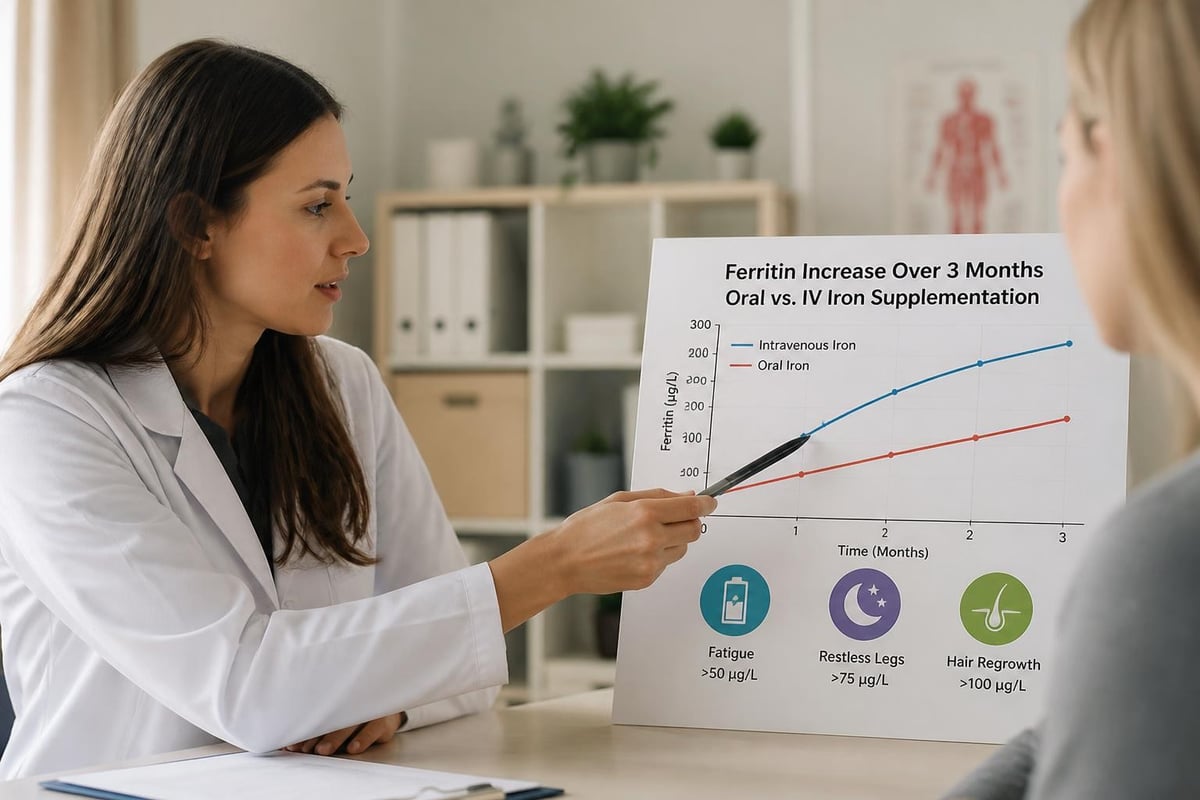
Intravenous iron bypasses absorption issues. It is used when oral iron fails, when gastrointestinal disease is present, or when rapid repletion is needed. A single infusion can deliver 500 to 1,000 mg. Ferritin rises within days. Hemoglobin increases over two to four weeks.
Dietary iron sources include red meat, poultry, fish, lentils, spinach, and fortified grains. Heme iron from animal products is absorbed more efficiently than non-heme iron from plants. Pairing plant iron with vitamin C increases absorption.
Monitoring Response
Ferritin should be rechecked after eight to twelve weeks of supplementation. An increase of 15 to 30 μg/L confirms response. If ferritin does not rise, poor absorption or ongoing blood loss is likely.
Symptoms improve before ferritin normalizes. Fatigue and restless legs often resolve when ferritin reaches 30 to 50 μg/L. Hair regrowth takes longer, as the follicle growth cycle is three to six months.
If ferritin remains low despite treatment, investigation for occult bleeding or malabsorption is required. Endoscopy, celiac serology, and stool occult blood testing are next steps.
Biomarker Tracking in a Physician-Led Programme
Ferritin does not exist in isolation. It is one marker in a network of metabolic, inflammatory, and hematologic parameters. Tracking ferritin alongside hemoglobin, CRP, vitamin D, thyroid function, and sex hormones provides context.
At Healthi Life, ferritin is measured as part of recovery and performance biomarker panels. Results are reviewed by a licensed physician who interprets them within the patient's full clinical and lifestyle context. A single low value triggers investigation. Trends over months inform decisions about supplementation, diet adjustment, or further testing.
Regenerative protocols that include cellular therapy often incorporate iron optimization. Stem cell proliferation and tissue repair require adequate iron. Ferritin is checked before treatment begins and monitored during recovery. Protocols are adjusted based on biomarker response, not calendar intervals.
Common Questions
What ferritin level causes symptoms?
Symptoms often begin below 30 μg/L, though some people experience fatigue or hair loss at 40 to 50 μg/L. Athletes and menstruating women may need higher levels to avoid symptoms. Response is individual.
Can low ferritin cause anxiety?
Iron is required for neurotransmitter synthesis. Low brain iron affects dopamine and serotonin. Anxiety, irritability, and low mood occur in some patients with ferritin below 20 μg/L. Symptoms improve with repletion.
How long does it take to raise ferritin?
Oral iron raises ferritin by approximately 10 to 15 μg/L per month if absorbed. Intravenous iron raises ferritin within one to two weeks. Full repletion to 50 μg/L or higher may take three to six months orally.
Should ferritin be tested if hemoglobin is normal?
Yes. Non-anemic iron deficiency causes symptoms before anemia develops. If fatigue, hair loss, or restless legs are present, ferritin should be tested regardless of hemoglobin.
The Role of Inflammation and Chronic Disease
Chronic kidney disease, heart failure, and autoimmune conditions raise ferritin through inflammation. Ferritin of 100 μg/L or higher may coexist with functional iron deficiency. Transferrin saturation and soluble transferrin receptor provide additional information.
Hepcidin, a hormone produced by the liver, blocks iron absorption and release from stores. Inflammation raises hepcidin. This is why iron supplementation fails in some inflammatory states. Addressing the underlying inflammation is required.
Conditions that mimic or overlap with low ferritin symptoms include hypothyroidism, perimenopause, vitamin B12 deficiency, and sleep apnea. Testing should be comprehensive. Treating ferritin alone does not resolve symptoms if thyroid or hormonal imbalance is also present.
Ferritin in Men Over 45
Men rarely develop low ferritin unless bleeding or malabsorption is present. A ferritin below 30 μg/L in a man over 45 requires investigation for gastrointestinal bleeding, even if stool tests are negative.
High ferritin is more common in men over 45. Levels above 300 μg/L may indicate hemochromatosis, chronic liver disease, or metabolic syndrome. Genetic testing for HFE mutations is indicated if ferritin is persistently elevated without inflammation.
When to Consult a Physician
Low ferritin symptoms that persist for more than four weeks warrant evaluation. Fatigue, hair loss, restless legs, or shortness of breath should not be attributed to aging or stress without testing.
A physician reviews ferritin alongside complete blood count, inflammatory markers, and relevant clinical history. If ferritin is low, the next question is why. Dietary insufficiency, blood loss, malabsorption, and increased demand are all considered.
Supplementation is straightforward when the cause is dietary. It is not when bleeding or absorption defects are present. A diagnostic approach prevents symptom recurrence and identifies conditions that require specific treatment.
Ferritin and Long-Term Health
Persistent low ferritin is linked to reduced exercise capacity, impaired cognitive function, and poorer surgical outcomes. It is not benign. Treating it improves quality of life and supports metabolic resilience.
Iron is involved in immune function. Low iron increases infection susceptibility. It impairs T-cell proliferation and neutrophil activity. Chronic low ferritin may contribute to immune senescence, though the magnitude of effect is still under study.
Hair loss from low ferritin is reversible. Once ferritin rises above 40 to 50 μg/L, regrowth begins. Shedding decreases within weeks. Full density returns over three to six months, provided no other cause of hair loss is present.
Athletes who maintain ferritin above 50 μg/L perform better. Endurance capacity, recovery time, and adaptation to training improve. Monitoring ferritin every three to six months is part of performance optimization programs that address metabolic and musculoskeletal health.
Low ferritin symptoms emerge before anemia and affect energy, cognition, hair, and sleep. Testing is simple. Interpretation requires a physician who reviews biomarkers in context, not in isolation. Healthi Life offers physician-led diagnostic check-ups and continuous biomarker tracking in longevity programs built around individual physiology, not population averages.
This page is for information only and is not medical advice. Medical consultation and prescription are available online and on site at Healthi Life, Ekkamai, Bangkok.