
MCHC Blood Test: Reference Ranges and What It Measures

MCHC blood test measures hemoglobin concentration in red cells. Learn reference ranges, when MCHC is high or low, and what it means.
This page is for general information and does not constitute medical advice, diagnosis, or treatment. Results vary between individuals. Every medicine and peptide listed here is dispensed only after a medical consultation at Healthi Life and on a physician's prescription. Prices are published for transparency, not as an offer to supply. Always consult a qualified physician about your condition. See our full medical disclaimer.
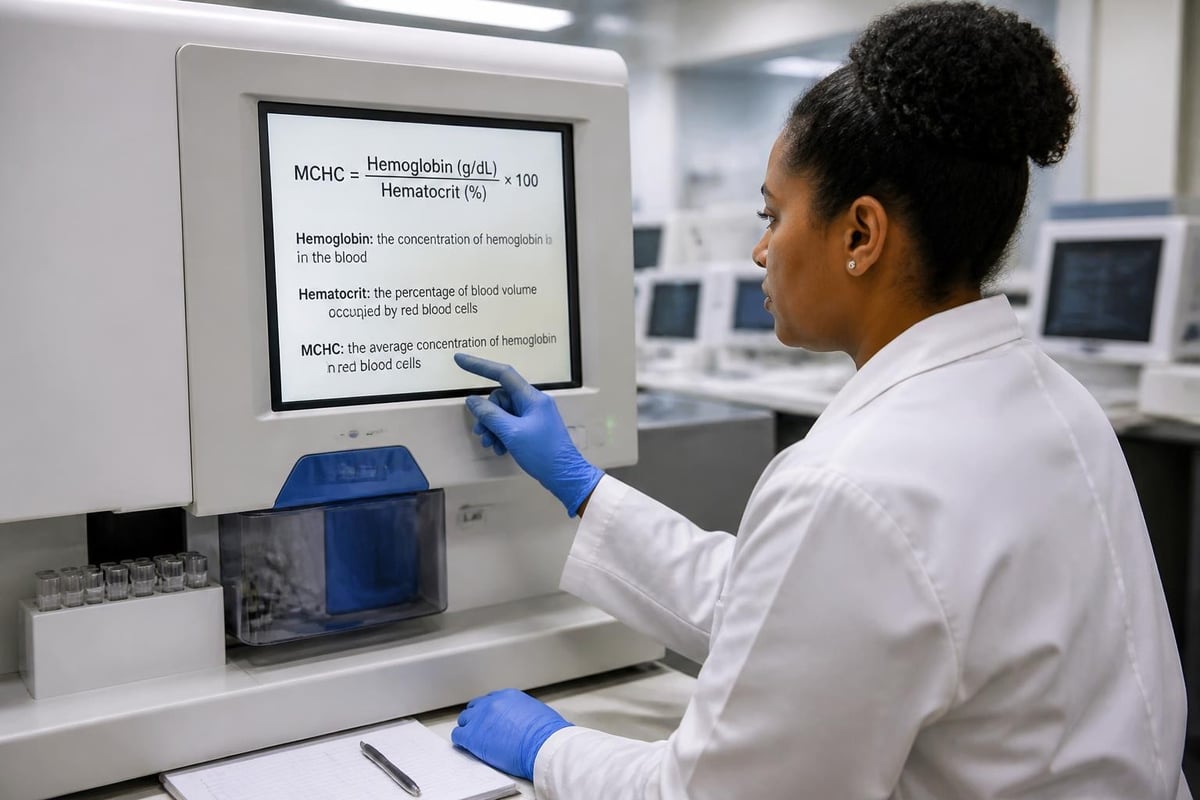
The mchc blood test measures the mean corpuscular hemoglobin concentration inside your red blood cells. It reports the average amount of hemoglobin per unit volume of red cells, expressed in grams per deciliter. This metric is derived from two other values: total hemoglobin and hematocrit. The calculation divides hemoglobin by hematocrit and multiplies by 100.
Normal MCHC in adults ranges from 32 to 36 g/dL. Values outside this range indicate that red cells carry either too much or too little hemoglobin relative to their size. The test is always ordered as part of a complete blood count, never alone.
What the MCHC Blood Test Actually Measures
MCHC quantifies hemoglobin density. Red blood cells transport oxygen. Hemoglobin inside each cell binds oxygen molecules. MCHC tells the physician whether those cells are saturated with hemoglobin or diluted. This guide is published by the Healthi Life longevity clinic in Bangkok.
The laboratory analyzer measures hemoglobin concentration directly using spectrophotometry. It measures hematocrit by calculating the fraction of blood volume occupied by red cells. MCHC is then computed: (hemoglobin ÷ hematocrit) × 100.
Because MCHC is a calculated value, errors in either input will distort the result. Hemolyzed samples, lipemia, or instrument calibration issues can all produce spurious readings. Red blood cell indices are always interpreted alongside the full CBC, not in isolation.
Reference Ranges for MCHC
| Population | MCHC Reference Range (g/dL) | Notes |
|---|---|---|
| Adult men | 32.0 – 36.0 | Most common range |
| Adult women | 32.0 – 36.0 | Same as men |
| Newborns | 31.0 – 37.0 | Slightly wider |
| Children 6-12 years | 32.0 – 36.0 | Converges with adult values |
Reference intervals vary slightly by laboratory. The UW Medicine test guide and NHS pathology reference ranges both use 32.0 to 36.0 g/dL for adults. Some instruments report 31.0 to 37.0 g/dL.
Values below 32 g/dL indicate hypochromia. Red cells contain less hemoglobin than they should. This pattern appears in iron deficiency anemia, thalassemia, and chronic disease anemia.
Values above 36 g/dL are less common. MCHC rarely exceeds the physiological maximum because red cells cannot pack hemoglobin beyond a certain concentration. Spherocytosis and autoimmune hemolytic anemia sometimes produce elevated MCHC.
When MCHC Is Low
Low MCHC means hemoglobin is diluted within the red cell. The cell may be normal-sized or large, but it carries less hemoglobin per unit volume. This is hypochromic anemia.
Iron deficiency is the most common cause. Without sufficient iron, the bone marrow produces red cells that are pale and poorly filled. MCHC often falls before hemoglobin drops significantly, making it an early marker.
Thalassemia also lowers MCHC. Genetic variants reduce globin chain production. Red cells are small and contain less hemoglobin. MCHC and MCV both decline together.
Chronic inflammation can depress MCHC by sequestering iron. Conditions like rheumatoid arthritis, inflammatory bowel disease, or chronic infection trigger hepcidin release, which blocks iron absorption and recycling.
Lead poisoning disrupts heme synthesis, producing hypochromic cells. Sideroblastic anemia, a disorder of mitochondrial iron utilization, also lowers MCHC in some patients.
When MCHC Is High
Elevated MCHC is uncommon and often signals red cell membrane or hemolysis disorders. Normal red cells cannot concentrate hemoglobin beyond 36 g/dL without losing their biconcave shape.
Hereditary spherocytosis is the classic cause. Mutations in membrane proteins (spectrin, ankyrin, band 3) cause red cells to lose membrane surface area and become spherical. Spherocytes have reduced surface-to-volume ratio, packing hemoglobin into a smaller space, which raises MCHC.
Autoimmune hemolytic anemia can also elevate MCHC. Antibodies coat red cells, leading to partial phagocytosis by splenic macrophages. The cell loses membrane but retains hemoglobin, increasing concentration.
Cold agglutinin disease may produce falsely high MCHC due to red cell clumping during analysis. The analyzer misreads clumps as fewer, denser cells.
Severe dehydration can concentrate all blood components, but MCHC itself remains stable because both hemoglobin and hematocrit rise proportionally.

How the MCHC Blood Test Fits Into Anemia Evaluation
MCHC is one of three red cell indices reported in every CBC. The others are MCV (mean corpuscular volume) and MCH (mean corpuscular hemoglobin). All three describe red cell characteristics from different angles.
MCV measures cell size. MCH measures total hemoglobin per cell. MCHC measures hemoglobin concentration within the cell. A physician reads all three together to classify anemia.
Microcytic hypochromic anemia shows low MCV, low MCH, and low MCHC. This pattern points to iron deficiency or thalassemia. Normocytic normochromic anemia shows normal indices with low hemoglobin. This suggests acute blood loss, hemolysis, or early kidney disease.
MCHC adds specificity when MCV is borderline. A patient with low-normal MCV and low MCHC likely has developing iron deficiency, even if hemoglobin is still normal.
MCHC also helps distinguish true anemia from laboratory artifact. If MCHC is implausibly high or low, the sample should be recollected and reanalyzed.
The MCHC Blood Test in Diagnostic Workup
When MCHC is abnormal, the physician orders additional tests to identify the cause. For low MCHC:
- Serum ferritin to assess iron stores
- Transferrin saturation to measure iron availability
- Serum iron and TIBC (total iron binding capacity)
- Hemoglobin electrophoresis if thalassemia is suspected
- Reticulocyte count to evaluate bone marrow response
For high MCHC:
- Direct antiglobulin test (Coombs test) for autoimmune hemolysis
- Peripheral blood smear to visualize spherocytes or fragmented cells
- Osmotic fragility test if spherocytosis is suspected
- Bilirubin and LDH to confirm hemolysis
MCHC does not diagnose a condition on its own. It narrows the differential and guides the next step in testing.
MCHC and Other Biomarkers in Longevity Medicine
MCHC sits within a larger biomarker panel. At Healthi Life in Ekkamai, Bangkok, the Foundation health check-up in Bangkok begins at THB 10,500 and includes a complete blood count with red cell indices, iron panel, metabolic markers, lipid profile, and organ function tests. Results are reviewed one-to-one with a physician, who interprets MCHC alongside ferritin, inflammatory markers, and clinical history.
In a three-to-twelve-month program, MCHC is tracked over time. A declining MCHC may indicate evolving iron deficiency, even if hemoglobin remains normal. This allows early intervention before anemia develops.
Chronic low-grade inflammation reduces iron availability and can lower MCHC. Tracking inflammatory markers like high-sensitivity CRP alongside MCHC helps differentiate true iron deficiency from inflammation-driven anemia. The physician adjusts supplementation or addresses the inflammatory source accordingly.
MCHC also interacts with muscle mass preservation after 40. Iron is required for myoglobin synthesis and mitochondrial enzyme function. Subclinical iron deficiency, flagged by low MCHC before anemia appears, can impair muscle performance and recovery. Addressing it early supports tissue oxygenation and training adaptation.
MCHC Trends in Long-Term Health Monitoring
Single MCHC values are snapshots. Trends are more informative. A gradual decline over six or twelve months, even within the reference range, may signal evolving deficiency or chronic disease.
Programs using up to 300 biomarkers track MCHC in context with zinc, copper, vitamin B12, folate, and erythropoietin. This reveals whether low MCHC is isolated or part of a broader nutritional or hematologic picture.
When MCHC falls, the physician reviews recent dietary changes, gastrointestinal symptoms, and menstrual history in women. Occult bleeding, malabsorption, or increased demand (pregnancy, intense training) all depress MCHC before hemoglobin drops.
Rising MCHC, though rare, may indicate early hemolysis or membrane disorder. Persistent elevation triggers further workup. The physician does not wait for symptoms to appear.

Frequently Asked Questions About the MCHC Blood Test
What is the difference between MCH and MCHC?
MCH measures the average mass of hemoglobin in one red cell, reported in picograms. MCHC measures hemoglobin concentration per unit volume of red cells, reported in grams per deciliter. MCH depends on cell size. MCHC does not. A large cell can have high MCH but normal MCHC if hemoglobin is distributed over a large volume.
Can MCHC be too high?
Yes, but it is uncommon. MCHC above 36 g/dL suggests spherocytosis, hemolytic anemia, or laboratory error. Hemoglobin cannot exceed physiological packing density inside a red cell. Values above 37 g/dL are almost always artifact and require sample reanalysis.
Does dehydration affect MCHC?
Dehydration raises both hemoglobin and hematocrit proportionally, so MCHC remains stable. However, severe hemoconcentration can cause spurious readings if the analyzer misinterprets cell morphology. Proper hydration is recommended before blood collection.
How quickly can MCHC change?
MCHC reflects the average concentration across all circulating red cells. Red cells live approximately 120 days. A change in bone marrow output takes weeks to shift MCHC. Rapid drops suggest acute blood loss or hemolysis. Gradual changes over months indicate evolving iron status or chronic disease.
Is MCHC part of a routine blood test?
Yes. MCHC is included in every complete blood count. Most health screenings, pre-operative panels, and annual check-ups order a CBC, so MCHC is measured routinely. It is not ordered separately.
When to Get the MCHC Blood Test
The mchc blood test is part of a complete blood count, which is ordered in several situations:
- Annual health screening for adults 40 and older, to detect early anemia or hematologic changes before symptoms appear
- Evaluation of fatigue, weakness, or pallor, which may indicate anemia
- Monitoring during treatment for iron deficiency, B12 deficiency, or chronic disease anemia
- Pre-operative assessment to ensure normal hemoglobin and red cell parameters before surgery
- Diagnosis of unexplained bruising, bleeding, or jaundice, which may signal hemolysis or bone marrow disorder
You should request a CBC if you have persistent fatigue, shortness of breath, dizziness, or pale skin. Women with heavy menstrual bleeding, individuals on restricted diets, and those with gastrointestinal symptoms (chronic diarrhea, blood in stool) should have MCHC monitored regularly.
In longevity medicine, the mchc blood test is measured at baseline and re-tested at scheduled intervals. Physicians review it alongside ferritin, transferrin saturation, vitamin B12, folate, and inflammatory markers. This comprehensive view reveals subclinical deficiencies before they progress to anemia.
MCHC measures hemoglobin concentration within red cells and signals iron deficiency, thalassemia, or hemolysis when abnormal. It is always interpreted alongside the full CBC and clinical context. For a physician-reviewed Foundation health check-up in Bangkok that includes MCHC, iron panel, and up to 300 biomarkers in extended programs, visit Healthi Life. Every result is reviewed one-to-one, and every protocol follows a licensed physician's assessment.
- 5.0 Google Rating · 238 reviews
- 2,500+ Guests
- 50+ Countries
- 2025 Regenerative Clinic of the Year in Asia-Pacific — GlobalHealth Asia-Pacific Awards