
Zepbound vs Mounjaro: Same Molecule, Different Label
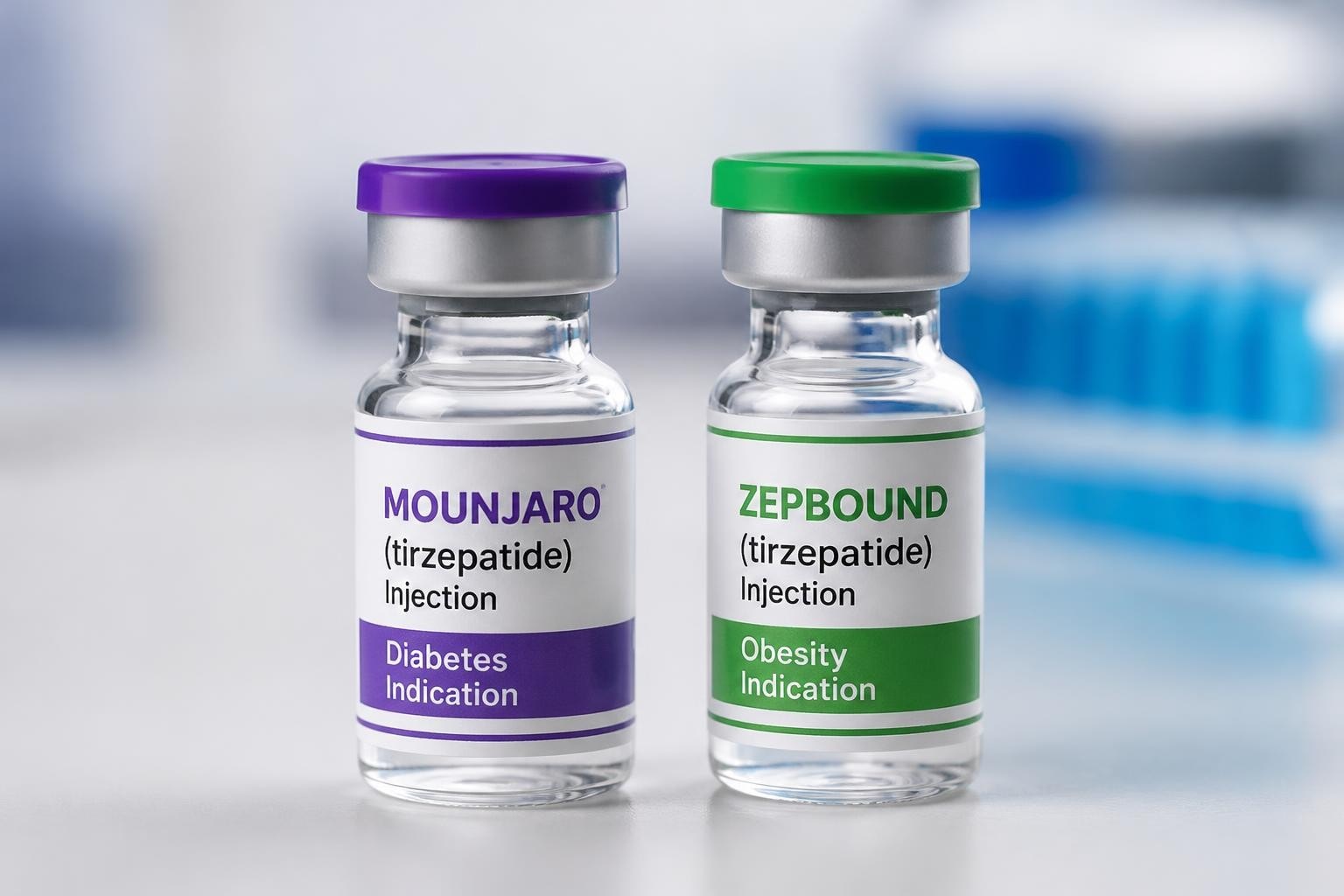
Zepbound vs Mounjaro explained: both are tirzepatide. Read the evidence, FDA approvals, dosing differences and Thailand cost data.
This page is for general information and does not constitute medical advice, diagnosis, or treatment. Results vary between individuals. GLP-1 medication (semaglutide — Ozempic, Wegovy; tirzepatide — Mounjaro) is a prescription medicine, dispensed and administered only after assessment by a licensed physician. This page is medical information, not an advertisement or an offer of treatment. Every medicine and peptide listed here is dispensed only after a medical consultation at Healthi Life and on a physician's prescription. Prices are published for transparency, not as an offer to supply. Always consult a qualified physician about your condition. See our full medical disclaimer.
Zepbound and Mounjaro are identical at the molecular level. Both contain tirzepatide, a dual GIP/GLP-1 receptor agonist developed by Eli Lilly. Mounjaro received FDA approval in May 2022 for type 2 diabetes. Zepbound was approved in November 2023 for chronic weight management. The difference is regulatory, not chemical.
The Verdict on Zepbound vs Mounjaro
Same active ingredient. Same manufacturer. Same mechanism. The only difference is the indication on the label and the trial endpoints used for approval. Mounjaro targets glycemic control in type 2 diabetes. Zepbound targets weight reduction in adults with obesity or overweight with at least one weight-related comorbidity. Physicians in the United States and internationally prescribe Mounjaro off-label for weight loss before Zepbound existed, and that practice continues where Zepbound is not available. Healthi Life is a physician-led longevity house in Bangkok.
Comparison Table: Key Differences
| Feature | Mounjaro | Zepbound |
|---|---|---|
| Active molecule | Tirzepatide | Tirzepatide |
| FDA approval | May 2022 (type 2 diabetes) | November 2023 (chronic weight management) |
| Mechanism | Dual GIP/GLP-1 receptor agonist | Dual GIP/GLP-1 receptor agonist |
| Trial evidence | SURPASS 1-5 (diabetes outcomes) | SURMOUNT 1-4 (weight reduction outcomes) |
| Thailand availability | Available at Healthi Life | Not currently imported |
| Cost (Thailand) | THB 12,000 / 15,000 / 18,000 / 20,500 per dose | Not applicable |

What Tirzepatide Does
Tirzepatide activates two incretin hormone receptors. GIP (glucose-dependent insulinotropic polypeptide) and GLP-1 (glucagon-like peptide-1) both regulate glucose metabolism and energy intake. The GLP-1 component slows gastric emptying, reduces appetite and stimulates insulin secretion when glucose is elevated. The GIP component amplifies insulin response and may have additional metabolic effects on fat tissue and energy expenditure.
The dual action distinguishes tirzepatide from single-agonist GLP-1 drugs like semaglutide. Whether that translates to superior outcomes depends on the endpoint measured and the patient's baseline metabolic state.
Evidence From Clinical Trials
The SURPASS-1 trial enrolled 478 adults with type 2 diabetes inadequately controlled on diet and exercise. After 40 weeks, the tirzepatide dose reduced HbA1c by 2.07 percentage points and body weight by 9.5 kg. Smaller doses showed dose-dependent reductions.
SURPASS-2 through SURPASS-5 tested tirzepatide against metformin, insulin glargine, insulin degludec and semaglutide. Across all five trials, tirzepatide consistently met or exceeded glycemic control targets. Weight loss occurred in every trial, even though weight was not the primary endpoint.
The SURMOUNT trials focused explicitly on weight reduction. SURMOUNT-1 enrolled 2,539 adults with obesity (BMI ≥30) or overweight (BMI ≥27) plus at least one weight-related comorbidity, excluding diabetes. At 72 weeks, participants on tirzepatide lost an average of 20.9% of baseline body weight. Placebo participants lost 3.1%.
SURMOUNT-2 included participants with type 2 diabetes and obesity. SURMOUNT-3 and SURMOUNT-4 tested maintenance strategies after initial weight loss.
FDA Labeling and Prescribing Differences
The Mounjaro prescribing information lists type 2 diabetes as the sole indication.
The Zepbound prescribing information lists chronic weight management in adults with an initial BMI of 30 kg/m² or greater, or 27 kg/m² or greater with at least one weight-related comorbidity. The dosing schedules are identical. The difference is the patient population and the clinical goal.
Both labels carry the same boxed warning regarding thyroid C-cell tumors observed in rodent studies. Both are contraindicated in patients with a personal or family history of medullary thyroid carcinoma or in patients with Multiple Endocrine Neoplasia syndrome type 2.
Off-Label Use and Physician Discretion
Physicians prescribe FDA-approved medications off-label when clinical evidence supports the use and the benefit-risk calculus favors the patient. Mounjaro has been prescribed for weight loss since its approval in 2022, well before Zepbound existed. Some insurance plans in the United States cover Mounjaro for diabetes but not Zepbound for obesity, creating a financial incentive for off-label prescribing even after Zepbound's approval.
In Thailand and other markets where Zepbound is not registered, Mounjaro remains the only tirzepatide option. The molecule is the same. The physician reviews the patient's metabolic profile, comorbidities and goals, then decides whether tirzepatide is appropriate and at what dose.

Zepbound vs Mounjaro: Cost in Thailand
Healthi Life offers Mounjaro in four doses. The 2.5 mg dose is THB 12,000. The 5 mg dose is THB 15,000. The 7.5 mg dose is THB 18,000. The 10 mg dose is THB 20,500. Each dose is administered once weekly.
Every medicine and peptide listed here is dispensed only after a medical consultation at Healthi Life and on a physician's prescription.
Zepbound is not currently imported into Thailand. Patients seeking tirzepatide receive Mounjaro after consultation and biomarker review.
What the Cost Includes
The price covers the pharmaceutical, the pre-filled pen, the physician consultation and the medical supervision required for safe titration. Patients do not receive a prescription and collect the drug elsewhere. The medication is dispensed on-site after the physician reviews baseline blood work, screens for contraindications and confirms the treatment fits the patient's longevity plan.
Biomarker testing is separate. A baseline panel typically includes fasting glucose, HbA1c, lipid profile, liver enzymes and renal function. Patients on tirzepatide are re-tested at intervals determined by the physician. If HbA1c drops below target or liver enzymes rise, the dose is adjusted or the drug is paused.
Who Should Consider Tirzepatide
Tirzepatide is not a first-line intervention for metabolic health. The physician first reviews diet quality, meal timing, macronutrient distribution, exercise volume and sleep. If those are optimized and the patient still has elevated HbA1c, fasting glucose above or BMI above 27 with metabolic comorbidity, tirzepatide enters the discussion.
- Type 2 diabetes inadequately controlled on metformin alone
- Obesity with concurrent hypertension, dyslipidemia or fatty liver
- Patients who have failed lifestyle intervention despite documented adherence
- Patients seeking to reduce sarcopenia risk while losing fat mass
Tirzepatide is not prescribed for cosmetic weight loss in individuals with normal glucose tolerance and no metabolic disease. The risk of gastrointestinal side effects, the cost and the need for ongoing medical supervision make it unsuitable for patients who simply want to lose five kilograms.
Contraindications and Cautions
Patients with a history of medullary thyroid carcinoma or MEN 2 cannot use tirzepatide. Patients with a history of pancreatitis are evaluated individually. Those with severe gastroparesis or a history of diabetic retinopathy may require additional monitoring.
Tirzepatide slows gastric emptying. That can interfere with the absorption of oral medications taken at the same time. The physician adjusts timing or switches to non-oral formulations when necessary.
Women who are pregnant or planning pregnancy stop tirzepatide. Animal studies show fetal harm. Human data are insufficient.
How Tirzepatide Fits Into a Longevity Program
Metabolic dysfunction shortens lifespan and healthspan. Chronic hyperglycemia damages endothelium, nerves and kidneys. Excess visceral fat drives systemic inflammation and insulin resistance. Correcting these derangements reduces all-cause mortality and improves functional capacity in later decades.
Tirzepatide is one tool. It does not replace nutrient-dense meals, resistance training and sleep hygiene. It accelerates progress when those foundations are already in place.
At Healthi Life, tirzepatide is part of Longevity Programs that run three to twelve months. The program starts with a full biomarker panel, imaging and a one-to-one physician consultation. The physician writes a protocol that may include tirzepatide, peptides, hormone optimization and targeted supplementation. The patient returns for scheduled re-testing. The protocol is adjusted based on the data.
The goal is not to lose weight for a wedding. The goal is to restore insulin sensitivity, reduce visceral fat and normalize inflammatory markers so the patient enters their 50s and 60s with lower disease burden and higher functional reserve.
Combining Tirzepatide With Other Interventions
Some patients combine tirzepatide with peptides that preserve lean mass. Others add peptides for recovery and sleep to support training volume while in a caloric deficit. The physician decides based on the patient's biomarker trend and training load.
Tirzepatide suppresses appetite. Patients must consume adequate protein to prevent muscle loss. A target of 1.6 to 2.2 grams per kilogram of body weight is typical. Resistance training volume increases or is maintained during the weight loss phase.
Patients who lose weight rapidly without resistance training lose muscle and fat proportionally. That worsens long-term metabolic health. The physician monitors body composition, strength metrics and resting metabolic rate throughout the program.

Timeline and What to Expect
The first dose of tirzepatide is. Most patients tolerate this well. Mild nausea, reduced appetite and occasional loose stools are common in the first week. These effects diminish after the second or third injection.
Dose escalation occurs every four weeks. The physician reviews symptom logs and may pause escalation if gastrointestinal side effects persist. Others require 10 or 15 mg.
Weight loss is not linear. The first four weeks typically show the largest drop, much of which is water and glycogen. Fat loss accelerates in weeks 8 through 20. Plateaus are common and do not indicate treatment failure. The physician reviews biomarkers and body composition data, not just scale weight.
Duration of Treatment
Type 2 diabetes is a chronic condition. Patients who discontinue tirzepatide without addressing the underlying metabolic dysfunction will see HbA1c rise again. Some patients remain on tirzepatide indefinitely. Others transition to lower doses or switch to oral agents once insulin sensitivity improves.
For weight management, the SURMOUNT-4 trial tested what happens after patients lose weight on tirzepatide. Participants who stopped tirzepatide regained approximately half the lost weight within a year. Those who continued tirzepatide maintained most of the weight loss.
The physician and patient decide together how long to continue. If the patient has normalized HbA1c, reduced visceral fat below 100 cm² on imaging and restored insulin sensitivity, a supervised taper may be appropriate. If metabolic markers remain abnormal, continuation is safer than cessation.
Potential Side Effects and How They Are Managed
Nausea is the most frequently reported side effect. It peaks in the first week after dose escalation and improves with time. Eating smaller meals, avoiding high-fat foods and spacing meals evenly throughout the day reduce nausea severity.
Diarrhea and constipation both occur. The gastrointestinal effects reflect slowed motility and altered gut hormone signaling. Adjusting fiber intake, hydration and meal timing usually resolves the issue. If symptoms persist, the physician may reduce the dose or pause escalation.
Rare but serious side effects include pancreatitis, gallbladder disease and acute kidney injury. Patients report persistent abdominal pain, vomiting or reduced urine output immediately. The physician evaluates and decides whether to continue or stop the medication.
Hypoglycemia is uncommon with tirzepatide monotherapy because the insulin response is glucose-dependent. Patients who combine tirzepatide with insulin or sulfonylureas have higher risk and require dose adjustment of those agents.
Monitoring and Physician Oversight
Baseline testing includes fasting glucose, HbA1c, lipid panel, liver enzymes, creatinine and thyroid-stimulating hormone. Patients with a history of thyroid nodules receive an ultrasound before starting tirzepatide.
Re-testing occurs every 8 to 12 weeks during the titration phase, then every 12 to 16 weeks once the maintenance dose is reached. The physician reviews the trend, not just the absolute value. If HbA1c drops from 8.5% to 6.0% within 12 weeks, the dose may be reduced to prevent hypoglycemia. If liver enzymes rise above twice the upper limit of normal, the drug is paused pending further investigation.
Body composition is tracked using DEXA or bioimpedance analysis. The goal is to lose fat mass while preserving or gaining lean mass. If lean mass declines, protein intake and resistance training volume are increased.
Frequently Asked Questions
Is Zepbound available in Thailand?
No. Zepbound is not currently registered or imported into Thailand. Tirzepatide is available as Mounjaro, dispensed after a physician consultation at Healthi Life.
Are Zepbound and Mounjaro the same drug?
Yes. Both contain the same active molecule, tirzepatide, at identical doses. The difference is the regulatory indication. Mounjaro is approved for type 2 diabetes. Zepbound is approved for chronic weight management.
Can I use Mounjaro for weight loss?
That decision belongs to the physician. After reviewing your biomarkers, body composition and medical history, the physician determines whether tirzepatide is appropriate for your goals. Many patients use Mounjaro for weight management under medical supervision.
How much does Mounjaro cost in Thailand?
The 2.5 mg dose is THB 12,000. The 5 mg dose is THB 15,000. The 7.5 mg dose is THB 18,000. The 10 mg dose is THB 20,500. Each dose is administered once weekly and includes the consultation and medical supervision.
How long do I need to stay on tirzepatide?
Duration depends on your metabolic response and long-term goals. Some patients remain on tirzepatide for years. Others taper after achieving glycemic targets and restoring insulin sensitivity. The physician reviews your biomarker trend every 8 to 12 weeks and adjusts the plan accordingly.
Why Healthi Life Requires Physician Review Before Dispensing Tirzepatide
Tirzepatide is not dispensed over the counter. Every patient undergoes a baseline consultation, biomarker review and contraindication screening. The physician confirms the drug fits your metabolic profile and long-term health plan.
This is not an IV lounge. This is not a volume clinic. Healthi Life in Ekkamai, Bangkok is a private longevity house where every protocol is supervised by a licensed physician. Tirzepatide, NAD+, peptide therapy and cellular treatments are prescribed only after the data support their use.
Patients who want their health managed as an ongoing program, not an annual check, work with Healthi Life across three to twelve month engagements. Measure, understand, decide. That is the sequence. The physician sees the biomarker trend, reviews the imaging and body composition data, then adjusts the protocol. No guesswork. No one-size-fits-all dosing.
Zepbound and Mounjaro are the same molecule under different regulatory labels. The evidence, mechanism and dosing are identical. In Thailand, Mounjaro is the available form of tirzepatide and is dispensed after a full physician consultation and biomarker review. If you are a Bangkok resident or international visitor seeking physician-supervised metabolic optimization, visit Healthi Life to schedule a consultation and review your baseline data.
Every medicine named on this page is dispensed only after a medical consultation at Healthi Life and on a physician's prescription. No dosing schedule is published here; the dose is set by the prescribing physician. This page is published for transparency, not as an offer to supply.