
Fatty Liver Symptoms: What to Watch For in 2026

Most fatty liver symptoms appear late. Learn the early signs, lab markers, and when to test. From a Bangkok longevity clinic that follows data.
This page is for general information and does not constitute medical advice, diagnosis, or treatment. Results vary between individuals. GLP-1 medication (semaglutide — Ozempic, Wegovy; tirzepatide — Mounjaro) is a prescription medicine, dispensed and administered only after assessment by a licensed physician. This page is medical information, not an advertisement or an offer of treatment. Every medicine and peptide listed here is dispensed only after a medical consultation at Healthi Life and on a physician's prescription. Prices are published for transparency, not as an offer to supply. Always consult a qualified physician about your condition. See our full medical disclaimer.
Fatty liver symptoms are usually absent until disease has advanced. Most people with hepatic steatosis feel nothing. When symptoms do appear, they typically signal inflammation or fibrosis: fatigue that does not resolve with rest, a dull ache in the right upper abdomen, or unexplained changes in liver enzyme levels during routine testing.
What Fatty Liver Is and Why Symptoms Arrive Late
The liver stores small amounts of fat as part of normal metabolism. When more than five percent of liver weight becomes triglyceride, the diagnosis is hepatic steatosis. This guide is published by the Healthi Life longevity clinic in Bangkok.
Early accumulation causes no pain and triggers no alarm. The liver has no pain receptors in its parenchyma. Stretch of the capsule or inflammation of surrounding tissue must occur before discomfort registers.
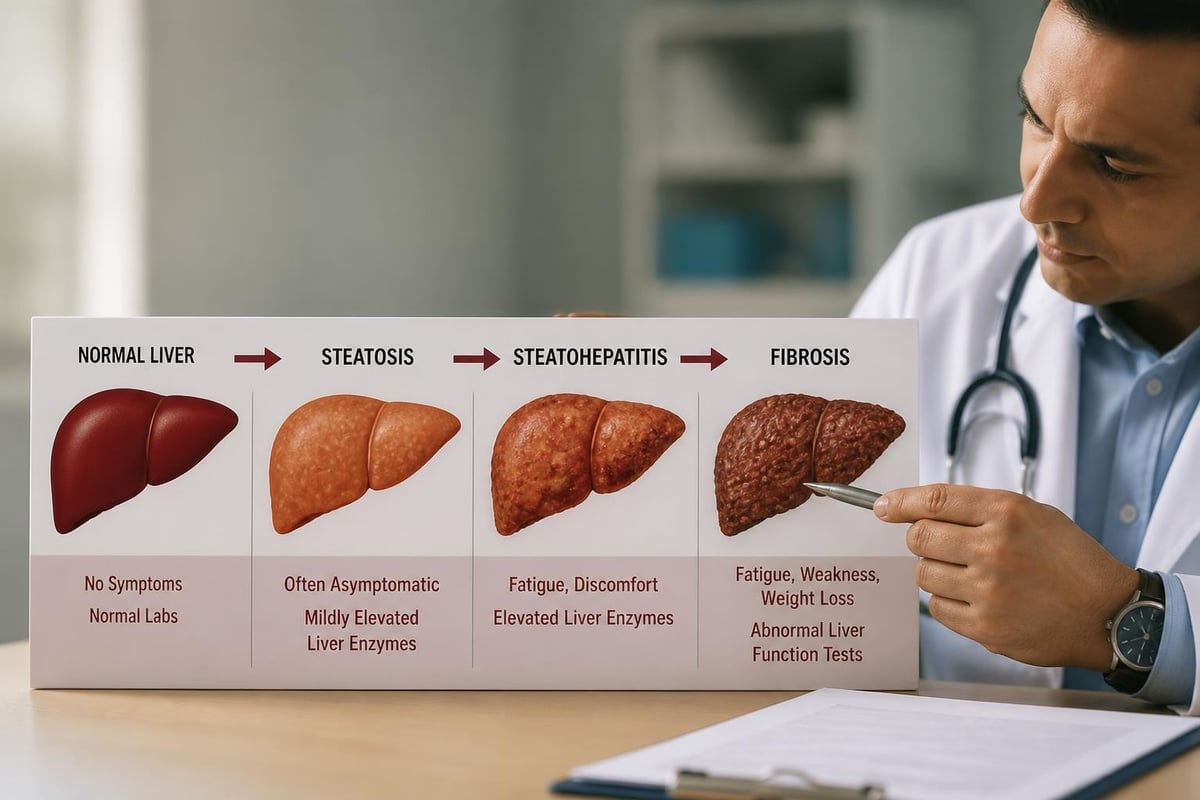
Most cases are discovered incidentally. A routine ultrasound for abdominal pain reveals echogenic liver texture. A metabolic panel ordered for fatigue shows elevated alanine aminotransferase (ALT) or aspartate aminotransferase (AST). The National Institute of Diabetes and Digestive and Kidney Diseases notes that simple steatosis often produces no symptoms at all, and progression to steatohepatitis may still remain silent for years.
The Spectrum: From Steatosis to Steatohepatitis
Two stages define the spectrum. Simple steatosis is fat without inflammation. Steatohepatitis adds hepatocyte injury, immune infiltration, and the beginning of scarring.
Progression is not inevitable. Some patients remain at simple steatosis for decades. Others advance. The distinction matters because steatohepatitis carries the risk of fibrosis, cirrhosis, and hepatocellular carcinoma.
Symptoms, when present, reflect the degree of inflammation and architectural change rather than fat percentage alone.
Recognizing Early and Late Fatty Liver Symptoms
Early disease is silent. The liver continues to synthesize proteins, clear toxins, and regulate glucose without complaint. No jaundice, no edema, no confusion.
Fatigue and Malaise
Fatigue is the most common symptom reported once steatohepatitis develops. It is non-specific and often attributed to other causes: poor sleep, stress, aging, thyroid dysfunction.
The fatigue of liver inflammation does not improve with rest. It persists through weekends and vacations. Patients describe it as a heaviness rather than sleepiness, a sense that normal tasks require more effort than they should.
No single marker confirms that fatigue originates in the liver. The diagnosis is one of context: persistent tiredness in the presence of elevated transaminases, imaging evidence of steatosis, and exclusion of other causes.
Right Upper Quadrant Discomfort
A dull, persistent ache beneath the right ribcage sometimes appears. The pain is not sharp or colicky. It does not radiate to the shoulder or worsen with meals the way biliary pain does.
The sensation reflects capsular stretch as the liver enlarges or mild inflammation of the peritoneum over the liver surface. Palpation may reveal hepatomegaly: a liver edge extending more than two centimeters below the costal margin.
This symptom is more common in steatohepatitis than in simple steatosis, but its absence does not rule out advanced disease.
Laboratory Abnormalities as the First Clue
MedlinePlus emphasizes that fatty liver is frequently discovered through blood work ordered for unrelated reasons. Elevated ALT and AST appear in metabolic panels. The ratio of AST to ALT is often less than one in fatty liver disease, the inverse of alcoholic hepatitis.
Gamma-glutamyl transferase (GGT) may rise. Alkaline phosphatase (ALP) typically remains normal unless biliary involvement or advanced fibrosis is present. Bilirubin, albumin, and prothrombin time stay within reference range until cirrhosis develops.
A comprehensive metabolic panel and lipid profile form the baseline. Triglycerides are often elevated. HDL cholesterol is frequently low. Fasting glucose or hemoglobin A1c may reveal prediabetes or diabetes, both strong risk factors for progression.
| Biomarker | Reference Range | Typical Pattern in Fatty Liver |
|---|---|---|
| ALT | 7–56 U/L | Mild to moderate elevation (50–150 U/L) |
| AST | 10–40 U/L | Mild elevation; AST/ALT ratio < 1 in NAFLD |
| GGT | 9–48 U/L | Often elevated, especially with metabolic syndrome |
| Triglycerides | < 150 mg/dL | Frequently > 150 mg/dL |
| HbA1c | < 5.7% | Often 5.7–6.4% (prediabetes) or higher |
An Advanced Check-Up at Healthi Life includes a hepatic panel, lipid profile, glucose markers, and imaging reviewed one-to-one with a physician. The Foundation tier is THB 10,500, published and all-inclusive, with no separate lab fees. Results are interpreted in the context of personal and family history, body composition, and metabolic risk.
Signs of Progression: Fibrosis and Cirrhosis
Advanced fibrosis and early cirrhosis may still produce few symptoms. When they do appear, the disease has often been present for years.
- Spider angiomas: small, red, branching blood vessels on the chest and arms
- Palmar erythema: reddening of the palms
- Ascites: fluid accumulation in the abdomen, detected by shifting dullness on percussion
- Peripheral edema: swelling of the ankles and lower legs due to low albumin
- Jaundice: yellowing of the skin and sclera when bilirubin rises above 2–3 mg/dL
- Easy bruising: prolonged prothrombin time and low platelet count impair coagulation
- Confusion or altered mentation: hepatic encephalopathy from ammonia accumulation
These findings indicate decompensated liver disease. Referral to a hepatologist is required. Management includes sodium restriction, diuretics, lactulose, and in some cases evaluation for liver transplantation.
The American Association for the Study of Liver Diseases provides detailed guidance on staging and monitoring. Regular surveillance with imaging and non-invasive fibrosis scores (FIB-4, NAFLD fibrosis score) helps identify patients at risk before decompensation occurs.
Risk Factors and Who Develops Symptoms
Not everyone with fat in the liver develops inflammation or symptoms. The presence of metabolic risk factors accelerates progression.
Metabolic Syndrome and Insulin Resistance
Central obesity, hypertension, dyslipidemia, and impaired fasting glucose cluster together. This combination drives hepatic fat accumulation and promotes steatohepatitis.
Insulin resistance is the shared mechanism. The liver continues to synthesize fat in response to insulin even as peripheral tissues become resistant to glucose uptake. Free fatty acids flux into the hepatocyte, exceed oxidative capacity, and trigger lipotoxicity.
Adults over forty with expanding waist circumference and rising fasting glucose are at highest risk. The prevalence in Asia is increasing. Urbanization, sedentary work, and calorie-dense diets have shifted the burden from Western populations to Bangkok, Singapore, and Hong Kong.
Age, Sex, and Genetic Modifiers
Men develop fatty liver at higher rates before age fifty. After menopause, the prevalence in women rises to match or exceed that in men.
Genetic polymorphisms modify risk. The PNPLA3 I148M variant is associated with increased hepatic fat, higher transaminase levels, and faster progression to fibrosis. The TM6SF2 E167K variant also raises steatosis risk but paradoxically lowers cardiovascular risk by reducing VLDL secretion.
Family history matters. A parent or sibling with fatty liver disease doubles the likelihood of steatosis, independent of shared lifestyle factors.
Medications and Other Causes
Certain drugs induce or worsen hepatic steatosis:
- Corticosteroids: chronic use promotes insulin resistance and fat deposition
- Tamoxifen: used in breast cancer treatment, associated with steatohepatitis
- Methotrexate: low-dose regimens for autoimmune disease can cause steatosis and fibrosis
- Amiodarone: antiarrhythmic with known hepatotoxicity
- Valproate: anticonvulsant linked to microvesicular steatosis in children and adults
Medication review is part of the initial evaluation. A lipid-lowering statin or GLP-1 receptor agonist for diabetes may improve steatosis, while adjusting or discontinuing a hepatotoxic drug may halt progression.
Maintaining muscle mass after 40 also supports metabolic health. Skeletal muscle is the primary site of insulin-mediated glucose disposal. Resistance training and adequate protein intake improve insulin sensitivity and reduce hepatic fat independent of weight loss.
Testing and Diagnosis
No single symptom confirms fatty liver disease. Diagnosis requires imaging, laboratory testing, and risk stratification.
Imaging Modalities
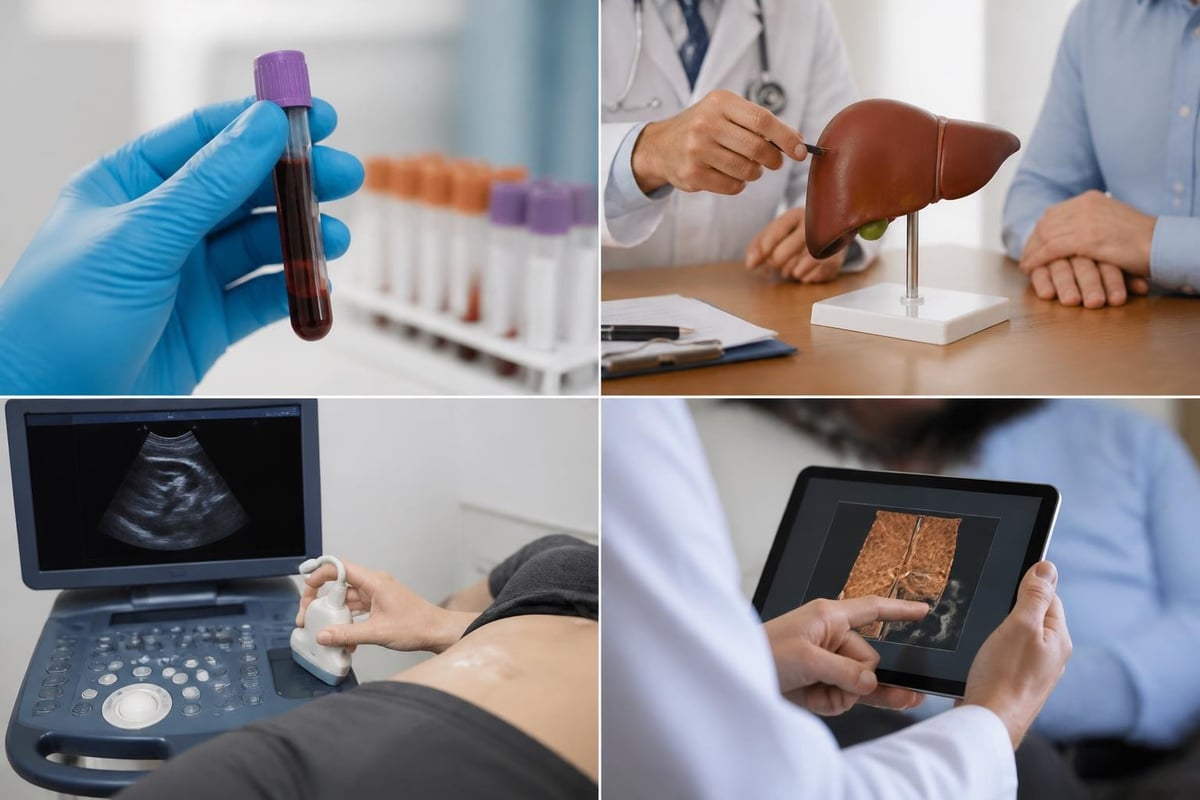
Ultrasound is the first-line tool. Increased echogenicity and posterior attenuation suggest steatosis. Sensitivity is approximately seventy percent when fat exceeds twenty percent of liver weight.
Magnetic resonance imaging proton density fat fraction (MRI-PDFF) quantifies hepatic fat with high accuracy. It is the reference standard in clinical trials and research but remains expensive and not widely available in routine practice.
Transient elastography (FibroScan) measures liver stiffness as a surrogate for fibrosis. Controlled attenuation parameter (CAP) scores estimate fat content. The test is quick, non-invasive, and reproducible.
Biopsy is reserved for cases where non-invasive tests are indeterminate, autoimmune or genetic liver disease is suspected, or treatment decisions hinge on precise staging. The procedure carries a small risk of bleeding and sampling error.
The NHS outlines a stepwise approach: screen with blood tests, confirm with imaging, stage fibrosis with elastography or scoring systems, and biopsy only when necessary.
Non-Invasive Fibrosis Scores
Several scores estimate fibrosis risk using age, body mass index, platelet count, albumin, and transaminase levels.
The FIB-4 index requires age, ALT, AST, and platelet count. A score below 1.3 has high negative predictive value for advanced fibrosis. A score above 2.67 suggests high risk and warrants further evaluation.
The NAFLD fibrosis score incorporates age, BMI, hyperglycemia, platelet count, albumin, and AST/ALT ratio. A score below -1.455 rules out advanced fibrosis with ninety percent accuracy.
These tools help triage. Patients at low risk continue lifestyle modification and annual monitoring. Those at indeterminate or high risk proceed to elastography or biopsy.
Lifestyle Modification and Symptom Reversal
Weight loss remains the only intervention proven to reverse steatosis and improve steatohepatitis. A reduction of seven to ten percent of body weight reduces liver fat, lowers transaminase levels, and in some cases reverses fibrosis.
Diet and Physical Activity
No specific macronutrient ratio is universally superior. Mediterranean diet patterns, low-carbohydrate approaches, and calorie restriction all reduce hepatic fat when weight loss occurs.
Avoiding fructose-sweetened beverages is essential. High fructose intake drives de novo lipogenesis in the liver independent of total calorie intake.
Aerobic exercise and resistance training both improve insulin sensitivity. Combining the two produces the greatest benefit. A target of one hundred fifty minutes per week of moderate-intensity activity is a reasonable starting point.
Pharmacologic Interventions
No drug is currently approved by the FDA specifically for fatty liver disease, though several are in late-stage trials.
Pioglitazone, a thiazolidinedione used in diabetes, improves steatohepatitis and reduces fibrosis in non-diabetic patients in controlled trials. Side effects include weight gain, fluid retention, and bone loss.
Vitamin E (800 IU daily of RRR-alpha-tocopherol) reduces liver inflammation in non-diabetic adults with biopsy-proven steatohepatitis. It is not recommended in diabetic patients or those with cirrhosis due to conflicting data on cardiovascular and prostate cancer risk.
GLP-1 receptor agonists (semaglutide, tirzepatide) produce significant weight loss and improve liver histology in early trials. These agents are increasingly used for metabolic syndrome and obesity. A comparison of Mounjaro vs Wegovy reviews the efficacy and dosing of two commonly discussed options.
Every medicine and peptide listed here is dispensed only after a medical consultation at Healthi Life and on a physician's prescription.

Medical Aesthetics and Weight Management
Patients pursuing body composition goals sometimes seek adjunctive treatments.
When to Get Tested
Testing is indicated when risk factors are present or when symptoms appear. Adults over forty with central obesity, prediabetes, or dyslipidemia should have baseline liver enzymes, fasting glucose, lipid profile, and consideration of imaging.
Annual monitoring is appropriate for those with known steatosis. Re-testing after weight loss or metabolic improvement documents response.
The test is a comprehensive metabolic panel with liver function tests, lipid profile, hemoglobin A1c, and abdominal ultrasound or elastography. Longevity medicine programs that track up to 300 biomarkers over months include hepatic markers in the baseline and follow-up assessments, allowing the physician to detect early progression and adjust intervention.
If enzymes remain elevated despite weight loss, or if imaging suggests fibrosis, referral to a hepatologist or gastroenterologist is warranted. NICE guidance outlines surveillance intervals and criteria for specialist involvement.
Foundation health check-up in Bangkok at Healthi Life delivers a hepatic panel, imaging, and physician review in a single visit. Results are explained in the context of long-term metabolic risk, not as isolated numbers. The check-up is the entry point into continuous monitoring or a structured longevity program when deeper intervention is needed.
Frequently Asked Questions
What are the earliest fatty liver symptoms?
Most people with early fatty liver disease have no symptoms. Fatigue and right upper abdominal discomfort appear only after inflammation or fibrosis develops. Elevated liver enzymes on routine blood work are often the first sign.
Can fatty liver symptoms go away?
Yes. Weight loss of seven to ten percent reverses steatosis in many patients and improves transaminase levels. Symptoms such as fatigue and abdominal discomfort often resolve as liver inflammation decreases. Fibrosis regression is possible in some cases but requires sustained intervention.
How do I know if my fatty liver is getting worse?
Rising transaminase levels, worsening insulin resistance, or new symptoms such as jaundice, ascites, or confusion indicate progression. Non-invasive fibrosis scores (FIB-4, NAFLD fibrosis score) and elastography track changes over time. Serial testing every six to twelve months is recommended for those at moderate or high risk.
Do fatty liver symptoms differ between men and women?
The symptoms themselves do not differ, but prevalence and risk patterns do. Men develop fatty liver earlier in life. Women see rising prevalence after menopause. Hormonal changes, visceral fat distribution, and genetic factors all influence when and whether symptoms appear.
Is fatty liver dangerous if I have no symptoms?
Asymptomatic fatty liver can still progress. Simple steatosis carries low risk, but steatohepatitis and fibrosis develop silently in a subset of patients. Regular monitoring with blood tests and imaging allows early detection before complications such as cirrhosis or liver cancer occur.
Fatty liver symptoms appear late, often after years of silent fat accumulation and inflammation. Early detection relies on routine blood work, imaging, and risk assessment rather than waiting for discomfort or fatigue to develop. Healthi Life in Ekkamai, Bangkok offers physician-led diagnostic check-ups and longevity programs that measure hepatic markers, track metabolic trends, and build protocols based on data rather than assumptions. Schedule a consultation to establish your baseline and decide what comes next.
Every medicine named on this page is dispensed only after a medical consultation at Healthi Life and on a physician's prescription. No dosing schedule is published here; the dose is set by the prescribing physician. This page is published for transparency, not as an offer to supply.
- 5.0 Google Rating · 238 reviews
- 2,500+ Guests
- 50+ Countries
- 2025 Regenerative Clinic of the Year in Asia-Pacific — GlobalHealth Asia-Pacific Awards