
Heavy Metal Toxicity Symptoms: What to Look For
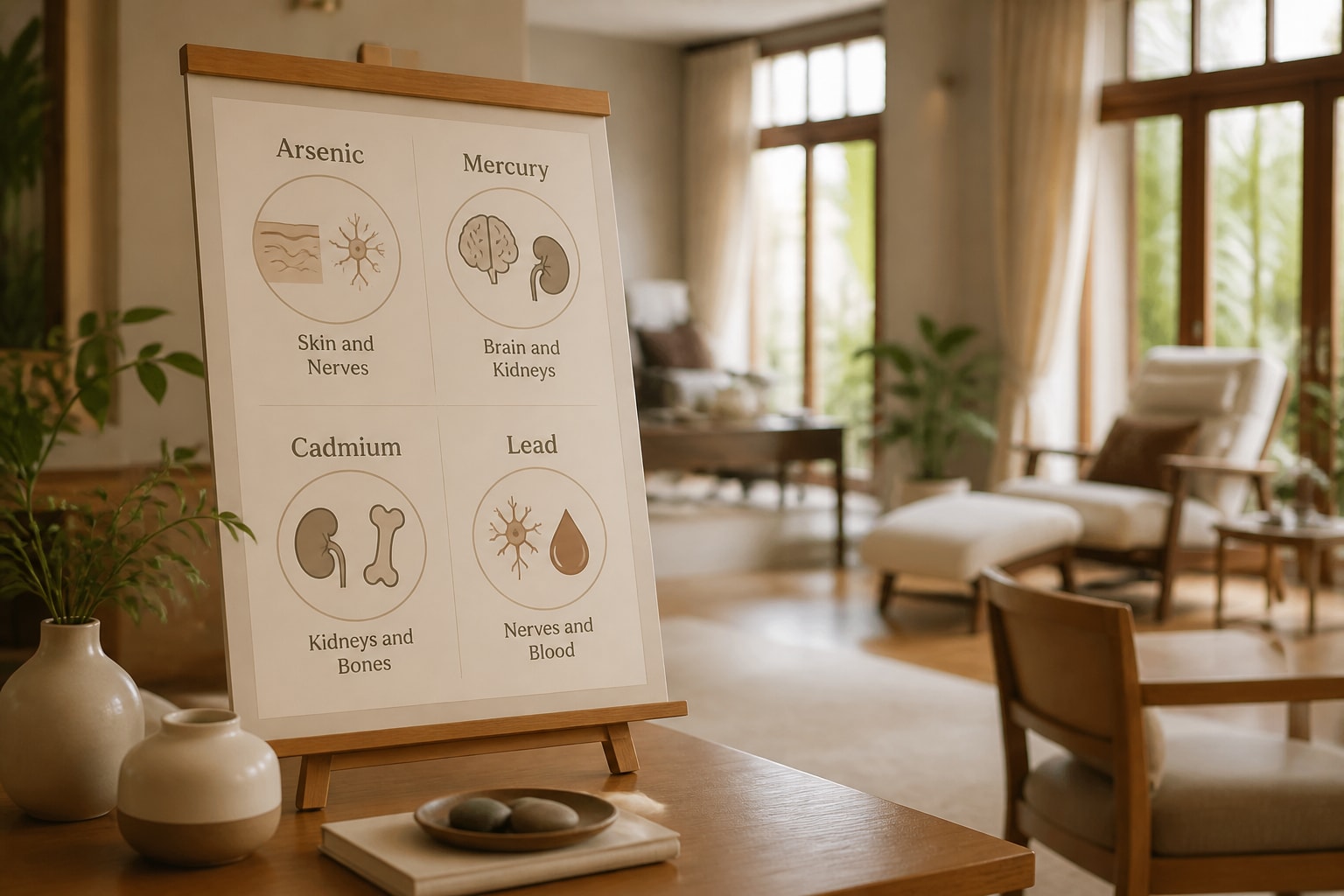
Heavy metal toxicity symptoms by metal: arsenic, mercury, cadmium and lead. Learn the signs, who is exposed, and how testing confirms what symptoms cannot.
This page is for general information and does not constitute medical advice, diagnosis, or treatment. Results vary between individuals. Every medicine and peptide listed here is dispensed only after a medical consultation at Healthi Life and on a physician's prescription. Prices are published for transparency, not as an offer to supply. Always consult a qualified physician about your condition. See our full medical disclaimer.
Heavy metal toxicity symptoms vary by metal and by dose, but the common signs are abdominal pain, nausea, numbness or tingling in the hands and feet, headaches, memory problems, fatigue and skin changes. No single symptom is specific. Only a laboratory test, read by a physician, can confirm exposure.
For adults over 40 in Asia, the question is practical. Rice, seafood, tap and well water, older buildings, industrial districts and frequent travel all shape exposure. This article sets out what each metal tends to do, which signs deserve attention, and how testing separates a true exposure from ordinary tiredness.
What Counts as a Heavy Metal and How Exposure Happens
Heavy metals are dense metallic elements that can harm the body at low doses when they accumulate. The ones most often tested are arsenic, mercury, cadmium and lead. Some, such as iron and zinc, are essential in small amounts. The toxic ones have no known function in the body. Healthi Life is a physician-led longevity clinic in Bangkok.
Exposure usually comes from four routes:
- Food and water. Arsenic can occur in groundwater and in rice. Mercury builds up in large predatory fish. Cadmium enters crops through soil.
- Air. Industrial emissions, smelting, traffic and tobacco smoke carry cadmium and lead.
- Occupation and hobbies. Battery work, welding, mining, construction and some manufacturing involve direct contact.
- Products and buildings. Older paint, plumbing, certain cosmetics, traditional remedies and imported supplements can contain metals.
Exposure is not the same as poisoning. Trace amounts appear in almost everyone. Toxicity depends on the metal, the form, the dose, the duration and the person's own kidney and liver function.
Heavy Metal Toxicity Symptoms by Metal
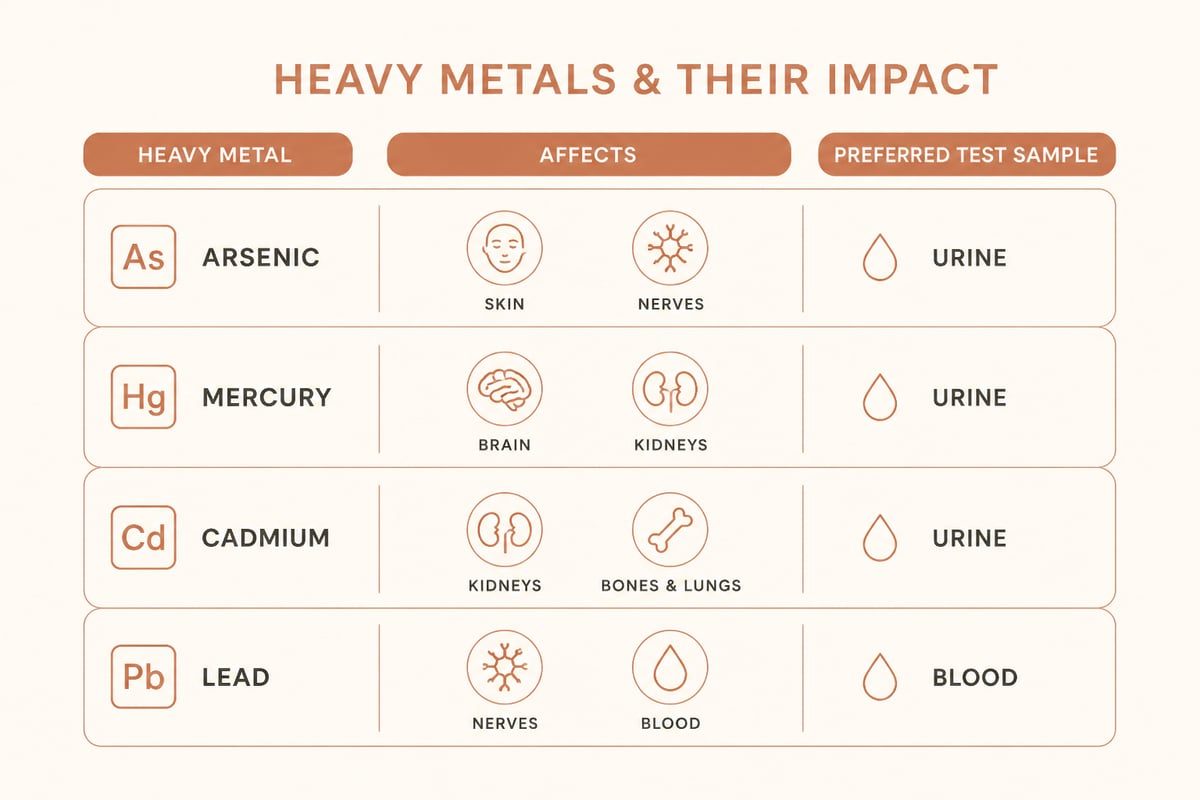
Each metal has a recognizable pattern, though the patterns overlap. The table below summarizes the main targets and the typical presentation.
| Metal | Main body systems affected | Typical symptoms | Best sample for testing |
|---|---|---|---|
| Arsenic | Skin, nerves, gut, heart | Abdominal pain, vomiting, skin pigment changes, thickened palms or soles, numbness in hands and feet | Urine (speciated) |
| Mercury | Brain, nerves, kidneys, skin | Tremor, insomnia, memory loss, headaches, mood change | Blood (recent fish intake), urine (inorganic) |
| Cadmium | Kidneys, bones, lungs | Kidney damage, brittle bones, cough and breathlessness after inhalation | Urine (long-term), blood (recent) |
| Lead | Nerves, blood, kidneys, blood pressure | Fatigue, headache, abdominal pain, irritability, raised blood pressure | Blood |
This table is a reference, not a diagnostic tool. A physician interprets any result alongside history and symptoms.
Arsenic poisoning symptoms
The symptoms of arsenic poisoning depend on whether exposure was a single large dose or years of low-level intake. According to the ATSDR clinician brief on arsenic, acute toxicity can cause severe abdominal pain, vomiting, bloody diarrhea, dehydration and cardiovascular collapse. Milder cases may involve numbness, muscle cramps, nausea and diarrhea.
Long-term exposure looks different. The same ATSDR source describes skin pigmentation changes, thickened skin on the palms or soles, and peripheral neuropathy that often affects the hands and feet symmetrically. This slow pattern is the one most relevant to adults who drink from private wells or eat large amounts of rice over decades.
ATSDR's patient guidance on arsenic states plainly that symptoms alone cannot identify arsenic poisoning. A urine test is required.
Mercury toxicity symptoms
Mercury mainly affects the nervous system and kidneys. The World Health Organization fact sheet on mercury lists tremors, insomnia, memory loss, headaches and cognitive or motor dysfunction among the neurological effects, with skin problems also reported. Mercury exposure can also damage the kidneys.
The form matters. Methylmercury, from fish, behaves differently from elemental mercury vapor or inorganic mercury salts. For a person who eats tuna or swordfish several times a week, this is a dietary question first and a medical one second.
Cadmium: what it is and what it does
Cadmium is a heavy metal. It occurs naturally in soil and is released by mining, smelting, battery manufacturing and burning fossil fuels. Tobacco plants absorb it readily, which is why smoking raises body levels.
Cadmium in food comes mainly through crops grown in contaminated soil: rice, leafy vegetables, root vegetables, and shellfish and organ meats. The amounts are small in most diets, but cadmium is retained for decades.
The effects of cadmium on the body center on the kidneys and bones. Per the ATSDR ToxFAQs for cadmium, repeated exposure can damage the kidneys and contribute to weak, brittle bones, and inhaled cadmium can damage the lungs. After a heavy inhalation, ATSDR's acute effects page notes that symptoms may begin within hours of exposure. They can resemble flu at first, then progress to chest pain, cough or shortness of breath.
Lead
Lead affects nerves, blood formation, kidneys and blood pressure. In adults, chronic exposure often presents as fatigue, headache, abdominal discomfort, irritability, poor concentration and elevated blood pressure. These are easy to attribute to work stress, which is one reason lead exposure goes unrecognized.
Early Signs Versus Advanced Signs
Early heavy metal toxicity symptoms are vague, and advanced ones are organ-specific. Separating them helps a physician decide how urgent testing is.
Early and non-specific:
- Persistent fatigue not explained by sleep
- Headaches and difficulty concentrating
- Mild stomach upset or metallic taste
- Tingling in the fingers or toes
- Sleep disturbance
- Mood changes or irritability
Later and more specific:
- Symmetrical numbness or weakness in the limbs
- Tremor
- Skin darkening, patchy pigment or thickened palms and soles
- Declining kidney function on blood work
- Bone pain or fractures at low impact
- Raised blood pressure without another cause
The overlap with other conditions is large. Low ferritin, B12 deficiency and thyroid disease can all produce fatigue, tingling and poor concentration. This is why a symptom list cannot settle the question.
Who Is More Likely to Be Exposed
Exposure risk follows lifestyle and geography more than age, though effects accumulate over time. Adults over 40 carry a longer exposure history and often have less kidney reserve to clear metals.
Groups worth a closer look:
- People who eat rice as a daily staple or rely on private or well water.
- Frequent consumers of large predatory fish, including tuna, swordfish and some mackerel.
- Current or former smokers.
- People who have worked in manufacturing, construction, mining, battery or electronics industries.
- Frequent travelers who spend long periods in cities with heavy industrial or traffic pollution.
- Users of imported herbal remedies or supplements without a certificate of analysis.
A physician will ask about these in a history before ordering anything.
Why Symptoms Alone Cannot Confirm Toxicity
A symptom pattern can raise suspicion, but it cannot identify the metal or the dose. Fatigue, brain fog and numbness have dozens of more common causes. The reverse also applies: some people with measurable body burdens have no symptoms at all.
Two points follow from this. First, self-diagnosis from a symptom checklist is unreliable. Second, the sample type is part of the answer. Per ATSDR, cadmium can be measured in urine, blood and feces. Urine is the best measure of exposure over time, while blood reflects more recent exposure. Other metals have their own preferred samples, and a test run on the wrong sample can return a falsely reassuring number.
Interpretation also depends on context. A single recent seafood meal can raise blood mercury without meaning chronic toxicity. Physicians account for this by timing the test, asking about diet in the preceding days, and repeating the measurement when a result is borderline.
How Testing Works and What Follows a Result
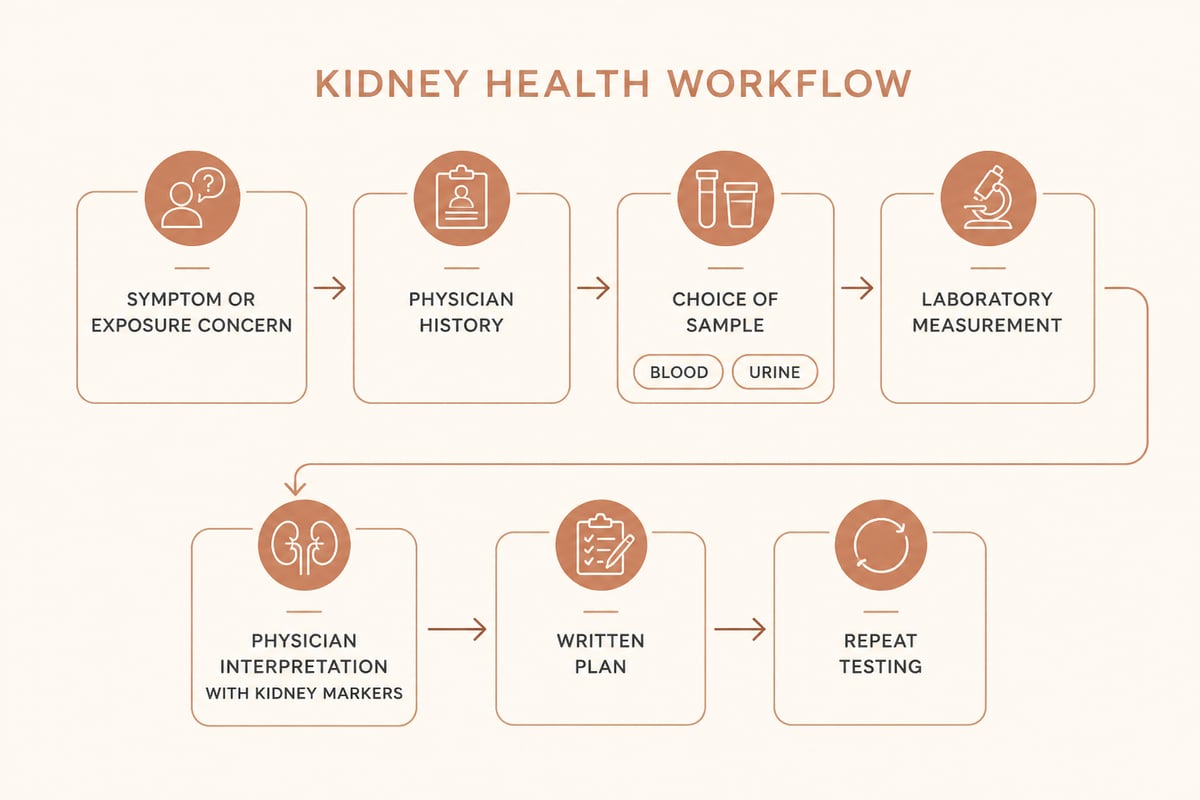
Testing starts with a physician conversation, then a blood or urine sample, then interpretation against reference ranges and your history. The sample depends on the metal and the question being asked.
A typical sequence looks like this:
- History. Diet, water source, occupation, travel, supplements, smoking.
- Sample selection. Whole blood for recent exposure and lead. Urine for long-term cadmium, arsenic and inorganic mercury.
- Kidney and blood markers. Creatinine, eGFR and a complete blood count show whether an organ has been affected.
- Interpretation. The physician compares values with reference ranges and decides whether a result reflects exposure, toxicity or normal background.
- Plan. In most cases the first step is to identify and remove the source. Medical treatment, such as chelation, is reserved for confirmed significant toxicity and is a physician's decision, not a routine step.
Healthi Life offers a heavy metal test as part of its private testing, and results are reviewed one-to-one with a physician. Where metals sit alongside a wider concern, the Advanced Health Check-Up places them next to kidney, liver, hormone and inflammation markers, so that a metal result is read in context.
This is the approach behind longevity medicine: measure first, understand the pattern, then decide. Every protocol follows a consultation with a licensed physician.

FAQ
What are the symptoms of arsenic poisoning?
Acute poisoning causes severe abdominal pain, vomiting, bloody diarrhea and dehydration, and can progress to cardiovascular collapse. Chronic exposure causes skin pigmentation changes, thickened palms or soles, and numbness in the hands and feet. A urine test is needed to confirm it.
Is cadmium a heavy metal?
Yes. Cadmium is a toxic heavy metal with no known biological function in the body. It is released by mining, smelting, battery manufacturing and tobacco smoke, and it accumulates in the kidneys over many years.
What is cadmium in food?
It is cadmium taken up from soil by crops and seafood and then eaten. Rice, leafy and root vegetables, shellfish and organ meats are the usual sources. Dietary amounts are small for most people, but the metal is retained for decades.
What are the effects of cadmium on the body?
Repeated exposure can damage the kidneys and contribute to weak, brittle bones, according to ATSDR. Inhaled cadmium can also injure the lungs. Smoking increases body levels.
Can heavy metal toxicity cause fatigue and brain fog?
It can, but these symptoms are far more often caused by sleep loss, thyroid disease, low iron or B12, or stress. Fatigue and brain fog are reasons to test and exclude causes, not evidence of toxicity. A physician decides which tests are appropriate.
When to Get Tested
Get a heavy metal test if you have a defined exposure and persistent symptoms, or if a physician sees a pattern in your kidney function, blood count or nerve findings that points to a metal. Common triggers include years of private well water, high fish intake, a history of smoking or industrial work, unexplained tingling or tremor, and a long period of unexplained fatigue.
The test to request is a heavy metal panel, which measures arsenic, mercury, cadmium and lead in blood and urine as appropriate. Ask for it alongside kidney markers, so the result can be interpreted. Anyone with sudden severe abdominal pain, repeated vomiting, breathing difficulty or confusion after a possible exposure needs emergency hospital care, not a clinic appointment.
If you suspect an exposure, write down your water source, fish intake, occupational history and supplements before any appointment, since a physician will start there. The physicians at Healthi Life in Ekkamai, Bangkok review these results one-to-one and follow guests over months, not a single visit. To have your own exposure measured and interpreted by a physician, book a discovery consultation with the team.
- 5.0 Google Rating · 238 reviews
- 2,500+ Guests
- 50+ Countries
- 2025 Regenerative Clinic of the Year in Asia-Pacific — GlobalHealth Asia-Pacific Awards