
MOTS-c Benefits: What the Research Shows So Far

MOTS-c benefits in plain terms: what animal and early human data suggest, where the evidence stops, and what a physician would want measured first.
This page is for general information and does not constitute medical advice, diagnosis, or treatment. Results vary between individuals. Every medicine and peptide listed here is dispensed only after a medical consultation at Healthi Life and on a physician's prescription. Prices are published for transparency, not as an offer to supply. Always consult a qualified physician about your condition. See our full medical disclaimer.
MOTS-c benefits, as far as the research shows, are mostly metabolic in animal and cell models. Human data are thin. The peptide is not approved for medical use, and its value in a healthy adult has not been established.
Verdict: MOTS-c benefits in one paragraph
The case for MOTS-c rests on mouse and cell studies, not on completed human trials. Early animal work reports changes in insulin sensitivity, fat metabolism and exercise capacity. A physician cannot yet promise any of that in a person. Healthi Life is a physician-led longevity house in Bangkok.
The mechanism is coherent: AMPK activation and mitochondrial signaling are real biology, and the age-related decline in the peptide is an observation worth studying. Coherent biology is still a hypothesis until a controlled human trial tests it. USADA states that no completed human trials establish safety, and long-term data do not exist.
At Healthi Life, MOTS-c is available at THB 6,000, only after a medical consultation. Most guests are better served by measuring first. Glucose, insulin, lipids and body composition show whether a metabolic problem exists, and established options can then be weighed against an unproven one.
Every medicine and peptide listed here is dispensed only after a medical consultation at Healthi Life and on a physician's prescription. Prices are published for transparency, not as an offer to supply.
What is MOTS-c?
MOTS-c is a 16-amino-acid peptide encoded in the mitochondrial 12S rRNA region, according to a Springer review. It belongs to a group called mitochondrial-derived peptides.
Most proteins are built from nuclear DNA. MOTS-c is built from mitochondrial DNA. It acts as a signal between the mitochondria and the rest of the cell.
Mitochondria carry their own small genome, separate from the one in the nucleus. For a long time that genome was thought to code only for a short list of proteins. The discovery of peptides such as MOTS-c, hidden inside a ribosomal RNA gene, showed that mitochondria also send out regulatory messages. Length is part of the definition: 16 amino acids is very short, closer to a hormone fragment than to an enzyme.
Natural levels are reported to change with age. That observation is the reason it is studied in aging research. It is not proof that replacing it restores function.
How MOTS-c works: the proposed mechanism
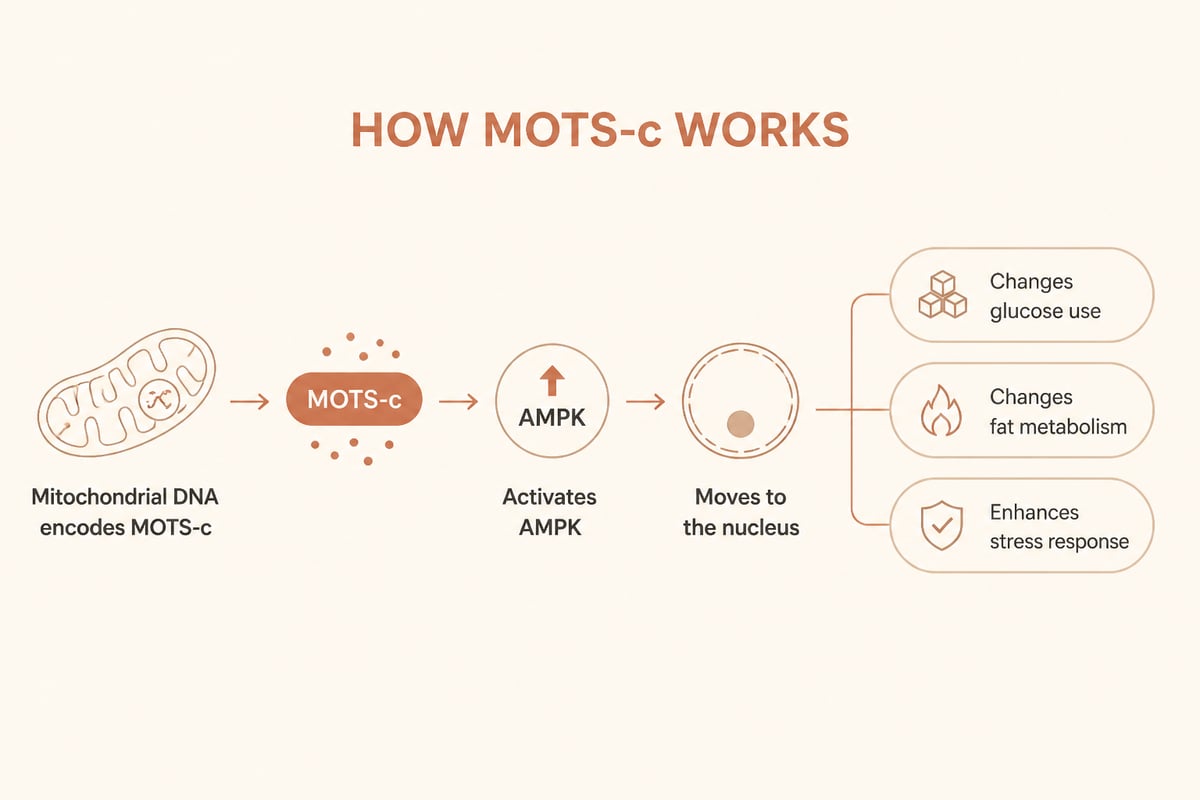
The proposed mechanism centers on AMPK, an enzyme that senses cellular energy and shifts metabolism toward fuel use. The same Springer review describes AMPK activation and changes in glucose and energy metabolism as the main effects.
AMPK acts as a fuel gauge. When cellular energy runs low, it switches on pathways that burn glucose and fat and switches off those that store them. MOTS-c is proposed to nudge this system, which would explain the changes in glucose and energy metabolism seen in experiments.
Under stress, MOTS-c is reported to move to the nucleus and influence gene expression tied to metabolic adaptation. This is described mainly in cell and animal work. It would make MOTS-c an unusual messenger: a peptide made in the mitochondria that reaches the nucleus to change what the cell does.
The pathway resembles what exercise and caloric restriction trigger. That overlap explains the interest. It does not mean the peptide substitutes for either.
Does MOTS-c provide energy?
MOTS-c may raise cellular energy efficiency, but it is not a stimulant and no human trial shows a gain in daily energy. The effect studied is at the level of the cell: how mitochondria and AMPK direct fuel.
Animal studies report changes in exercise capacity and weight gain on high-fat diets. Those are animal findings.
A tired executive should not read these results as a remedy for fatigue. Persistent low energy has many causes: sleep apnea, thyroid disease, anemia, low testosterone, iron deficiency. A panel finds them. A peptide does not.
Metabolic health and insulin sensitivity
The strongest signal for MOTS-c benefits is in glucose metabolism. In animal models, the peptide has been reported to affect insulin sensitivity and weight gain on a high-fat diet.
- Glucose uptake: reported to change in skeletal muscle in animal work.
- Fat metabolism: shifted toward use rather than storage.
- Human data: limited to small, early studies.
The proposed link to diabetes and obesity is a hypothesis. Established options exist for those conditions, and a physician chooses among them after reviewing fasting glucose, HbA1c, fasting insulin and lipids. For readers weighing other metabolic agents, see our overview of berberine benefits.
Muscle, exercise capacity and healthy aging
A 2024 study on MOTS-c and skeletal-muscle function is cited in the 2026 Springer review, alongside a separate 2024 study on immobilization-related muscle atrophy. The review frames these as research leads, not proof of clinical benefit in humans.
Immobilization atrophy is the muscle loss that follows a cast, bed rest or a long hospital stay. It is a practical question for older adults. A peptide that protected muscle during such periods would matter. At present that remains a question the research is asking.
The aging angle is similar. Changes in circulating MOTS-c with age fit the theory of declining mitochondrial signaling. Whether raising it extends healthspan in people is unknown.
Resistance training, adequate protein and sleep have human evidence behind them. A physician can track grip strength, lean mass and walking speed over time, which shows whether muscle is being preserved. Creatine is another option with a documented record in muscle and cognition.
How strong is the evidence?
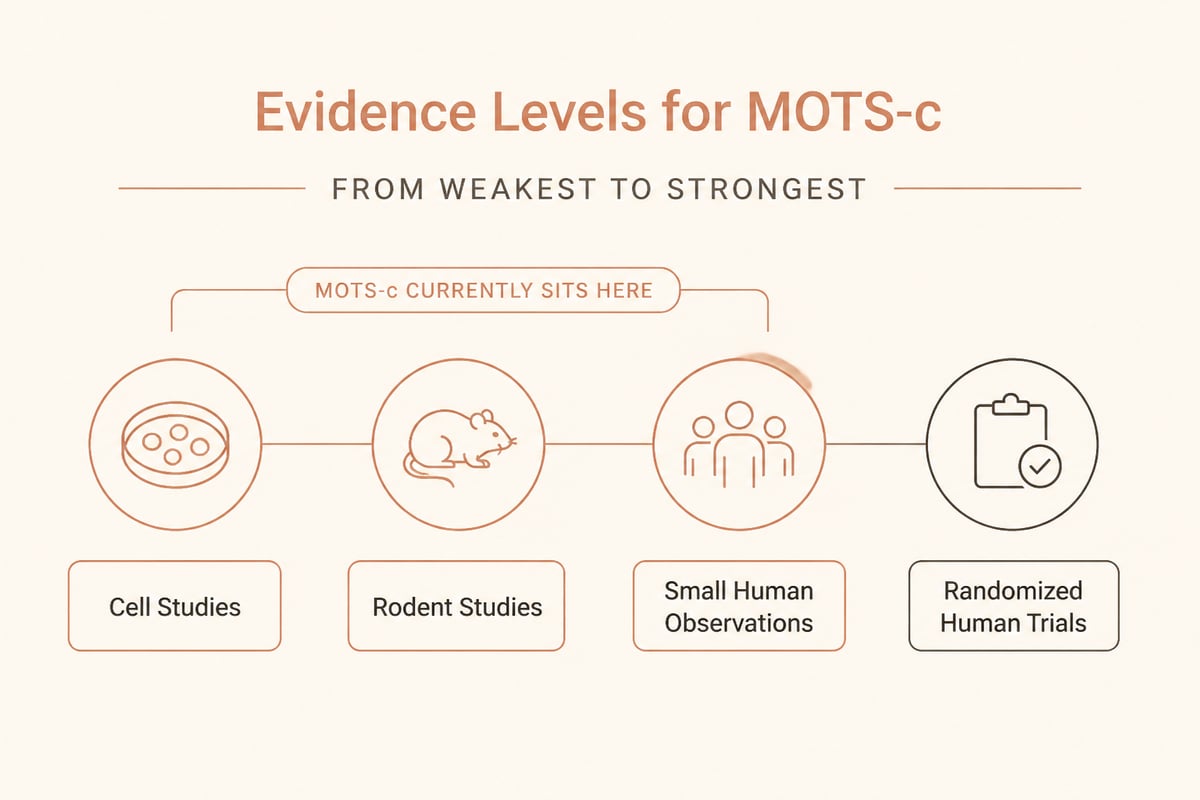
The evidence is early. Most of it comes from cell cultures and rodents, with limited human observations.
The US Anti-Doping Agency states that MOTS-c is not FDA-approved for human use or for compounded medications, and that no completed human clinical trials establish its safety. That is a primary statement from an agency that tests athletes.
The table compares MOTS-c with two familiar approaches on the attributes a physician weighs.
| Attribute | MOTS-c | Exercise training | Metformin-class prescription |
|---|---|---|---|
| Mechanism | AMPK activation, mitochondrial signaling | Physiological AMPK activation, muscle adaptation | Reduced liver glucose output, AMPK activation |
| Evidence | Mostly animal data, few human studies | Extensive human trials | Extensive human trials |
| Timeline | Not established in humans | Weeks to months | Weeks |
| Downtime | None known; long-term data absent | None | None |
| Thailand cost | THB 6,000 | Gym or trainer fees | Set by prescription |
The comparison is of evidence, not of efficacy in any one person.
What side effects have been reported?
Reported side effects come from informal use, not controlled trials. USADA lists increased heart rate or palpitations, injection-site irritation, insomnia, immune reactions and fever among people claiming to buy MOTS-c online.
It also notes that long-term-use data are unavailable. That gap matters. A trial would record these events against a control group and a known product. Informal reports cannot say how often an effect occurs, whether MOTS-c caused it, or whether another ingredient did.
Products bought online carry additional risk: purity, concentration and sterility are unverified. Injection-site irritation, for example, could come from the peptide, a contaminant or poor technique, and the user could not tell which.
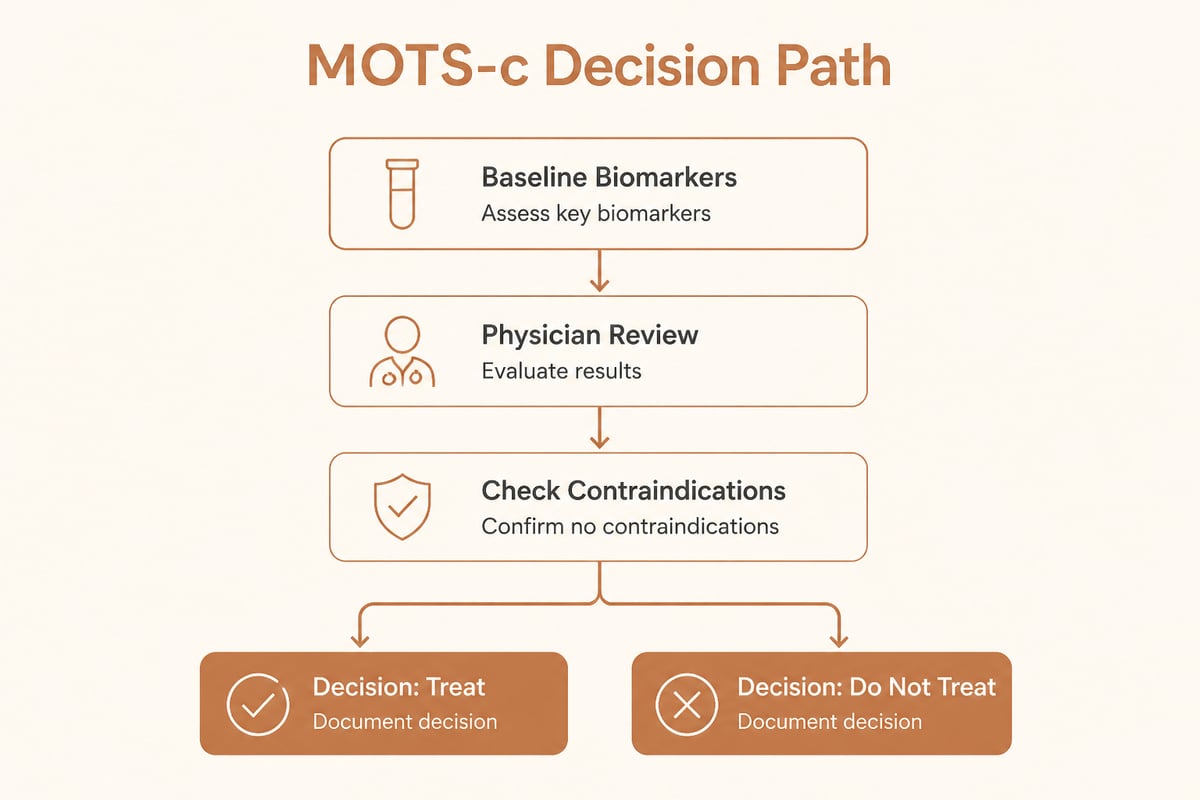
A physician screens for contraindications before any peptide is considered. A history of arrhythmia, autoimmune disease or pregnancy changes the calculation. Current medicines are reviewed as well, since palpitations or sleep disruption may overlap with a drug already being taken. If any listed effect appears, the sensible step is to stop and contact a physician.
MOTS-c versus other peptide approaches
MOTS-c is one of several peptides discussed in longevity medicine. Each has a different mechanism and a different evidence base.
The question "what are the top 3 peptides to take" has no honest single answer. It depends on the goal, the baseline labs and the medical history. Some peptides have regulatory approval for defined conditions. Others, including MOTS-c, do not.
Healthi Life offers peptide therapy injections after a consultation, priced at THB 2,500 for the consultation. For guests whose goal is recovery and sleep, our note on peptides for recovery and sleep covers the broader field. The choice follows the data, not the other way around.
Measure before you consider any peptide
The sound sequence is to measure, understand, then decide. A physician reviews the numbers that MOTS-c is supposed to influence before suggesting anything.
- Fasting glucose, HbA1c and fasting insulin.
- Lipid panel and inflammatory markers.
- Body composition and muscle mass.
- Sleep, thyroid and hormone status.
- Biological age and mitochondrial-relevant markers where available.
The Check-Up Foundation is THB 10,500 and gives a physician a baseline to work from. A broader panel is described on the health check-up collection. For those who prefer to order basic blood tests independently, Justlabs offers self-pay lab testing, though interpretation belongs with a physician.
Guests who want the treatment side reviewed can see how Recovery & Performance medicine is organized at the house. Every protocol follows a consultation and biomarker review.
Frequently asked questions
Does MOTS-c provide energy?
It may influence how cells use fuel, but no human trial shows a gain in perceived energy. Fatigue should be investigated with labs first.
Are the benefits proven in humans?
No. The data are mostly animal and cell studies. USADA states that no completed human clinical trials establish safety.
What is the cost of MOTS-c in Thailand?
At Healthi Life, MOTS-c is THB 6,000, dispensed only after a medical consultation and on a physician's prescription. The consultation for peptide therapy is THB 2,500.
What side effects are reported?
Reported effects include palpitations, injection-site irritation, insomnia, immune reactions and fever, per USADA. Long-term data are unavailable.
Who decides whether MOTS-c is appropriate?
The physician, after reviewing your biomarkers and history. It is not a self-directed purchase.
Start by booking a baseline panel so a physician can show you where your glucose, lipids and mitochondrial-relevant markers stand. If a peptide is then considered, it is reviewed against that data and your history. To arrange this at Healthi Life in Ekkamai, Bangkok, request a conversation with a physician through a Book a Discovery Consultation. This page is for information only and is not medical advice. Medical consultation and prescription are available online and on site at Healthi Life, Ekkamai, Bangkok.
Every medicine named on this page is dispensed only after a medical consultation at Healthi Life and on a physician's prescription. No dosing schedule is published here; the dose is set by the prescribing physician. This page is published for transparency, not as an offer to supply.
- 5.0 Google Rating · 238 reviews
- 2,500+ Guests
- 50+ Countries
- 2025 Regenerative Clinic of the Year in Asia-Pacific — GlobalHealth Asia-Pacific Awards